
Pinned
Aug '25 •
START HERE: ☠️ You Will Be Removed From The Group, Unless…
“Give more than you expect to receive, and life often gives back in ways you never planned.” If you stay inactive and don’t reach Level 2 (5 points)… 👉 You won't be removed from the group, but how will you reach your goals without action? “The cost of inaction is often greater than the cost of making a mistake.” The good news? It’s very easy to start. “Nothing changes if nothing changes.” ✅ Step 1: Introduce Yourself! First, you'll make a post here to introduce yourself: Click Me :) 1️⃣ What is your Instagram so we can all follow each other? 2️⃣ What is your current goal? 3️⃣ What skill do you want to master in the future? 4️⃣ Choose a GIF that represents you, your goals, or just something totally random 😄 ✅ Step 2: Explore the Free Resources! 👉 [Click here to finish the introduction course to get more free stuff] There, you will find: - How to get the most out of this community - Training Plan - And More!

Pinned
1d •
Unassisted bar pull over 🎉
Here's one of my skills update! Last week I was able to do the bar pull over without using a band😁 I'm glad I waited to show cause today I did even better! When I did the pull over, the wall was always in the way so I had to start the pull over in a tuck position…. Well I finally clued in and realized I could move the rack AWAY from the wall, hey better late than never😂 Iit's also perfect for when I do rings! Once a moved the rack I was able to start the pull over with straight legs I also moved the bar 2 notches up on the rack, I'm still low but it does put me a bit higher Since I don't have access to higher bars, I'm trying to make it more challenging and not use my feet to push off Of course It's an easier version but there's no way I'd be able to start from a dead hang position yet! I remember the first video I saw online of a bar pull over and I thought “pfff, that's easy!” Ya, nope it wasn't that easy😂 But being able to do it is still pretty ccool i think 🤗

Pinned
1d •
First chest to wall handstand 🥳
I was scared to try this for so long but it was actually pretty fun and easy! But now what? My arms went quite wobbly pretty quickly 😅 Excited to get my head around the progressions and practice every day 🤸♀️

2d •
Skills week recap!
The past week I did more skills then strength training 🌞 The point was to revisit the yoga poses, mobility challenges and skills I've done !n the past ~7 months…. Besides the shoulder stand to L-sit sequence that I've done many times (I was struggling with that one lately!) and cartwheels (it's been forever since I did those!), I had pretty much did the other skills/pose/challenges only once Video 1 yoga poses: I did screenshots of the poses, no point in showing the whole videos. I've shared these poses before and it would be too long… The Scissor Side Crow is new from this week, might not be exactly right but it's still a pretty cool pose! Redoing the poses made me realize that I have lost some mobility/flexibility Not sure what I'm doing different now…I'll keep some yoga poses in my workout routine from now on... It'll keep my mobility and flexibility in check 😆 Video 2: just a mixture of skills (video is sped up!) I finally got back my shoulder stand to L-sit sequence, what a relief! I'll start adding weights to my chin ups and pull ups once a week but I'm doing it smartly this time unlike in July… Starting with 5 lbs and putting it around my waist😅 My chest to wall handstand push ups seemed a lot lower when I did them until I watched the videos 😂 It was a fun week, I'm glad I took the time to redo those skills. Some went better than others but now I know a bit more what I need to improve and work on… ***I did work on other skills that I'm super excited about my progress ! I'll share them later this week🤗

9h •
Keep fighting
I'm hoping to reach half the level of you all. I'm amazed at the progression. I am not giving up but the muscle loss on my shoulders and arms are taking a toll on my exercises. Plodding on!
1-30 of 2,432
skool.com/awesome-ninja-fitness
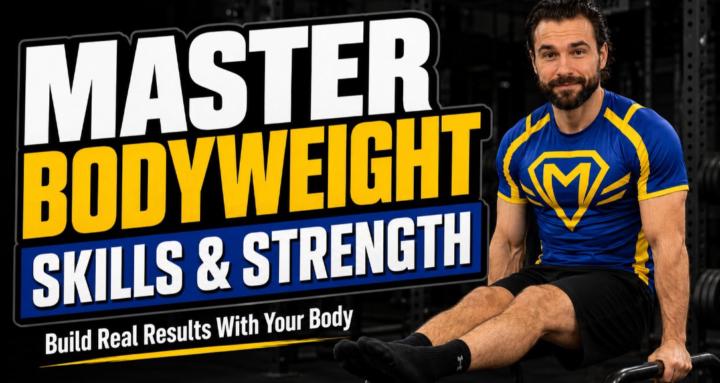
THE Beginner Calisthenics hub → 💪🔥 Build muscle ups, handstands & more with step-by-step progressions + coaching. Build strength, control & skills.
Leaderboard (30-day)
1
+212
2

+127
3

+117
4
+111
5
+92
Powered by