Activity
Mon
Wed
Fri
Sun
Aug
Sep
Oct
Nov
Dec
Jan
Feb
Mar
Apr
May
Jun
Jul
What is this?
Less
More
Owned by Brandon
THE Beginner Calisthenics hub → 💪🔥 Master pull-ups, handstands & more with step-by-step progressions + coaching. Build strength, control & skills.
Memberships
GOOSIFY: Skool Made Fun
13.1k members • Free
Skoolers
166.5k members • Free
1827 contributions to Awesome! Hybrid Calisthenics

1 like • 2h
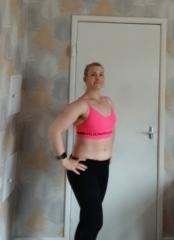
Claire, this is a great start. You already look comfortable being upside down, which is a big piece of the handstand puzzle. The wall is perfect for building confidence, strength, and getting used to kicking up. One thing to know with back-to-wall handstands is that they are great for practicing the kick-up, but they do not always teach the best handstand position. In the photo, you can see a bit of a banana shape, where the back arches and the weight gets pulled toward the wall. That can make it harder to find the real balance point later. So I’d still use these, but I’d use them with a purpose: • Practice smooth kick-ups • Try to lightly take one foot off the wall at a time • Do small toe pulls away from the wall • Push tall through the floor • Gently tuck the ribs so the back does not arch as much • Also work chest-to-wall handstands for a cleaner line Chest-to-wall will usually show the real position better because it helps you stack hands, shoulders, hips, and feet without relying on the wall behind you. Really good first handstand post. Now we just clean up the shape little by little.
4h •
Front lever
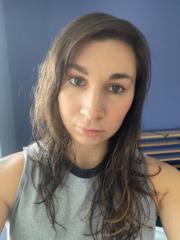
I’ve been trying to work on keeping the legs a bit higher in tuck front lever, however i’m still having trouble with focusing on keeping the arms straight whilst focusing on retraction. Does anyone have any good cues for focusing on the retraction?

0 likes • 3h
Zara, I’d make straight arms the first rule, then add the shoulder position after. For front lever, retraction should not feel like a big row squeeze because that can make the elbows bend. Try thinking “pull the bar down toward my hips,” “shoulders away from ears,” and “shoulder blades into back pockets.” If the arms bend when the legs go higher, make the tuck easier and build from there.
🔥
16h •
Mobility
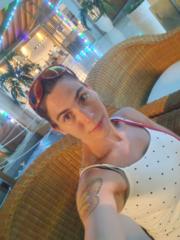
Just sharing some upper body mobility ideas! When i get up I tend to be stiff so I've been doing a lot of mobility work and stretching as part of my morning routine for a long time plus it's a great way to start the day 2 of my favorite upper body are these exercises (see videos, I don't know the names) after all the pull ups and dips I did today, my upper body was a bit sore! These 2 exercises were perfect to losen everything up!😊

0 likes • 3h
Val, these are great. They look like a version of prone shoulder swimmers or prone shoulder mobility raises. Perfect after pull-ups and dips because they help the shoulders, upper back, and chest loosen up without just flopping around. Move slow, keep the neck relaxed, and only use the range your shoulders can control. Very solid morning mobility choice 😂

1d •
My Scale
You would laugh but I took my scale on the cruise. I'm showing a 2 pound loss, body fat of 17.8 and muscle of 36.4. That is the lowest body fat and the highest muscle mass my scale has ever shown. I'm going to get a body scan after 3 more training cessions and I hope that these numbers are supported!!! If they are I will feel that the cruise is proving to be a success!!!
0 likes • 3h
That is a fun update though. A 2 pound drop and better body composition readings are exciting, but remember hydration, salt, food, sleep, and travel can all affect those numbers. Either way, I’d already call the cruise a success with all the stairs, rowing, gym time, walking, and smart blood pressure checks. Just don’t turn the cruise into a secret boot camp.
3d •
Free handstands
I dont know if we are allowed to ask questions and such but since it seems I can only post here, Ill give it a try. Today was the FIRST time I did a free handstand! I felt grass was the safest. As usually I always do them close to a wall out of fear. So today I did a bunch of cartwheels, then handstand to cartwheel. I didnt hold it but a couple seconds as I just wanted to feel safe with dismounts. I think next time I should try handstand to forward roll? Or what are other ways to bail thats controlled and safe if you overkick? I just dont want to fear hurting myself. I still have a ways to go to doing pike to handstand as I need to be stronger when I lean further over my shoulders to get my hips over my hands. As I need to use a wall behind my shoulders/head to help for now lol. Im just pretty happy I finally got away from a wall!! And was the first time since I hurt my rotator cuff that I went to a calisthenics park and my shoulder feels fine now! I just dont push it too much after that.
1 like • 1d
@Claudine Stone Sometimes the body is ready before the brain agrees. You already had the wall work, sideways dismounts, cartwheels, rolls, and general body awareness, but doing it in the open without panic is a different skill. That part is huge. I like how you built into it too. A dozen cartwheels, then slowly making the entry more handstand-like, then only holding 1 to 2 seconds so it felt safe and repeatable. That is a really good way to turn something scary into “oh, I can do this.” For the forward roll exit, your plan sounds good. Start with regular forward rolls, then hips higher, then small handstand-to-roll shapes. I still agree the cartwheel exit should stay your main bail for now, but if you already roll well, the forward roll can be another tool. And for the ladies watching, you probably did not intimidate them as much as you think. There is a good chance they were just watching because someone doing skin the cat at the park looks cool. You may have accidentally become the mysterious calisthenics park person 😂
0 likes • 3h
@Claudine Stone I love this 😂 The yoga ball idea makes sense because it removes a lot of the fear from the pike-handstand to somersault. But if it triggered migraine pain later, I’d keep that one careful or skip it for now. The cartwheel exit still sounds like your better main bail. Also, tiny person getting big respect in the gym for handstands is amazing.
1-10 of 1,827
@brandon-beauchesne-hebert-5208
💪 I help people who want body mastery, strength and skills like handstands + muscle-ups in 90 days, without the guesswork.
Online now
Joined Aug 18, 2025
Powered by