
Pinned

2d •
The Personals - Late Edition - You are invited!
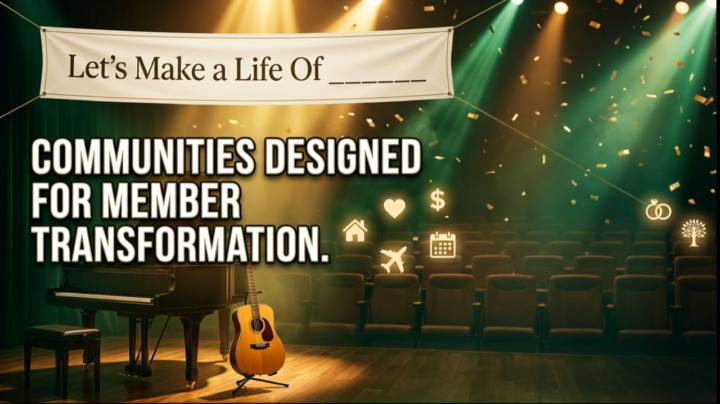
How do you design your community for member transformation? This question is where we will build harmony using the answers to 'Let's make a life of ________'. If you have time for a bit of pre-event homework brainstorm of how you would answer these questions now and how you may make tweaks in the future.
Pinned

⭐
🔥
2d •
Doors are Open - Do you want to host a masterclass in the CLASSIFIEDS?
In order to host a masterclass in the CLASSIFIEDS like @Mimi Ramsey is doing today, there are three things you need to do: 1. Become a premium member 2. Take the prerequisite workshop "How to Teach a High-Value, High-Converting Masterclass" 3. Fill out a Google form with the details of your masterclass. I teach the prerequisite workshop once every two months, and the next one is March 4. It cost $27 and the doors are open now to register. And, yes, there is a recording available if you miss the live event! 😉 After the masterclass, you get to do your first masterclass for free and then subsequent classes you offer are subject to a $10 administrative fee. No interested in doing a masterclass but still interested in the workshop? No worries, you can sign up too. There's no obligation to become a premium member or do a masterclass after the workshop! You can register for the masterclass by purchasing the course here! See you next week. It's going to be a great session!

Pinned
⭐
🔥
Aug '25 •
HOW IT WORKS - READ THIS FIRST
Ever wonder how you can let people know about your Skool community? Feel like you have so much to offer but don't know how to get people involved? Wish there was somewhere you were actually allowed to promote yourself and talk about your offer? Look no further! The Skool Classifieds are the place where you are not only allowed to promote yourself, but you are actually encouraged to do so! Like the Classifieds section of your local newspaper or the Community Message Board at the gym, this is the place to let people know what you do and what you offer. Here's how it works: 1. Invite other Skoolers you know to join the group using your invite link. The more people join, the more people there are to promote to! 2. You can post once a day only. This is to keep the group from getting spammy. If it's spammy, people won't read and you won't get noticed. Post as many days in a row as you want, but please do not post the same thing day after day - mix it up! 3. Make sure you add your post to the appropriate group/heading. Please see below for a description of what each group is for. If you don't see a group that is appropriate, message me. 4. Self-Promotion is what this group is all about, but please do not DM people with your offers. You will be removed from the group for doing this. 5. Introduce yourself in this thread, and then scroll up and find someone you have something in common with. Reach out. There are some really amazing people here! 😉 This is a place for us to support each other for our mutual benefit. Hate speech, offensive language, or general negativity will be deleted, and you will be removed from the group. *Please check out this post for more tips on how to get great results from your posts. And also this post by one of our own community members who has had great success growing his group through the CLASSIFIEDS.


17h •
Saturday Theme: Ethics Across Borders
I've actually thought about whether to post this for the last 48 hours. I've thought about it and prayed about it. BUSINESS ETHICS: A SUBJECT I'VE NEVER SEEN POSTED ON SKOOL MAYBE I MISSED IT? Business ethics isn’t just about what you do inside your own community. It’s about how you behave across borders. Some people build worlds. Some people borrow worlds. And some people try to take worlds because they don’t yet know how to create their own. When someone in another community copies your work, it’s not a threat, it’s a diagnostic. It tells you exactly where their internal scaffolding is missing. The Ethical Risk: When Unqualified People Copy Clinical Content Content theft is annoying. But unqualified people copying clinical content is dangerous. It creates three predictable harms: - Harm to the public - People may act on misinformation instead of seeking qualified help. - Harm to the field - It erodes trust in legitimate practitioners. - Harm to the creator - Your work gets stripped of context, nuance, and safety boundaries. This is not just a business ethics issue. It’s a safety issue. In health education, ethics is about safety. - When someone without credentials copies content, they remove the safety rails. - They don’t understand contraindications, nuance, or the difference between correlation and causation. - They don’t know how to prevent harm. - And their audience doesn’t know they don’t know. In health education, ethics is not optional. When someone without training copies content or starts making claims that aren't true, it's not just unprofessional, it’s unsafe. In my world, I don’t play with people’s health. I don’t make promises that aren't true. And I don’t confuse correlation with cure. Ethics is how I protect the people I serve. Before sharing health information, ask: “Is this accurate, contextual, and safe?” If you don't know, ask someone who does. Before acting on health information, ask: “Is this coming from someone educated and trained to speak on it?”

🔥
16h •
The Jolly Green Giant!
Ahhh! Nope. Sorry it is not. It's just a short nature loving money talker. See me in the gif talking money to those lovely cartoon farmers? Yup that's me. Hi there! I'm Becca and I am truly someone who is obsessed with talking about money at least once a day, but preferably much much more. I have this strongly held belief that the more people talk about money the easier and more self trusting it will become. What do I mean? Well most times people really only have the candid conversations when they are under financial strain. Think like job loss, hours lost, increased living costs, or sometimes death bed. And that is no fun. In fact it perpetuates the idea you don't talk about it until you HAVE to and that is only in the negatives. But ladies and gentlemen, we use money DAILY. So why is it not more common in our conversations? Why wait till the time is bad and you feel FORCED to share? No one really likes that kind of pressure. It feels icky and then the conversation is hard. We elevate our heart rate and stress out. So what if we did it differently. What if we talked about money all the time? Well then it becomes less scary. More people start doing it cause people like to have conversations with people they like so if their friends talk money... BAM.. they too start to talk money. The more we talk about money, the easier it gets. The less scary. And now with the stress of talking out the way... We have room to grow. Grow in our money skills and be more bold knowing we can figure it out and talk and get ideas from others' experiences. We realize we are not alone and there are lots of examples of people getting out of situations that are similar to our current situation. That is powerful! So if you would like to join the money talk movement I enthusiastically invite you Unmuted Money. A freemium community with weekly free unrecorded live calls to chat money, and lots of low pressure ways to start the practice.

1-30 of 7,690

skool.com/classifieds
The #1 place to promote your Skool group, increase your visibility, and collaborate with other Skoolers. Exclusive connection & growth without spam.
Leaderboard (30-day)
1
🔥
+593
2

🔥
+421
3

🔥
+392
4

🔥
+362
5

🔥
+348
Powered by