Activity
Mon
Wed
Fri
Sun
Aug
Sep
Oct
Nov
Dec
Jan
Feb
Mar
Apr
May
Jun
Jul
What is this?
Less
More
Memberships
The AI Advantage
126.5k members • Free
Castore: Built to Adapt
1.1k members • Free
STA (Course Only)
3.2k members • Free
Endless Evolution w/ Duffin
2.9k members • Free
Marma Method
1.6k members • Free
9 contributions to Castore: Built to Adapt

May 16 •
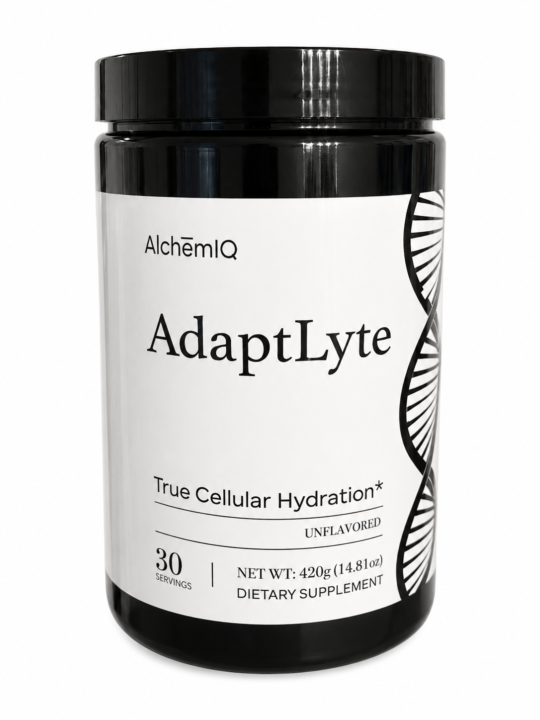
You’re Wasting Your Peptides…And It’s Not the Peptides’ Fault
You probably aren't as hydrated as you think. “Drinking water” and “becoming hydrated” are two very different conversations Most people think hydration is solved at the kitchen sink. Fill the bottle. Drink the bottle. Repeat. Maybe toss in some electrolytes if training was hard or the sauna ran long. The internal scorecard says hydrated, the body says something else, and we keep moving. Here is the uncomfortable part. You can drink water all day and still have cells that are under-volumed, undercharged, and under-resourced. The water moves through you. It does not always move into you not where it counts. This article is about where it counts. The Two Compartments Almost Nobody Talks About When you drink water, that water enters the extracellular space first, the bloodstream and the fluid bathing your tissues. That is the easy compartment. It moves fast, it dilutes quickly, and you can pee most of it out within an hour if the terrain is not set up to hold it. The compartment that actually drives performance, recovery, and adaptation is the intracellular space. That is the water inside the cell. Roughly two-thirds of your body water lives there. It is the environment where mitochondria make ATP, where ribosomes build protein, where signaling cascades fire, where peptide messages get translated into actual biological responses. A useful analogy: extracellular water is the rain on the roof. Intracellular water is the rain that actually reaches the roots. You can have a lot of one and very little of the other, and the plant will tell you which one matters. The goal of real hydration is not to soak the roof. The goal is to get water to the roots. Cell Volume Is a Signal, Not a Side Effect This is the piece that reframes everything once you see it. A well-hydrated cell is not just a wetter cell. It is a cell with a different internal pressure and that pressure is interpreted by the body as a signal. The biochemist Dieter Häussinger’s work established that cell swelling, within normal limits, tends to bias the cell toward an anabolic, building, repairing state, while cell shrinkage tends to bias it toward a catabolic, stressed, breakdown state.

1 like • Jun 10
I’ve been doing it right! I’ve got all those containers on my counter! Who knows though if I am getting what I am getting from Amazon though
May 3 •
The VEGF Trap: Why BPC-157 Is Being Misunderstood
The idea that “BPC-157 feeds cancer” sounds convincing at first because it leans on a real biological truth, but then stretches that truth past where the evidence actually goes. To understand what is really happening, you have to zoom out and look at how the body makes decisions at the cellular level. Cells are not blindly following one signal. They are constantly integrating multiple inputs, like a control center weighing oxygen levels, damage signals, inflammation, energy status, and structural integrity. BPC-157 seems to operate inside that decision-making network, not as a simple on/off switch for growth. Let’s start with the fear itself. VEGF is a real molecule with a real job. It stands for vascular endothelial growth factor, and its role is to help build blood vessels. If tissue is injured or deprived of oxygen, VEGF helps recruit new blood supply. Tumors can hijack this system. They release VEGF to grow their own blood supply, which helps them expand. That part is not controversial. The mistake happens when people assume that anything touching VEGF automatically behaves like VEGF. That is like assuming that anyone who walks into a construction site is a construction worker. Some people are there to build. Others are there to supervise, clean up, or shut things down. BPC-157 looks much more like a coordinator than a builder. At a molecular level, true angiogenic drivers like VEGF-A, FGF-2, or PDGF act as primary signals. They bind directly to receptors like VEGFR2 and initiate a cascade that pushes endothelial cells to proliferate, migrate, and form new vessel structures. This involves pathways like MAPK/ERK for proliferation, PI3K/Akt for survival, and eNOS activation for nitric oxide production and vessel dilation. When these signals are sustained, you get continuous vessel growth. That is exactly what tumors exploit. BPC-157 does not appear to behave like that. In resting endothelial cells, meaning cells that are not experiencing injury or stress, BPC-157 does not trigger angiogenesis. No tube formation, no forced proliferation, no “build vessels now” signal. That alone separates it from classic tumor-supporting growth factors.
1 like • May 5
Love
Apr 27 •
Nerve discomfort from Reta
Has anyone experienced this side effect? Nerve sensitivity or burning in the legs from Reta? It’s kind of like a sunburn, sensitive to the touch?
0 likes • Apr 28
@Theo Russel thanks for sharing

Mar 12 •
Feeling on 5Amino?
Just curious, other than looking for changes in the mirror, are there any other indicators that would tell me it’s working? I only ask because on SLU I felt a noticeable difference in my endurance during cardio sessions… On Tirz, my appetite tanks… Beta Alanine makes the fingers tingle.. Know what I’m sayin? A
2 likes • Mar 13
I feel more energy soon after and in the days that follow
Jan 27 •
WHY PERFORMANCE IS ABOUT TRANSITIONS, NOT INTENSITY
Most people think performance improves by pushing harder. More intensity, more volume, more effort, more stimulation. That belief makes sense because intensity is visible. You can see heavy weights, fast running, deep breathing, sweat, and fatigue. What you cannot see is what actually determines whether the body adapts or breaks down. That hidden factor is how well the body handles transitions. Biology does not reward force. It rewards coordination. At every level of the body, from a single cell to the entire nervous system, health and performance depend on how smoothly systems shift from one state to another. These shifts include rest to effort, effort to recovery, fed to fasted, stress to calm, inflammation to healing, and sleep to wakefulness. The quality of these transitions determines whether the system becomes stronger or weaker over time. A transition in biology is any moment when demand changes faster than structure can adapt. When exercise begins, muscles suddenly require more energy. When exercise stops, energy demand suddenly drops. When food is eaten, nutrients flood the bloodstream. When fasting occurs, energy must be mobilized internally. When stress hormones rise, immune and metabolic priorities shift. These changes are not steady states. They are moments of adjustment, and they are where the system is most vulnerable. Most people misunderstand how energy works in the body. Energy is not something you simply have or run out of. Energy is controlled flow. At the cellular level, this flow is managed by mitochondria. Mitochondria are often called powerhouses, but a better way to understand them is as traffic controllers. Their job is not just to make energy, but to regulate how electrons move through a tightly controlled system. Electrons enter mitochondria from the breakdown of food and stored fuels. These electrons move through a series of protein complexes called the electron transport chain. As electrons move through this chain, energy is released in a controlled way to produce ATP, the molecule used to perform work. ATP is not the goal. It is the result of proper electron flow. When electron flow is smooth, energy production is clean and signaling is preserved. When electron flow becomes congested, problems arise.
1 like • Jan 30
Love this
1-9 of 9
