
Pinned

⭐
Jan 18 •
🗽 START HERE: How to join our Group Calls!
We built this community for people who want to connect, debate, and strategize, not just scroll. The real action happens in our group calls, where we argue ideas in good faith and tackle the week's biggest global events. Here is how you can participate: 🔥 1. Open Calls These are our public town halls. Open to everyone. Whether you want to take the stage to challenge a point or just listen in, this is the "public square." 💎2. Premium Calls For members who want to go deeper. These calls are exclusive to our supporters and offer a space for more focused discussion and priority access. 👑 3. VIP Calls Reserved for our top-tier members. These are intimate, mastermind-style sessions where you get direct Q&A access with special guests and deep dives into high-level strategy. - 📅 Check the Schedule & Join Here: https://www.skool.com/libertypolitics/calendar - 💎👑 Become a Premium or VIP Member: https://www.skool.com/libertypolitics/plans Heads up: We believe these conversations are worth sharing! Our group calls are recorded and may be posted to our social media channels. By joining the stage, you’re helping us bring these important discussions to a larger audience. By participating in group calls and voice discussions, you consent to being recorded. You can read our community rules here: https://www.skool.com/libertypolitics/-/rules Moderation decisions and bans by mods are made with Armin's approval. 👋 New to the group? Say hello! We want to get to know you. Drop a comment below to introduce yourself. Tell us where you're from and what you like to do for fun (outside arguing politics!). Welcome to the community!
5h •
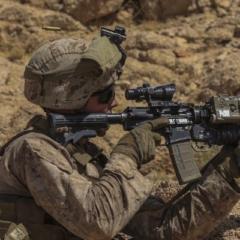
Who is Funding Protests
Many of the widespread university protests and encampments that erupted on U.S. campuses in 2023–2024, particularly those focused on the Israel-Gaza conflict and calls for divestment from Israel, were likely amplified (if not substantially enabled) by decades of massive undisclosed or underreported foreign funding from adversarial or rival entities. According to the provided tables and supporting analyses, countries like Qatar, China, and Saudi Arabia dominate NGO, university, and think-tank influence in the U.S., far outstripping formal FARA-registered lobbying. Qatar alone funneled billions into American higher education (with estimates ranging from $5B–$15B+ over recent periods, including heavy support for programs in Middle East studies, PR, and related nonprofits), while China contributed through mechanisms like Confucius Institutes (many now rebranded or closed) and undisclosed university funding, and Saudi Arabia added significant sums via similar channels. These inflows (often directed toward universities, student groups, and ideological nonprofits) created environments where anti-Israel activism could flourish with institutional tolerance or even tacit encouragement, as administrators became financially dependent on donors whose governments have strategic interests in shaping narratives against Israel or the West. Qatar, for instance, hosts Hamas leadership and has been linked to networks promoting related ideologies, while China's efforts have historically involved campus influence operations that align with broader geopolitical disruption. Only Israel appears with legal, transparent U.S.-based PAC spending (via AIPAC), whereas others operate through prohibited or opaque NGO/university channels that dwarf lobbying totals. In short, the scale of this foreign financial penetration into U.S. academia suggests that a substantial portion of the protest infrastructure, rhetoric, and persistence was not purely organic student activism but was primed and sustained by external actors seeking to advance their agendas through American institutions. Greater transparency and scrutiny of such funding are essential to understanding these dynamics.

15h •
Xi declares people on both sides of the Taiwan Strait are Chinese
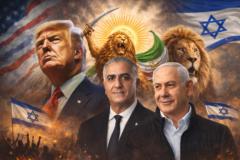
Hi everyone, This happened today. Taiwan's opposition leader Cheng Li-wun met with Xi Jinping on a "peace" mission to reduce tensions with China. I believe this is the first time a Taiwanese political leader has met with Chinese leadership in 10 years. Of course there is a lot that should be talked about from this meeting, but one thing that stood out to me was when Xi told Cheng Li-wun that Taiwanese people were Chinese and wanted peace. Keep in mind, 2/3 of Taiwanese see themselves as primarily Taiwanese according to recent polling. I wanted to bring this up because this reminds me of Putin's rhetoric. If I remember correctly, Putin declared that Ukrainians were Russians and also wanted peace before the war. This is just something to keep in mind because I do believe that China will be the next focus of the USA after the Iranian Revolution. https://www.reuters.com/world/asia-pacific/chinas-xi-meets-taiwan-opposition-leader-beijing-state-media-says-2026-04-10/https://www.theguardian.com/world/2026/apr/10/xi-jinping-cheng-li-wu-china-taiwan-meeting-bejing

1-30 of 2,638
skool.com/libertypolitics
Talk politics with others who care, in live calls and community posts. Share your views, ask questions, or just listen in.
Leaderboard (30-day)
1
+529
2

+366
3

+327
4

+326
5

+323
Powered by