Activity
Mon
Wed
Fri
Sun
Dec
Jan
Feb
Mar
Apr
May
Jun
Jul
Aug
Sep
Oct
Nov
What is this?
Less
More
Liberty Politics Discussion
5k
4.9
Free
270 contributions to Liberty Politics Discussion

3d •
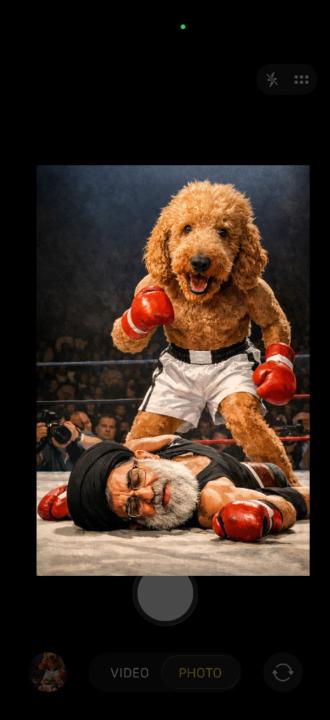
😏 Khamanei’s threat.. of a good time
PS when I read this out loud my husband (in dead serious tone) said “didn’t we kill him??” 😆 BABE! Yes, sort of, keep up!!!!! #youcantkillcardboard
3
0


🔥
11d •
Europe’s settlement boycotts crush the Palestinians
October 22, 2026 For many Palestinians, employment in Israel or Israeli businesses in Judea and Samaria is an important source of income in the Palestinian Authority economy, where opportunities are limited. By Khaled Abu Toameh, Gatestone Institute On September 8, 2026, Canada, Britain, France, Denmark, Finland, Iceland, Ireland, Norway, Poland, Portugal, Spain, and Sweden announced their intention to introduce national restrictions on trade with Israeli settlements in Judea and Samaria, support European-level measures, or consider similar action. The governments said their objective is to protect the “two-state solution” and respond to—presumably meaning prevent—”settlement expansion.” To many Palestinians, of course, all of Israel is one big settlement to be dismantled. Some restrictions are already in force. Ireland’s prohibition on importing designated settlement goods took effect on September 15, followed by a Dutch ban on the import, purchase, and sale of such goods on September 20. Other countries have announced plans or are considering additional restrictions. These are not all components of one uniform import ban. The measures differ from country to country, and some remain proposals. The restrictions, in addition, do not generally prohibit all Israeli products: they target only goods originating in settlements where Jews live. Nevertheless, the direction is clear. As European governments increase economic pressure on Israel, Palestinians working in businesses in the settlements lose their jobs. According to a report by Israel’s Ynet news website, Israeli industry representatives have already reported declining overseas orders and the cancellation of long-term distribution contracts. Industrial zones such as Barkan, Mishor Adumim, and Ariel, where Israeli-owned factories employ Palestinians from surrounding communities, are particularly vulnerable. Avraham Novogrotcki, president of the Manufacturers Association of Israel, described the boycott of factories in the Israeli settlements as a measure that primarily harms Palestinian workers and their families.

1 like • 10d
I’m sorry, but this is what “Palestinians” get for their stupid ideology. You want to claim you are the victims, now you are in the hands of the stupid west, let them help you “better” than Israel does…

11d •
Newest jihadi filth: trying to replace the Remembrance Day poppy
Whether you had family who served in WW1/2. Whether you've served yourself, or if you live in the west and get to enjoy the freedoms that came as a result of those sacrifices, this should piss you the fuck off. These people have absolutely no shame and deserve zero respect. When will leftist westerners wake up and realize Islam's highest priority is erasure of people they conquer? Hopefully sooner than later. https://combatantisemitism.org/cam-news/palestine-poppy-sparks-outrage-over-politicization-of-britains-remembrance-day/

1 like • 10d
🤯

11d •
Saudi Arabia executed two newly weds after kissing on the forehead inside a mosque
Saudi Arabia executed two Bangladeshi nationals Nazrul Islam Abdul Basir and Siti Akhtar after convicting them of an immoral act inside a mosque in Mecca. The "immoral" act? A kiss on her forehead, according to some reports. Saudi Arabia executed two Bangladeshi nationals for an immoral act inside a Mecca mosque under a Sharia d*ath sentence. ⠀ Nazrul Islam Abdul Basir and Siti Akhtar were arrested years earlier, tried, and sentenced under ta'zir discretionary punishment for violating the sanctity of the holy site. A royal order carried out the executions on October 14 2026 and their bodies returned to Bangladesh in coffins while the government in Dhaka said it received no advance notice. ⠀ Social media claims of a newlywed forehead kiss remain unverified. Official statements cite only the gravity of the indecent act inside the mosque. ⠀ This is radical Sharia in practice where judges impose d*ath for acts that desecrate religious spaces. The same framework appears in groups that seek parallel systems and has been linked to rising support among younger Americans. ⠀ U.S. Muslim population estimates have risen from about 2.4 million in 2007 to roughly 5 to 5.5 million in 2026 while mosque counts have climbed past 3,000. Texas has seen hundreds of new mosques and planned Islamic developments amid reports of enclaves and 43 percent of young voters viewing Sharia positively. ⠀ Think about what it means when a system that hands out d*ath sentences for immoral acts in a mosque expands through immigration and institutions in the United States. ⠀ #Sharia #IslamInAmerica

1 like • 10d
!!!! Am I crazy for not expecting this from SA?!? Also how do you execute a foreigner?!? 😡 May their memories be a blessing 🕯️ 🕯️
10d •
Gholamreza Khani Shekarab
🚨BREAKING: The Islamic regime in Iran has hanged Gholamreza Khani Shekarab — a former MMA champion, coach, and international referee. He was executed today on charges of spying for Israel following what rights groups describe as a sham trial with no fair legal representation and reports of torture leading to forced confessions. A proud fighter who represented Iran on the international stage has been killed by the very regime he once called home.

1 like • 10d
😞 May his memory be a blessing 🕯️
1-10 of 270