Activity
Mon
Wed
Fri
Sun
Aug
Sep
Oct
Nov
Dec
Jan
Feb
Mar
Apr
May
Jun
Jul
What is this?
Less
More
Memberships
Liberty Politics Discussion
4.8k members • Free
67 contributions to Liberty Politics Discussion

2d •
This creator does a South Asian Repunzel look for a wedding. The end is beautiful.
https://youtube.com/shorts/ti-ml-gl5Zk?is=kKcQkR5nBOXG6KwT

1 like • 2d
I love her videos The makeup and outfits are always so beautiful
27d •
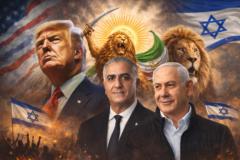
Operation Sovereign Tide: Preventing Regime Remnants from Reconstituting Through Oil Revenue
Fellow patriots, The reason we are moving into the next phase of liberating Iran is because the conventional military phase has largely achieved its purpose. Operation Epic Fury broke the mullah regime’s immediate conventional military capacity, but the broader conflict has not ended. It has shifted towards the second phase of Iranian liberation that centers on diaspora supported track II efforts to further enable Iranian resistance. The reason for the shift is in no insignificant part underwritten by the fact the United States-led Western alliance is facing a coordinated autocratic bloc made up of Putin’s criminalized counterintelligence state, the Chinese Communist Party, the North Korean regime, the remnants of the mullah regime, and their sub-state terrorist proxies. These actors are not operating in isolation. They are watching each other, learning from each other, and coordinating pressure across multiple theaters in order to stretch Unuted States force projection capability. · Putin is preparing to test NATO in the Intermarium. · The Chinese Communist Party is increasing its belligerency against Taiwan. · North Korea remains a standing threat in Northeast Asia. The mullah regime remnants and their proxy networks understand this broader strategic environment and will try to exploit it. Their goal is to survive long enough for the United States and its allies to be pulled into multiple simultaneous crises, giving each member of the autocratic bloc an easier path in its respective theater. That is the context behind the floated MOU or transitional understanding with regime remnants. It is not a sign that the mission is over. It is an attempt to secure an operational pause so the United States can pivot geopolitically toward the Intermarium, Taiwan and the broader global confrontation with the autocratic bloc, while also continuing to rebuild a national defense industrial base that has been weakened for decades by leftist and libertarian disinvestment, political mismanagement and unserious or int he case of clinton, obama and biden compromised strategic leadership.
2 likes • 27d
I apologize if this is a stupid question. Would the US Navy or another Navy have to get involved in the first line of Operation Sovereign Tide? From what it seems like to me, there would have to be some sort of Navy to intercept the shadow fleet. Also, once the shadow fleet is intercepted, who would be the authority that makes sure that the proceeds go to a legitimate Iranian transitional authority or escrow mechanism. I copied and pasted the first line for my own reference. · The first line of effort is direct control over the oil revenue system itself: deny the remnants the ability to monetize Iranian crude, seize or bring under lawful control the oil already held at sea, redirect those cargoes away from regime-linked channels, and reallocate the proceeds to a legitimate Iranian transitional authority or escrow mechanism for the Iranian people.
0 likes • 21d
@Jeffrey Cappella Thank you so much for your response!
27d •
One thing I am grateful for from this World Cup
There are a lot of problems from this World Cup like Fifa banning the Lion and Sun flag and the Islamic Republic's team even being able to participate after the January Massacre. However, I am grateful that the World Cup is actually being held in countries in this year (mainly the USA) that is not governed by Sharia Law and protects individual liberties. I know women will not have to fear jail or punishment for reporting SA. I know LGBT people will not be arrested for waving a pride flag or engaging in PDA. I know couples will not have to fear being arrested for pre-marital sex or just simply being in the same hotel room together. I know people can enjoy an alcoholic beverage as long as they are of age and drink responsibly. I know people will be able to protest peacefully (which I'm not 100% sure about rules around protesting in Sharia Law, but I know you couldn't protest peacefully in Qatar). I'm just really grateful that we don't have to be gaslit into thinking that Sharia Law is okay and should not be criticized because it is the host country's "culture".
1
0
1 like • 28d
Honestly this is really fascinating. There are a lot of different angles to talk about this from starting from the impact of one child policy to generational shifts in education and family expectations to how young women are now taking something once meant to shame them and flipping it on its head in protest of the same institution that started it. I think it has similarity to the term "cat lady" in English. If you don't get married, you will be stuck all alone with a bunch of cats. However, I think young women are reclaiming this term. The discourse around it now is that young women would rather be "cat ladies" and live alone with pets they love then be in a bad marriage.
1 like • 28d
@Shauna Starcher That's a good point. 27 is so young and very specific. The term "cat lady" does not have the same impact as "leftover woman" because of that. I do admit though in my personal experience, members of my family said I would become a "cat lady" when I was a teenager because I didn't date in middle school or high school. I became a guinea pig lady instead~
Jun 14 •
Should English get a new alphabet?
https://youtube.com/shorts/d8qk_14YDa4?is=0jPNLZSeMtn_brAZ
1 like • 29d
@Shauna Starcher That's fair, he did give some good alternatives in the video.
1 like • 28d
@Shauna Starcher The different depictions of the mouth reminds me of hieroglyphs which is kind of cool. But I'm not gonna lie, I could not understand the example paragraph he gave. I'm not good at writing or drawing tiny circles either 🥲 My vote for an alternative English alphabet would have to do to the first one because that is the only one I could start to read instantly.
1-10 of 67
@amanda-tennant-5426
I like guinea pigs, pandas, and learning new things. Literature girly. I'm an American living in Tokyo
Active 9h ago
Joined Mar 5, 2026
Powered by