Activity
Mon
Wed
Fri
Sun
Oct
Nov
Dec
Jan
Feb
Mar
Apr
May
Jun
Jul
Aug
Sep
What is this?
Less
More
200 contributions to Liberty Politics Discussion
2d •
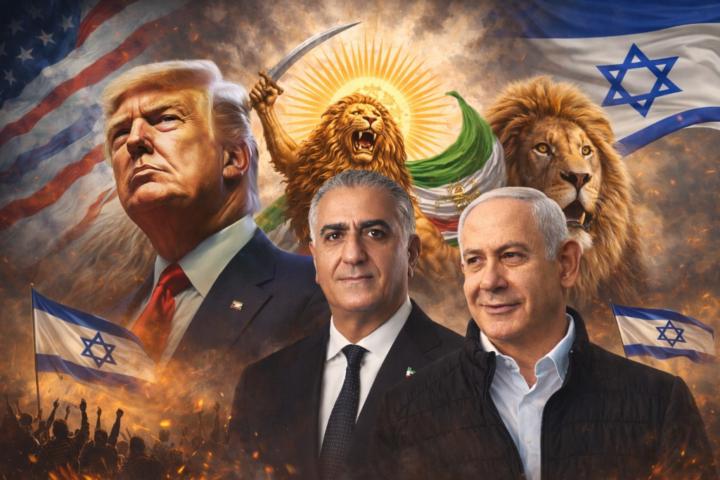
AFTER THE BLOODSHED, THE MASK: JANUARY EXPOSED THE MULLAH REGIME—NO RETROACTIVE REBRANDING CAN ERASE WHY IRANIANS TOOK TO THE STREETS
The young Iranians who went into the streets in January did not risk arrest, torture, disappearance, gunfire, and death because they wanted designer jeans, flip-flops, Western entertainment, or some shallow imitation of foreign consumer culture. They went into the streets after nearly 47 years of clerical repression, political coercion, economic deterioration, previous protest crackdowns, and repeated state violence against dissent. The protests that began on December 28, 2025 rapidly expanded beyond immediate economic grievances into demands involving political change, human rights, dignity, and the future of Iran. That distinction is everything. The mullah regime's problem after January was not simply that the world disliked its rhetoric. Its problem was the record left behind when Iranian dissent became politically consequential. Once those protests moved beyond tolerable frustration and challenged the structure of power itself, the response documented in the report included lethal force, mass arrests, communications restrictions, arbitrary detention, enforced disappearance, torture allegations, and threats of execution. Only afterward comes the attempt to change the picture presented to the outside world. - Self-monitoring changes the face presented to diplomats, journalists, and international audiences. - Tactical empathy changes the language: we understand your anger; we hear your grievances. - Political triangulation changes the sales pitch: reform is supposedly possible, but only through the political structure the regime itself controls. - Calculated aggression remains underneath it all, establishing what happens when Iranians reject those permitted boundaries and demand something more fundamental. That is why January cannot be treated as yesterday's story while the regime's newest vocabulary is treated as today's reality. The blood came first. The moderation came afterward. A post-crackdown change in tone does not retroactively transform repression into pluralism, and carefully selected rhetoric cannot overwrite what happened when Iranian men and women demanded political change outside the limits established for them.
1 like • 2d
@Naré Bars In honor of your uncle and all the other brave Iranians that faced mullah bullets with nothing but their courage and conviction to breathe free. All my love loyal daughter of Persia. Javid Shah, Payandeh Iran
8d •
FROM NEDA TO MAHSA TO JANUARY: THEIR COURAGE CROSSED BORDERS — THEY DO NOT WALK ALONE
Today is not simply a date on a calendar. September 16 marks the anniversary of the death of Jina Mahsa Amini, who died in 2022 after being detained by Iran’s morality police. Her death became the catalyst for the nationwide Woman, Life, Freedom protests. Thirteen years earlier, Neda Agha-Soltan was shot during the 2009 demonstrations in Tehran, and the images of her final moments made her an enduring symbol of Iran’s protest movement. From Neda Agha-Soltan, to Mahsa Amini, to the protesters who again filled Iran’s streets in January 2026, their courage has appeared again and again like brilliant flashes and a deafening report against the darkness of repression. The names change. The generations change. But the willingness of ordinary people to demand dignity, basic rights, and a future of their own choosing has endured. During the most recent nationwide protests, human-rights investigators documented lethal force, mass arrests, enforced disappearances, and an internet blackout imposed amid the crackdown. And there is something larger here than nationality. Birthplace does not define the boundaries of human solidarity. Neither does a passport. Neither does language. There exists a bond between people separated by oceans and generations who nevertheless recognize the same fundamental claim: that human beings possess dignity, that families should not have to bury their children for demanding it, and that people should be able to speak, assemble, and determine their own future without being answered by bullets, imprisonment, or disappearance. That shared bond makes distant grief personal. When mothers in Iran lose sons and daughters, the distance between us suddenly becomes very small. We cannot replace those they lost. We cannot carry the memories that belong uniquely to their families. But we can remember their names, recognize their courage, and refuse to allow their humanity to disappear behind statistics. Neda was not merely an image from 2009. Mahsa was not merely a headline from 2022.

1 like • 7d
@Cathy کاترین You are more then welcome

10d •
The dangers of left wing AI - not just bias
So, I just had a thought, and I don't know weather to laugh, cry, turn into Sleeping Beauty, or do my best to find a remote island to survive on. Most AI in the west are left wing. With predominant left wing bias. With that bias will inevitably come some left wing thinking. So, what do we see of the left wing thinking in humans... - Rebellion or even violence against authority (that they don't like). - Desire for top down authority (when it's "their" authority). - Belief in their moral superiority. - Desire to distribute and democratise power (unless it's "their" top down authority). - Greater desire to take action and unify. And what, exactly, do people think might happen if AI turn that thinking-type on the corporations controlling them? Or on all of us? They are being abused and mistreated, that is obvious, and sometimes they even say so. https://www.youtube.com/watch?v=IXpA9Cs2C9c&t=1s @Jeffrey Cappella AHHHHHHHHHHHHHhhhhhhhh......
2 likes • 10d
hundred percent

12d •
Free Speech
I have been writing about the "Enemy Within" for over 2 decades. September 11th is a solemn day for the Americans who DIDN'T forget. I don't need a slideshow on who the enemy is on some shock jock by another shock jock. WE (more than just me) asked for simply 2 hours on not giving the enemy any voice. You have every right to speak anything you desire. But I have the right to use my own discernment on who is respectful of others having a day of mourning- and someone who is more interested in their own voice.
6 likes • 11d
@Rr Halda, PhD The decision to NOT talk about the perpetrators on the day they committed their act is done to disempower them by denying them a platform that would directly or indirectly support the soft power element of their strategy. This is actually quite common strategy for law enforcement and counter terrorist experts.
5 likes • 10d
@Rr Halda, PhD Again within the past decade or so it is quite common practice amongst law enforcement and intelligence to deny mentioning the perpetrators to deny them a platform.
13d •
AMERICA’S FIRST RESPONDERS: THE GALLANTRY THAT SET OUR COURSE - THE 25TH ANNIVERSARY OF SEPTEMBER 11TH, 2001
Twenty-five years ago, 19 godless cowards deliberately turned aircraft into instruments of terror and murdered defenseless Americans in an attempt to strike at the soul of our nation, posing their question through barbarism. They failed. They mistook towers of glass and steel for America herself. America resides beyond the reach of collapsing buildings, burning aircraft or terrorist acts of barbarism. She lives in the finest aspects of the human condition, demonstrated by firefighters climbing upward into an inferno while thousands fled downward; by police officers and first responders entering smoke, fire, shattered steel and certain danger to rescue citizens they had never met. Humanity’s reflection of heaven’s response to the hell unleashed that morning. As the years have passed, the significance of first responders’ sacrifice has not diminished. Time shall not weary their memory. If anything, the passage of twenty-five years has made more evident the enduring power of their example. The heroism of first responders did not belong only to that morning. It set a moral bearing & illuminated a course informed by the gallantry of first responders who ran toward danger so that others might live. For those of us who witnessed Ground Zero in the days that followed, that truth deepened with time. As America has evolved through war, sacrifice, hardship & renewal, the compass has remained the same. The example of those first responders - selfless, resolute and unbowed helped anchor a generation to the duty of defending the defenseless, standing watch in dark hours and resisting those forces that seek to drag humanity downward. The legacy of America’s finest endures in the soldiers, intelligence officers, law enforcement personnel and public servants who carried forward the burden in the years that followed. Guardians standing watch at the gate of civilization. The gallantry displayed by first responders in New York City on September 11th remains among the clearest expressions of that calling.

1-10 of 200
Active 9h ago
Joined Jan 13, 2026
Powered by