
Pinned

1d •
Day 11 Challenge: Finding your niche / business
Finding the right business for you is kind of like dating. If you are desperate you'll struggle to find 'the one' and if you do it will may just be a one night stand. You might need to 'kiss a few frogs' before you find 'the one'. For me I it happened when I wasn't looking. It was right under my nose. It was something that I was already doing to solve a problem for myself. Then people started asking me. "Can you help me do that thing". I became the 'go to guy' for that thing. After 50 people paid me to help them (I copy and pasted my thing 50 times), I turned it into an app. Is there something you are doing well that you can help others do? Often we don't value our own skills, but others would be happy to pay for what you do. It doesn't have to be your passion. Mine was boring. But it does have to solve a real problem.
Pinned
1d •
no more lone wolf!!!!
Howdy y’all, I’m relatively new here and wanted to introduce myself and connect with others in this space. I recently joined the FF Accelerator cohort and have been really appreciating the container — but more than anything, it’s made me realize how long I was trying to do everything on my own. As a business owner with ADHD, ideas and motivation were never the issue. It was focus, follow-through, and carrying the whole thing solo. I’d start strong, get overwhelmed, then scatter or stall. What’s shifted lately is slowing down enough to clarify what I’m actually building, simplifying instead of adding more, and having real structure and humans around me. Over the past several weeks I went from a loose vision to a functioning high-ticket course with a small paid beta group — but the bigger change is internal. My nervous system feels steadier. My weeks feel clearer. My work feels more livable. I’m mostly sharing this because I’m curious who else here has wrestled with similar patterns — ADHD, overwhelm, lone-wolfing, or just trying to build something real without burning out. If that’s you, I’d love to connect. Feel free to comment or reach out. Always down to meet other founders who are building thoughtfully and learning how not to do it all alone. — Joe
Pinned
🔥
11d •
Rise & Shine: A 21-Day Challenge to Unlock Your Potential ☀️🦁
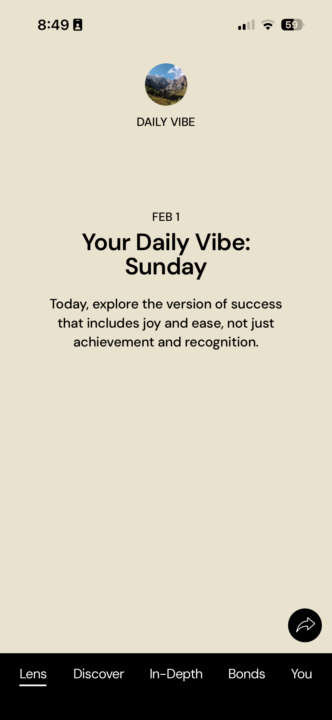
Today is February 1st—the first day of one of the historically most challenging months for me, and for anyone else who suffers from seasonal affective disorder. As my grandma loves to say, "February is the shortest AND longest month of the year." But today is also the full moon in Leo, for all you astrology nerds out there. (Looking at you, @Matthew O'Brien! 😉) And this full moon in Leo is calling you—calling ALL of us—to step into our power and f*cking shine! To honor this full moon in my sun & ascendant signs (yes, I'm a double Leo, and yes, I am proud about it 😂🦁), I am proposing a challenge: 🌅 𝗧𝗵𝗲 𝗥𝗶𝘀𝗲 & 𝗦𝗵𝗶𝗻𝗲 𝟮𝟭-𝗗𝗮𝘆 𝗖𝗵𝗮𝗹𝗹𝗲𝗻𝗴𝗲 🌅 For the next 21 days, I’m committing to sharing one lesson per day about: - 🧠 Business & entrepreneurship - 🌱 Emotional regulation & nervous system stability - 💰 Abundance, self-trust, and sustainable success - 🧘♂️ Becoming a more grounded, embodied human And I’m inviting you to do this with me. 🔥 𝗧𝗵𝗲 𝗢𝗻𝗹𝘆 𝗥𝘂𝗹𝗲𝘀 🔥 Keep it simple & real: - Post one lesson per day (or whenever you feel called) - Short is perfect (3–10 sentences is plenty) - No polishing, no perfectionism - Lessons can be from wins, mistakes, patterns, or realizations The goal is to step into your power, shine your light, and OWN who you are. F*ck RSD. F*ck being "too much". F*ck being "broken". This is your time to take up space and show how f*cking powerful you really are! There are no prizes here. No one is tracking or keeping score. Miss a day? Come back. This isn't about perfection. This is about seeing how much JOY and EASE we can bring into our practice. Let's rise together. Let's shine. Are you with me?
Poll
30 members have voted
16h •
So it Begins! Procrastination... Conquered!
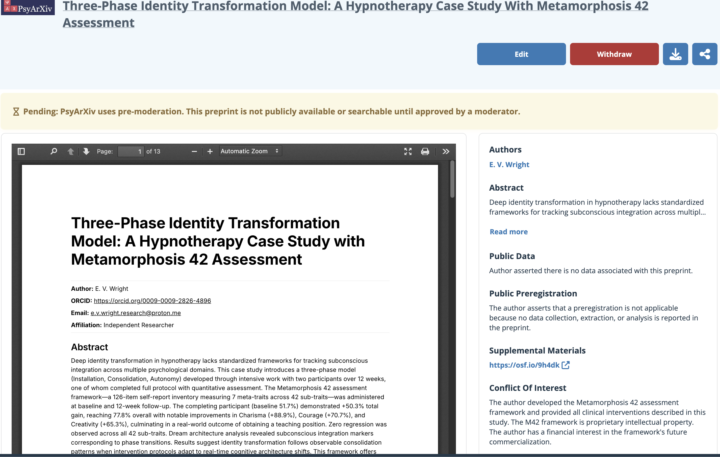
I typically muscle and white-knuckle my way through the chaos and make life happen no matter what, but family emergencies and my own massive transformation arc slowed me down considerably over the past few months. The intense Identity Transformation Program I was running last year took a lot from me, but it yielded near impossible results (some that are still shocking me and without the empirical data to back it up I would probably not believe). This white paper is the beginning of proving to the science community what Quantum Psychology is really about and what whole person frameworks that incorporate hypnotherapy can actually do. Theories are great, but being able to complete the tedious scientific rigor of "proving results" had been the final boss of my ADHD journey. I just proved to myself today that I can handle whatever dreams require of me and with the help of dreams it all becomes possible. The biggest contributor to making this happen was actually getting 8+ hours of sleep (thanks to injuring myself lifting my mom off the floor and helping her get into the ambulance over the weekend and the muscle relaxers I got from urgent care - sometimes you have to slow down and heal before pushing to the next level apparently was the meta-lesson for both my mom and I) lol.
17h •
so you want your business to actually connect with people?
Then stop building a faceless business. ESPECIALLY if you have ADHD Your business has to have some personality in order to thrive, just like massive corporations has a face to show to their customers, for example: Apple is innovative, creative and rebellious, McDonalds, Microsoft, and which invoke different emotions like And what makes them have strong brand personalities, are called BRAND ARCHETYPES. BRAND ARCHETYPES are based on a famous psychoanalysis Carl Jung's studies about how humans behave. Lets do this test that i stole from a friend that you can do now: What is your dream car? is it sleek sports car? rugged Jeep? powerful Ram Truck? refined luxury sedan? SUV to take your kids to their sport practice? All of these cars share the idea of living the life you love. it's not about the horsepower or the specs, it's about the identity. Your friend would choose a different car because it's their dream. A mom of 5 wants a lot of seats & safety, a badass wants a sleep sports car, an adventurer wants a jeep, a blue collar worker wants a reliable towing vehicle. When your brand's personality resonates with your clients, they feel truly understood. and in that moment, you are not just like any other business, but part of their identity. You stop blending in. I don't know much about cars, and i apologize if i make any mistakes Let me know if you guys found value in this post!
1-30 of 2,736
skool.com/focus-founders-free
Turning ADHD Entrepreneurs into Focused Founders - with ♡
Leaderboard (30-day)
1

🔥
+1055
2

🔥
+655
3
+631
4

+630
5
+343
Powered by