
Pinned

14h •
💣 Viktor & Rolf Spicebomb Arsenal – Up to 51% Off
💥 Spicebomb EDT – 51% OFF https://get.aspr.app/SH1aYq The original spicy tobacco-leather bomb that started it all. 🔴 Spicebomb Infrared – 44% OFF https://get.aspr.app/SH1nEO Sweet spicy warmth with cinnamon and vanilla explosive charm. 🖤 Spicebomb Dark Leather – 44% OFF https://get.aspr.app/SH1UxZ Rich smoky leather with tobacco and rum — the darkest of the line. 🥃 Spicebomb Extreme – 43% OFF https://get.aspr.app/SH1KFK Sweet tobacco, cinnamon, and vanilla — the cold-weather compliment grenade. 🌃 Spicebomb Night Vision – 35% OFF https://get.aspr.app/SH1nEN Cool aromatic-spicy freshness for evening confidence.

Pinned

🔥
Jun 5 •
Why Join Brotherhood Of Scent Premium?
I’ve stacked so much value into BOS Premium that honestly I think it’s a no-brainer YES decision to join. https://www.skool.com/bos/plans The details: - "Inner Circle Mastermind" LIVE Monthly Call Access Q&A with Perfumers & Frag Experts - Access To 5+ Premiun Fragrance Courses Designed To Level Up Your Knowledge of Scent - $1,000+ in retail discounts & price check guarantee (always get best deal save $$$) - Access To Challenge & Prizes - As a Patron the "activity" requirement doesn't apply to you. Thank you for your support! - Complete Mission Fragrance Set ($595 Value) - Your own "Personal Fragrance Concierge" (PFC) to help choose your perfect scent - MF Academy & Mindset Coaching ($2,000 Value) - Three Travel Atomizers (value $45) & Limited Edition MF Challenge Coin (value $35) - Invite To LIVE Event (Dallas, Oct 2026) Click here to join us - https://www.skool.com/bos/plans
78
0

8h •
Boss Does Niche
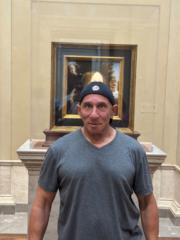
Today‘s church wear is Hugo Boss The Collection Vigorous Cologne, a memorably smooth citrus that dries down in woods and earthiness. The Collection is not widely known in the United States because it was rarely sold here at retail and only in the last year has appeared at the discounters. Most of the major designers have launched an elevated or “private” or “exclusive” niche-adjacent line over the last quarter century, and this is Hugo Boss‘. I own most of this line, and every one is a hit. No stinkers.

🔥
10h •
How the Perfume Industry Really Works: From Clones, Designer Houses, to Niche and Artisan Houses — Part 3
And that brings me directly into Part 3, because this is where I want to go much deeper into who is actually behind these fragrances. Not just the brand name on the bottle, but the perfumers, the major fragrance manufacturers, the oil houses, the raw-material suppliers, and where these companies are actually sourcing what eventually ends up in the bottle. This is where the perfume industry starts getting a lot more interesting, because the brand selling you the fragrance is not always the company actually creating everything behind it. The Name on the Bottle Is Only Part of the Story One of the biggest misconceptions in fragrance is that every perfume house has a perfumer sitting somewhere in the back room creating every fragrance from scratch. That simply isn't how a large part of this industry operates. There are several different business models. Some houses employ in-house perfumers. Some hire independent perfumers. Some commission fragrances from major fragrance manufacturers. Some work with outside laboratories. Some purchase fragrance concentrates or bases and modify them. Some independent perfumers actually formulate, compound, test, and produce much of their own work. And there are companies using combinations of all of these methods. This is why I think we need to stop looking at perfume as simply brand versus brand. Behind those brands is another entire industry. The Major Fragrance Manufacturers At the top of the fragrance supply chain are companies most fragrance consumers will never see advertised on a bottle. · Givaudan · dsm-firmenich · IFF · Symrise · MANE · Robertet · Takasago These are some of the giants of the fragrance and flavor industry. They employ perfumers, chemists, evaluators, researchers, and technical specialists. They develop aroma chemicals, natural extracts, proprietary ingredients, fragrance bases, and complete fragrance concentrates. These companies can work on everything from a $20 body product to a prestige designer fragrance selling for hundreds of dollars.

1d •
Ross and Burlington Factory Haul
$17 for a new 100 ml/ 3.34 fl oz of Lataffa Ramz from Ross. $15 ea for a 100 ml/ 3.38 fl oz of Bellavita G.O.A.T. And CEO MAN from Burlington Coat Factory. If any of these interest you and not currently in your collection, go forth and purchase for it is good.

1-30 of 45,024
skool.com/bos
#1 Fragrance Community 🏆
Our mission is to help YOU leverage the power of scent to become the man you know yourself to be.
Leaderboard (30-day)
1
🔥
+2995
2

🔥
+1587
3
🔥
+1380
4

+1210
5

🔥
+1166
Powered by