
Write something

3d •
Thinkers Thursday: ""Why Effective Leaders Get Branded as Problems"" - Harvard Business Review Article
Hey Leaders, One of the most thought-provoking articles I've read recently from Harvard Business Review challenges a common leadership assumption. When a high-performing leader creates friction, organizations often assume the leader is the problem. But what if that friction is actually exposing problems within the organization? In Why Effective Leaders Get Branded as Problems, leadership coach Luis Velasquez explains that organizations often misdiagnose leadership challenges by focusing only on a leader's behavior while overlooking the environment surrounding them. Sometimes what appears to be a leadership weakness is actually an outdated culture, conflicting expectations, or a system that resists change. The article highlights four possible sources of leadership friction: ✅ A true skill gap that needs development. ✅ An outdated reputation that no longer reflects the leader's current performance. ✅ A leadership strength that has become overused in a new role or situation. ✅ Organizational systems or culture that are creating resistance—not the leader. As leaders, one of our greatest responsibilities is to diagnose before we prescribe. Before asking, "How do we fix this leader?" we should first ask: - Are we evaluating current performance or past perceptions? - Are we treating symptoms instead of root causes? - Could our organizational culture be contributing to the very problem we're trying to solve? The best leaders don't rush to judgment—they seek understanding. Leadership Reflection: Think about someone on your team who seems to create "friction." Could they actually be highlighting an opportunity for your organization to grow? Read the full Harvard Business Review article: "Why Effective Leaders Get Branded as Problems" By Luis Velasquez. At Axis Leadership, we believe that great leadership isn't just about developing better leaders—it's about building better organizations. Better People. Better World. – Dr. Joe


6d •
Discipline is quiet
The habits that change our lives rarely make noise. They don’t announce themselves, and they don’t demand applause. Discipline is built in the small, consistent choices that no one sees—waking up a little earlier, practicing a skill again, choosing patience over reaction. Over time, those quiet decisions compound into visible results. It’s easy to celebrate outcomes, but the real work happens long before anyone notices.
9d •
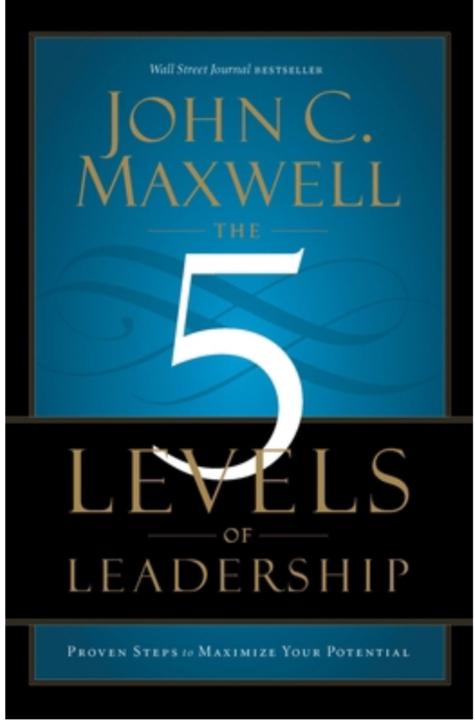
Book Feature Friday: Series Recap — The 5 Levels of Leadership by John C. Maxwell
Hey Leaders, We’ve reached the end of our journey through John C. Maxwell’s The 5 Levels of Leadership. Over the past several weeks, we’ve explored one of the most influential leadership frameworks ever written. While each level builds upon the one before it, the greatest takeaway is this: Leadership isn’t about a position—it’s about continually growing your influence and adding value to others. Let’s take one final look at what we’ve learned. Level 1: Position — People Follow Because They Have To Every leadership journey begins with a title or responsibility. But a position alone doesn’t inspire people to give their best. It simply gives you the opportunity to lead. Great leaders understand that leadership starts with a title, but it must be earned through trust, consistency, and service. Key Lesson: Don’t rely on your title—earn your influence. Level 2: Permission — People Follow Because They Want To Leadership becomes personal at this level. People choose to follow leaders who genuinely care about them. Strong relationships create trust, open communication, and a healthy culture where people feel valued. When people know you care, they become more willing to follow your vision. Key Lesson: People don’t care how much you know until they know how much you care. Level 3: Production — People Follow Because of Results Leadership is demonstrated through action. Leaders who consistently produce results build confidence, create momentum, and establish credibility. Teams are inspired when they see progress and know their leader can move the organization forward. Results matter—but they should never come at the expense of people. Key Lesson: Great leaders balance relationships with results. Level 4: People Development — People Follow Because of What You’ve Done for Them This is where leadership begins to multiply. The greatest leaders aren’t focused on creating followers—they’re focused on developing future leaders. By coaching, mentoring, and empowering others, leaders expand their influence far beyond what they could accomplish alone.
11d •
Wisdom Wednesday: "Leaders Reproduce Who They Are" - Maxwell Leadership Podcast
Hey Leaders, Are you leading from your strengths, or simply telling others what they should do? In this week’s episode, John Maxwell unpacks the challenging truth that leaders don’t just teach what they know—they reproduce who they are by their example. After his lesson, Mark Cole and Chris Goede provide practical strategies you can use to strengthen your self-leadership and intentionally shape the culture around you. Key takeaways: - Leading yourself effectively with authenticity and consistency can be your greatest daily challenge. - The responsibility of leadership means modeling growth and resilience so your team mirrors your example, not just your instructions. - What people observe in you determines what they become—leadership is visual, and proximity matters for genuine reproduction. Click here to listen. Our BONUS resource for this episode is the Leaders Reproduce Who They Are Worksheet, which includes fill-in-the-blank notes from John’s teaching. Be sure to download the bonus resource. - Dr. Joe

11d •
Belonging changes behavior
People show up differently when they feel like they’re supposed to be in the room. Belonging isn’t about fitting in; it’s about being recognized, valued, and understood. When someone senses that their presence matters, their confidence rises, their voice strengthens, and their potential expands. I’ve seen people transform simply because the environment finally matched their identity. It’s a reminder that culture shapes performance more than pressure ever will.
1-30 of 162

skool.com/axis-leadership
A place where leaders can grow, learn, and connect with others who share the same vision for success. Better People. Better World.
Leaderboard (30-day)
1

+11
2

+7
3
+5
4

+5
5

+1
Powered by