Activity
Mon
Wed
Fri
Sun
Nov
Dec
Jan
Feb
Mar
Apr
May
Jun
Jul
Aug
Sep
Oct
What is this?
Less
More
5 contributions to Joyful Mind Community

Feb 7 •
The Healer’s Shadow: Guidance, Governance, and the Ethics of Help
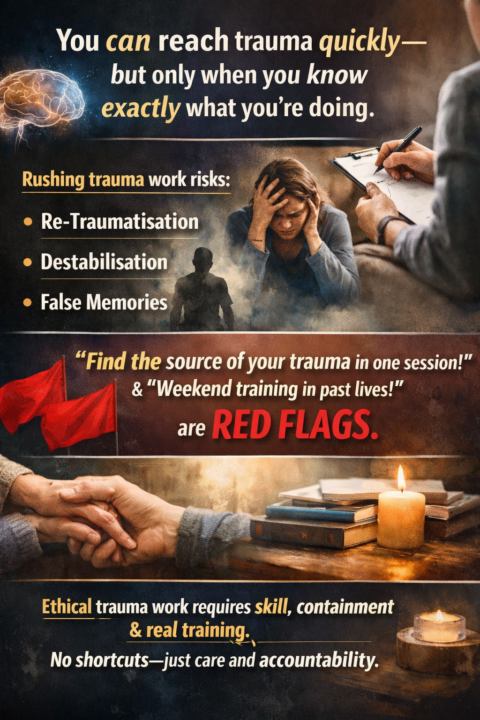
In our pursuit of mental wellbeing, it’s natural to seek out helpers, therapists, coaches, healers, who promise insight, relief, and meaning. Many practitioners do this work with integrity and care. But there is a dangerous line where guidance quietly turns into governance, and the helping relationship becomes something else entirely. Nicola Barragry a fantastic Hypnotherapist and friend recommended I listen to a podcast that told the story of a healer Ann Craig. Listening highlighted how important it is to understand what a helpful relationship is, appears and what is good and healthy in the therapy space. With the increased search for rapid healing and spiritual experiences more people are entering into unhealthy relationships and engaging in unhealthy practices on the therapy space. To understand how this can happen, it’s important to look at the cautionary case of Anne Craig, whose work in London’s elite social circles became the focus of the investigative podcast Dangerous Memories. Her story offers a powerful blueprint for what can go wrong when boundaries dissolve and influence goes unchecked. 1. The Lure of the “Pink Room” For Anne Craig’s clients, the experience didn’t begin with fear. It began with allure. She was often recommended by word of mouth among wealthy families as “that amazing healer lady.” The setting: Sessions took place in her home in Kensington/Chelsea, in a space famously described as “the pink room.” The hook: For young, intelligent women at a crossroads, the intimacy of a private home felt more enlightened and personal than a clinical consulting room. The experience: Early sessions were described as deeply validating. Clients felt profoundly seen. Craig was charismatic and warm, creating the sense that the “truth” behind their unhappiness was finally being uncovered. This is where ethical practice matters. In professional therapy, clear physical and relational boundaries are not cold, they are protective. They exist to ensure the work is about your growth, not the practitioner’s influence. When those boundaries blur, empowerment can quietly slide into enmeshment.

0 likes • Feb 8
Thanks for the recommendation. Listened over the weekend - really drew me in. It's atrociously sad what happened to the victims and their families. The psychologist had it spot on - even if the therapist had had good intentions, or at the very least not malicious ones, she had "convictions" and "directed" the therapy. As trained counsellors and hypnotherapists know, this is a No No. We are guided by our clients. We focus on their agenda, not ours. I was left wanting to know more about what made Ann Craig 'tick'. An interesting listen. 🙏
Jan 16 •
🔥✨ Cooling the Inner Fire: A Mind Magic Way to Soothe Inflammation from the Inside Out
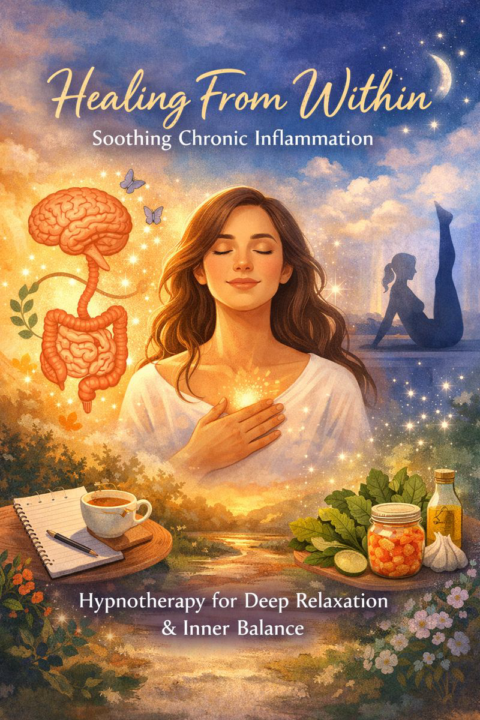
Inflammation is often spoken about as if it is an, something to eliminate, suppress, or defeat. We picture swelling around an injury, redness on the skin, a sudden flare that demands immediate action. Yet for many people, inflammation is not loud or obvious. It is quieter, more constant: a low-grade inner heat that shows up as brain fog, stubborn fatigue, aching joints, digestive discomfort, or a mood that feels stretched thin. When it lingers, it can feel like the body has turned against itself. But a different perspective changes everything. Rather than a sign of failure, chronic inflammation can be understood as a protective signal—an intelligent response that has become stuck. At its core, inflammation is the body’s attempt to keep us safe. It is part of the immune system’s natural design: a rapid-response team that mobilises when the body perceives threat. The problem is not that the body protects us; the problem is when the body cannot stand down. When the stress response stays switched on, day after day, month after month, the immune system may remain in a defensive posture, producing inflammatory signals long after the original danger has passed. In this sense, chronic inflammation is less like an invader and more like a fire alarm that keeps ringing. The aim is not to smash the alarm, but to understand why it will not stop. This is where the mind and nervous system become central. The nervous system acts like a thermostat for the body’s inflammatory state. When we are in “fight or flight,” the sympathetic branch of the nervous system is dominant. In that state, the body prioritises survival: alertness, speed, vigilance. It diverts energy away from repair and digestion, and it increases the production of chemical messengers that help the immune system stay ready for action. This is useful in short bursts. It becomes costly when it becomes chronic. A body that lives in high alert is not a body that can fully heal. If safety is the missing ingredient, then safety becomes medicine. This does not mean life must be perfect before the body calms down; it means the body needs repeated experiences—small, consistent ones—that signal “the threat is over.” One gentle way to do this is to train attention toward what can be called “glimmers”: tiny moments of ease, beauty, warmth, or connection that tell the nervous system it can soften. A warm cup of tea, sunlight on the floor, the sensation of exhaling slowly, a kind message from a friend—these are not trivial. They are biological cues. They help the body step out of defence and into regulation. Another practical tool is the simple act of writing.
0 likes • Jan 16
Absolutely agree with this Amanda! Inflammation is insidious, doing it's worse under the radar. I think it's great you're highlighting this. Also loving your point about "crowding out" - it's a far mor attractive idea, I think, to consider what we can add in to our lives, eg what/how we eat, as opposed to feeling deprived.
Jan 12 •
The Cinema Technique: Rewriting Inner Experience for Lasting Change
Tonight’s masterclass explores one of the most powerful and elegant tools in clinical hypnotherapy and transformational work: the Cinema Technique. This technique works directly with how the mind stores, replays, and emotionally charges memories and imagined experiences. By changing how something is experienced internally, profound emotional and behavioural shifts can occur—often quickly and gently. What Is the Cinema Technique? The Cinema Technique is a guided therapeutic process that helps a client observe and transform an internal experience as if it were a film rather than something they are emotionally immersed in. Instead of being inside a memory or feared scenario, the client is invited to: - Step back - Watch the experience on an imagined screen - Alter key sensory elements such as distance, colour, sound, speed, and perspective. Because the unconscious mind responds strongly to imagery and sensory input, these changes can significantly reduce emotional intensity and re-encode the experience in a calmer, safer way. In essence, the client becomes the director rather than the actor in their internal movie. Other Names and Variations of the Cinema Technique Depending on the therapeutic model or training background, you may hear this approach referred to as: - The Movie Technique - The Film Technique - The Rewind Technique - Visual Dissociation - Double Dissociation - Observer Position Technique - Screen Technique - Perceptual Reframing While the language may vary, the underlying principle remains the same: creating psychological distance in order to neutralise emotional charge and restore choice. How the Cinema Technique Works The mind does not distinguish strongly between real and vividly imagined experiences. When someone repeatedly replays a distressing memory or feared future event, the nervous system reacts as though it is happening again. The Cinema Technique interrupts this loop by: - Removing the client from the emotional centre of the experience - Engaging the mind’s natural capacity for imagery and imagination - Allowing the unconscious to update its response without force or re-traumatisation
0 likes • Jan 12
Thank you for another quality training Amanda!
Dec '25 •
From Fixing to Feeling, The Gentle Art of Heart-Centered Listening 💛
There’s a quiet revolution happening in the way we connect with one another. It’s a shift away from transactional conversations, where we listen to respond, fix, or advise, and toward something far more nourishing, relational listening. The kind that doesn’t rush, doesn’t diagnose, and doesn’t try to tidy up another person’s experience. At the heart of this shift is a simple but profound realisation. We’ve become a little top-heavy in our consciousness. When the Head Leads and the Heart Waits. Modern life trains us to live from the neck up. To analyse, categorise, strategise and solve. And while the brain is brilliant at keeping us safe and organised, it isn’t always the best guide for deep human connection. The analytical mind tends to look for problems and solutions, even when what’s being offered is simply a human experience asking to be witnessed. The heart, on the other hand, doesn’t divide or dissect. It recognises shared humanity. It feels rather than fixes. When we shift our inner centre of gravity from head to heart, listening transforms from something we do into something we are. The Heart-Centered Shift, Listening as a Whole-Body Experience Heart-centered listening isn’t a technique, it’s a state of presence. It recognises that listening is not just cognitive, but physical, emotional, and even energetic. Here’s what that shift looks like in practice. Dethroning the Head Without Firing It. The brain isn’t the enemy, it’s just been over-promoted. Its job is survival, pattern-making, and strategy. Wonderful skills… but often too rigid for moments that call for softness and connection. Heart-centered listening begins when we notice the urge to analyse or advise, and gently choose not to follow it. No inner battle required. Just awareness. Remembering Interconnectedness The mind sees separation, your problem, my solution. The heart senses sameness, your feelings, which I recognise in myself. From the heart, compassion arises naturally not as something we manufacture, but as something we remember.
0 likes • Dec '25
Love your invitation. And this exercise. Such a useful reminder. 🙏
Dec '25 •
Welcome
Hello everyone and welcome to my Joyful mind community. I've several groups running Eazzy Slim, Six Steps to smoke free, Trance Tribe, Guided Minds, Power of 8, Oasis and decided to invite you all to one space to share your wisdom knowledge and of course collective group updates on weekly masterclasses, courses and gatherings. Community and connection is important for me and I'm delighted you are all here. I'll be adding goodies to the classroom, blogs and posts to the sections and dates and links in the calendar. Please introduce yourself and tell us about you and what brings you here.
0 likes • Dec '25
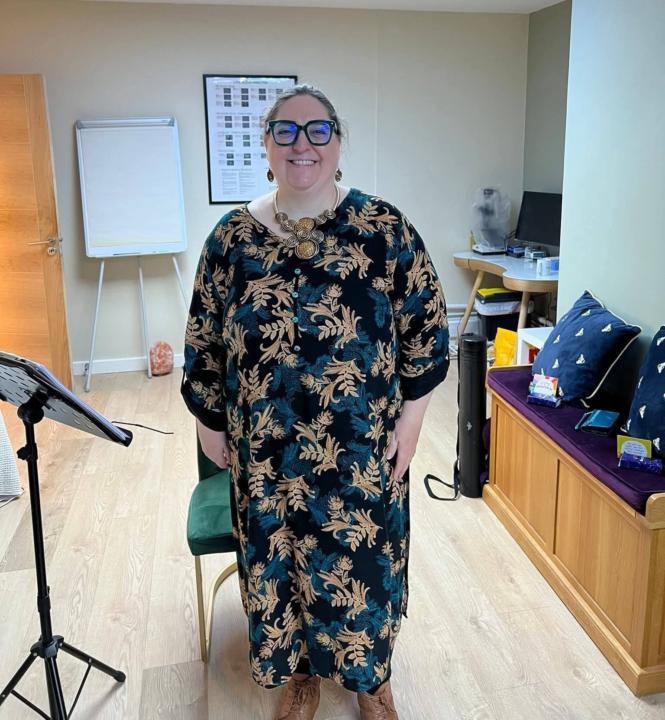
Hi, I’m an NCCH graduate and pleased to have Amanda Joy as a mentor still. I’ve benefited from mindfulness for about 13 years and it has become a big part of how I work with clients in hypnotherapy with EFT, counselling and supervision. (I’m also Reiki II attuned and experimenting at the moment with offering this remotely - inspired by a great recent Power of 8 group experience). Glad to be here 😊
1-5 of 5
@sue-mort-7408
Hi, I’m Sue, a graduate of the NCCH. I offer ‘Hypnotherapy with Heart’, Counselling and Supervision (online).
Active 119d ago
Joined Dec 27, 2025
Bridgend, S Wales, UK