


10d •
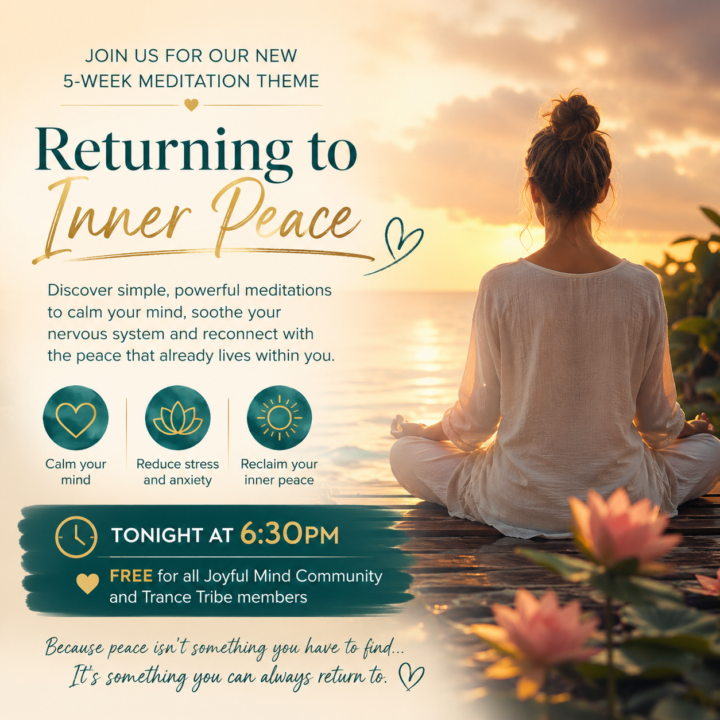
✨ Returning to Inner Peace ✨
I am back... We begin our brand-new meditation theme tonight at 7:30pm, and I'd absolutely love you to join us. Over the next five weeks, we'll be exploring what it truly means to return to a place of calm—not because life suddenly becomes perfect, but because we learn how to reconnect with the peace that already exists within us. Each session is designed to gently regulate your nervous system, quieten the busy mind, and give you practical meditation techniques that you can use in everyday life, whether you're feeling overwhelmed, anxious, stressed, or simply in need of a moment to breathe. Tonight we'll be introducing our beautiful Returning to Inner Peace meditation, a simple Light & Breath practice that you can use anywhere, anytime, to help you feel calmer, more grounded and more connected to yourself. 🌿 6:30pm tonight 💚 Free for all Joyful Mind Community and Trance Tribe members Join us tonight at 6-30 https://us02web.zoom.us/j/9692249643?pwd=NGl2VWFZWUtLSzNyS1VNN3l0a21hQT09
1
0
May 28 •
✨ A Beautiful Evening of Reflection, Breath & Big Questions ✨
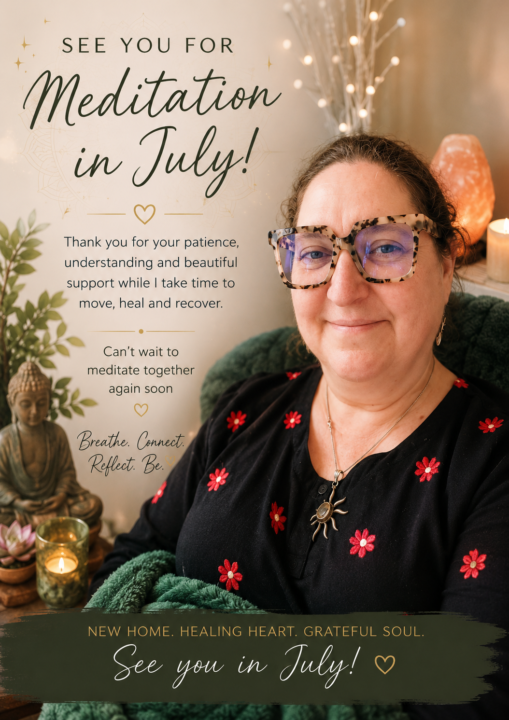
Tonight’s meditation class took us gently into some of the deeper teachings inspired by Thich Nhat Hanh’s The Art of Living. Together we explored interbeing, emptiness, perception, consciousness, and the nature of reality — asking curious questions such as: 🌿 What does it really mean to be connected? 🌿 What is “me”… and where does “me” exist? 🌿 Are we separate selves, or part of a much larger web of life? 🌿 Is reality ultimate truth… or shaped by perception, conditioning, and the stories we tell? Through reflection, discussion, and our Breath of Interbeing meditation, we explored the beautiful possibility that we are full of “non-self” elements — connected through breath, body, Earth, and perhaps a little cosmic magic too ✨ These are big concepts. Not necessarily things to “understand” in one evening… but fascinating invitations to ponder, explore, and carry into our everyday lives. A little update from me too… There won’t be meditation classes during June. I’m in the middle of moving house and also preparing for an operation, so I’m taking my own advice and consciously slowing down a little to support healing, recovery, and a gentler pace. Sometimes self-care looks like breathing deeply, resting well, and allowing ourselves the grace to do less for a while. Thank you, as always, for your beautiful presence, curiosity, openness, and shared breathing selves 💛 Meditation will return… but for now, June will be a month of recovery, boxes, healing, and practising what I preach. Be gentle with yourselves.
1
0
May 28 •
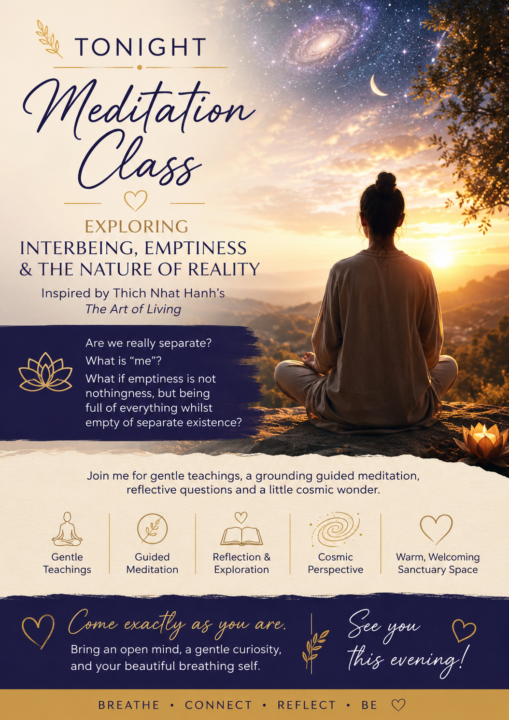
✨ Tonight’s Meditation Class – Exploring Interbeing, Emptiness & the Nature of Reality ✨
Join me this evening for a beautiful, thought-provoking, and grounding meditation class as we gently explore some of the deeper teachings inspired by Thich Nhat Hanh’s The Art of Living. Together we’ll reflect on questions such as: 🌿 What does it mean to be truly connected? 🌿 Are we really separate selves… or part of something much bigger? 🌿 What is “me”… and where does “me” actually exist? 🌿 How much of what we call reality is perception, projection, or conditioned experience? We’ll explore the Buddhist insight of interbeing — the understanding that we are woven together with each other, the Earth, and the wider cosmos — and gently dip our toes into the fascinating concept of emptiness: not nothingness, but being full of everything whilst empty of separate existence. Expect: ✨ Gentle teachings ✨ Grounding reflection ✨ A beautiful guided meditation on breath, connection, and cosmic conditions ✨ Space for curiosity — no pressure to “get it” ✨ A warm, welcoming sanctuary space to explore together These are big ideas… but wonderfully rich ones to ponder. Come exactly as you are. Bring an open mind, a gentle curiosity, and your beautiful breathing self. See you this evening 💛 https://us02web.zoom.us/j/9692249643?pwd=NGl2VWFZWUtLSzNyS1VNN3l0a21hQT09
1
0
May 19 •
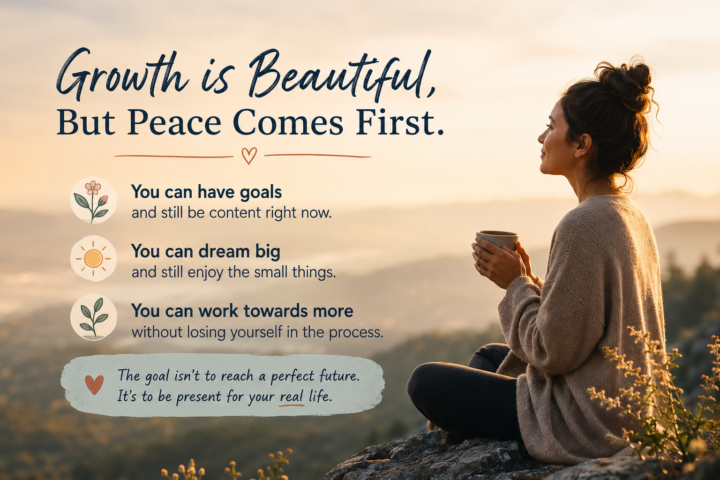
Beyond the Goal-Setting Trap: When “Aiming High” Starts Creating Suffering
We live in a culture that is constantly encouraging us to strive for more. More success. More healing. More money. More productivity. More transformation. We’re taught to “aim high,” chase our dreams, visualise the future we want, and keep pushing towards the next milestone. Even within therapy and personal development spaces, there’s often a huge emphasis on growth, future goals, and becoming a “better” version of ourselves. And to be fair, goals can be incredibly useful. They can give people direction, purpose, structure, and hope. Sometimes having something to move towards genuinely helps people reconnect with life again. But there’s another side to this conversation that I think we don’t talk about enough. Sometimes the constant pressure to achieve, improve, heal, optimise, or “become” something else actually creates suffering. Sometimes what looks like ambition on the surface is actually exhaustion, fear, insecurity, or emotional avoidance wearing a socially acceptable outfit. And this is where I think both therapy and philosophy begin to overlap in a really interesting way. The Problem With Chasing Happiness One of the things I notice often in the therapy room is how many people have unknowingly attached their peace to a future event. People say things like: “I’ll relax when…” “I’ll feel good enough once…” “I’ll finally be happy after…” After the promotion. After the weight loss. After the relationship. After the qualification. After the house move. After the nervous system finally calms down. And of course, having hopes and dreams is not the problem. The difficulty starts when our entire sense of wellbeing becomes dependent on reaching an outcome we can’t fully control. Because the mind then quietly starts rejecting the present moment. Life becomes something we’re trying to escape from while we chase a future version of ourselves that we imagine will finally feel peaceful. But peace built entirely on conditions is often very fragile. Buddhist Philosophy Explains This Beautifully
1-30 of 66
powered by
skool.com/joyful-mind-community-4081
The Spiritual, Practical community for Manifestation and Meditation Mastery. Build confidence & purpose. Teacher Training available. Join FREE!
Suggested communities
Powered by