Activity
Mon
Wed
Fri
Sun
Jun
Jul
Aug
Sep
Oct
Nov
Dec
Jan
Feb
Mar
Apr
May
What is this?
Less
More
Memberships
Awesome! Hybrid Calisthenics
882 members • Free
The Somatic Academy by Soma+IQ
14.6k members • Free
Mobility & Injury Prevention
208.8k members • Free
23 contributions to Awesome! Hybrid Calisthenics

8h •
New Journey, Stronger Me 💪🔥
Joined this community and I’m genuinely excited to be here. I love the focus here on strength, body control, and mastering real skills like handstands and muscle ups. The energy and mindset in this space already feel motivating and real. My goal is simple stay consistent, build strength, improve control, and grow with like-minded people on the same path. Looking forward to learning, improving, and sharing progress with you all

0 likes • 3h
Welcome to the community Tyson! 💪🏼
3h •
Day 3
Day 3 workout was a couple days ago but here it is. HS hold (chest to wall) 3 x 20 seconds Shoulder mobility with band (not on video) Scapula pull-ups Hi pulls Band muscles up 4 x 2 reps Pendlay rows Box jumps Leg extension (not on video) Leg curls (not on video) Pike push ups I'll share my week of training I'll follow and track for the next several weeks tomorrow to get your input on if it looks good for someone trying to achieve muscle up and handstand AND look good 😅
0
0

1d •
🤸 The Most Important Handstand Progression
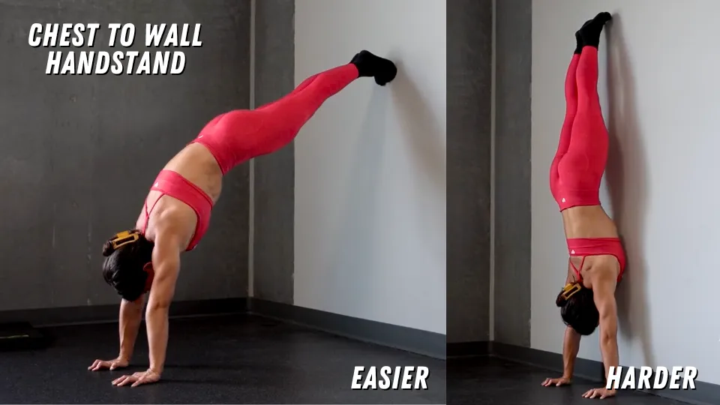
With a bunch of new people joining, I want to go over the most important handstand progression again. If you want to get a handstand, the biggest mistake is usually trying to force the full handstand too early. The better approach is this: Spend 2 to 3 weeks doing a little bit every day on the right progression. That will usually help way more than random max effort handstand attempts. 🧠 Why handstands feel so hard A handstand is not just one skill. It is a bunch of small skills happening at the same time: • being upside down • balancing on your hands • spatial awareness • pushing through the shoulders • activating your core • keeping your legs active • learning how to fall safely That is why handstands feel weird at first. You are not weak. You are just learning a lot of new things at once. 🎯 The most important progression For most people, the most important progression is: • Chest to wall handstand Why? Because it teaches: • the right shape • the right line • shoulder position • body tension • what a real handstand should feel like And honestly, it is much better to spend a few weeks getting comfortable here than rushing ahead. 📍 If you are not ready for chest to wall yet Then the best progression before that is: • Pike handstand hold This is amazing because it lets you practice: • being on your hands • shoulder alignment • core tension • getting upside down in a safer way And important reminder: Your legs do not have to be straight yet. If flexibility is the issue, bend the legs. You can even put your knees on something. The goal is not to force perfect flexibility. The goal is to get the alignment and practice being on your hands. 🔄 What comes next after chest to wall? The next most important thing is: • Learning how to fall out safely A lot of people do not struggle with handstands because of strength. They struggle because of fear. That is normal. If your brain does not trust the fall, it will not let you fully commit to the handstand.
0 likes • 20h
My wrists are very sore after 1 minute in chest to wall usually 3 sets of 20 seconds holds right now. Should I downgrade to Pike hold?
1d •
Muscle up practice
THIS is why I need to keep practicing explosive pulls. I just can't get explosive. (I swear the video is not in slow motion) 😭😅 Then did 4 sets of 2 muscles up after "explosive" pulling. I used the second lightest band. An on looker said I was using too much back followed by traps and not enough forearm. All I know is that my elbows are talking to me today.

1 like • 22h
@Val Mercier 🤞🏼

2d •
L-sit to shoulder stand
Thanks @Zara Doering for sharing your Video! I inspected how you did it and then I attempted it again Not a "perfect" attempt however this is the first time EVER that I've been able to transition 😁 I didn't have enough strength to do it all in one smooth move but this is huge today🎉 Plus I had already done lots today (hanging , EMOM chin ups, lat pull down, rows, face pulls!) so my strength was already used up quite a bit Now I'm done for today!😊

1 like • 1d
Nice work! I wanna try that.
1-10 of 23
@nicki-thompson-9227
Fitness trainer turned health coach who incorporates mobility into my training but wanting to go deeper with it, so checking out this course out.
Active 2h ago
Joined May 3, 2026
Powered by