
Write something
Pinned

2d •
5 Style Deals Worth Your Attention This Week!
Gentlemen, it's Monday and that means fresh deals for your wardrobe! 🔥 I've scoured the best DTC brands this week and found some serious markdowns on pieces that'll level up your style without emptying your wallet. 1. Essex Jackets – Peter Manning NYC - Product name: Essex Jackets (Master Collection) - Store: Peter Manning NYC - Original price: $450\.00 - Sale price: $295\.00 - Discount: 34% off (markdown, no code needed) - Why it's a good deal: Peter Manning is the go-to for guys under 5'10" who want proper fit without a tailor. The Essex jacket is a sharp, structured blazer at nearly $155 off — rare to see their core suiting drop this deep. - Link: https://petermanningnyc.com/products/master-essex-jackets 2. Frontier Boots – Thursday Boots - Product name: Frontier Boots in Arizona Adobe (Seconds) - Store: Thursday Boots - Original price: $220\.00 - Sale price: $129\.00 - Discount: 41% off (markdown, no code needed) - Why it's a good deal: Thursday's Frontier is their rugged lace-to-toe workhorse boot. At $129 these are nearly half off — an absolute steal for Goodyear-welted boots that'll last years. - Link: https://thursdayboots.com/products/_thrscnd_frontier-arizona-adobe 3. AO Polo – Cuts Clothing - Product name: AO Polo in Pacific Blue Signature-Fit PYCA Pro® - Store: Cuts Clothing - Original price: $72\.00 - Sale price: $40\.00 - Discount: 44% off (markdown, no code needed) - Why it's a good deal: Cuts' PYCA Pro fabric is their premium performance material — wrinkle-resistant, breathable, and sharp enough for date night or the office. Forty bucks for a polo that normally runs $72 is a no-brainer. - Link: https://cutsclothing.com/products/ao-polo-pacific-blue 4. Shawl Collar Wrap Sweater – Tecovas - Product name: Men's Shawl Collar Wrap Sweater in Black Wool
Pinned

25d •
Why Join RMRS Premium?
I’ve stacked so much value into RMRS Premium that seriously it’s a no-brainer YES decision to join. https://www.skool.com/rmrs/plans The details? - Monthly Q&A "Inner Circle Mastermind" LIVE Calls with Antonio & Expert Guests - Access To 6 Micro-Courses Designed To Level Up Your Image - Access To The Monthly Challenge & Prize Eligible - A Man's Guide To Style Course & Dress Like A Man eBook - As a Patron the "activity" requirement doesn't apply to you. Thank you for your support! - The Style System ($1,000 Value) a proven step-by-step program to transform your image - Premium "White Glove" DM support to help you buy the RIGHT clothing at the BEST price - $1,000+ in Discount Codes at your favorite retailers (Save $$$ building your wardrobe!) - Invite To LIVE Event (Dallas, Oct 2026) Click here to join us - https://www.skool.com/rmrs/plans
52
0

🔥
just now •
Vanity Sizing
I just bought a linen semi structured dress shirt at Nordstrom. Peter Millar. The thing is… it’s a medium size. What? I am happy with all of my weight loss. But as a 42 chest, 35.3 sleeve, 6’ 159.7 pound guy… I have no delusions about being medium. And this shirt fits comfortably- there’s nothing tight at all. The large was a swimming pool of fabric. Vanity sizing gone amuck really helps no one. It makes me distrust any Peter Millar sizes.
0
0

9h •
Evening hustle: casual with a dose of flair (and fun!)
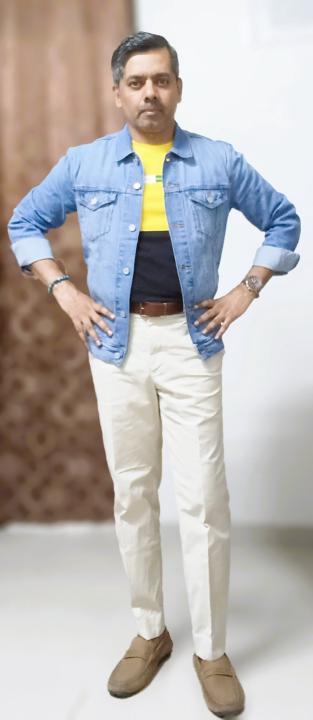
THE CONTEXT: Today we decided to go on a temple visit. I was thinking of pairing my multicolored textured Tee for some time until I decided to test a look based on the well-known versatility of a denim jacket. THE TOP: A canary yellow-black textured Tee with a white horizontal stripe along the torso. I loved this so much for the vibrant color. I got this about five years ago but only wore twice so far 🙂. I was just not brave enough to carry the sporty look for my age (I am 47, so I thought such colors are reserved for school boys). THE OUTER LAYER: Light-wash denim jacket (Levi's). This is advertised as a trucker jacket, but you will see from the image that it does not have a cropped look. May be my height (5 ft 9 in) is a little short for their factory cut and sewn fabrics. I wear size M (almost) always. THE BOTTOM: Beige MTM chinos with high waist. Finally, I am slowly replacing my wardrobe bottom pieces with MTM high waist ones. I LOVE the old-money style. THE WATCH: Brown belt, gold-on-silver dial frame. This was gifted by my ex-boss, has great sentimental value, and is a workhorse in my wardrobe. THE BELT: Tan (reversible with black). I have punched extra holes to accommodate my reducing waistline (I have been working out religiously for a while 😀). I might punch another hole soon (until the trouser starts rumpling at the waist when I will have to get the trousers also altered - gosh, this is a pain). Btw, hole-free belts like Anson are not reasonably priced in India. So, I will stick with this for a while. THE FOOTWEAR: Tan penny loafers in "nubuck" leather (the layer of tissue beneath the rugged, full-grain layer and above the delicate suede layer). I maintain this by spraying and brushing regularly (using a silicone spray); incidentally, about a month back, a sales guy at a footwear store complemented me for maintaining the shoes (which, surprisingly to me, he thought was rare). THE BRACELET: Brand new aquamarine, which nicely matches the washed look of my jacket.

🔥
4h •
OOTD - Wednesday 1 July
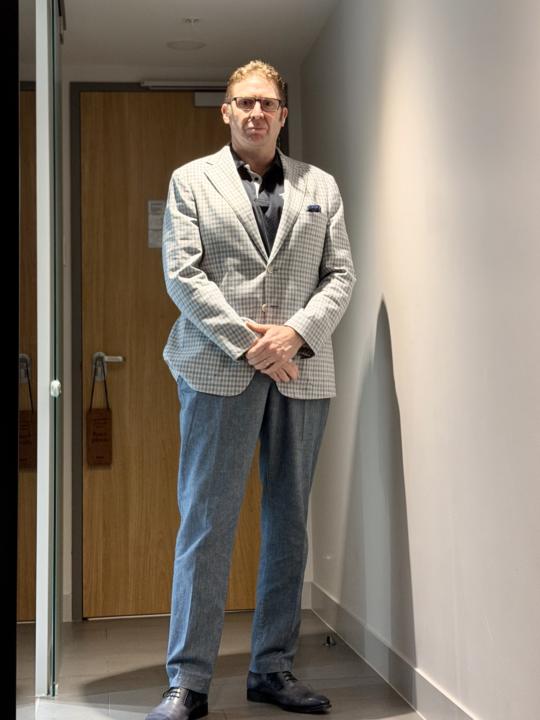
The year seems to be flying by. Being in Cairns isn’t all that bad, the weather is warmer and the guys in the office are loads of fun. Today’s outfit consists of: That dang Work Polyester Polo, M.J. Bale Santoro Jacket, a Neutral and Blue cotton, linen, wool, silk, in a lightweight gingham check, M.J. Bale Sinatra Trouser made from 100% Egyptian cotton in Empire Denim, Anson leather Navy Strap with a traditional buckle in Silver, OTAA Happy Penguin Socks, CNES MTO Oxford with Goodyear welted construction crafted from Italian crust leather, SOTD - Mancera Red Tobacco WOTD - Islander Watches Greenport, Slate Grey dial with sky blue accents.
1-30 of 30,530

skool.com/rmrs
Leverage style to earn more money and build unshakeable confidence. This is a community for professional men serious about self-improvement.
Leaderboard (30-day)
1
🔥
+4396
2
🔥
+2488
3
🔥
+2391
4

🔥
+2375
5

+2243
Powered by