
Pinned

Jan 18 •
🗽 START HERE: How to join our Group Calls!
We built this community for people who want to connect, debate, and strategize, not just scroll. The real action happens in our group calls, where we argue ideas in good faith and tackle the week's biggest global events. Here is how you can participate: 🔥 1. Open Calls These are our public town halls. Open to everyone. Whether you want to take the stage to challenge a point or just listen in, this is the "public square." 💎2. Premium Calls For members who want to go deeper. These calls are exclusive to our supporters and offer a space for more focused discussion and priority access. 👑 3. VIP Calls Reserved for our top-tier members. These are intimate, mastermind-style sessions where you get direct Q&A access with special guests and deep dives into high-level strategy. - 📅 Check the Schedule & Join Here: https://www.skool.com/libertypolitics/calendar - 💎👑 Become a Premium or VIP Member: https://www.skool.com/libertypolitics/plans Heads up: We believe these conversations are worth sharing! Our group calls are recorded and may be posted to our social media channels. By joining the stage, you’re helping us bring these important discussions to a larger audience. By participating in group calls and voice discussions, you consent to being recorded. You can read our community rules here: https://www.skool.com/libertypolitics/-/rules Moderation decisions and bans by mods are made with Armin's approval. 👋 New to the group? Say hello! We want to get to know you. Drop a comment below to introduce yourself. Tell us where you're from and what you like to do for fun (outside arguing politics!). Welcome to the community!

13h •
Fundamental Islam and the apathy of the Muslim population . . . 🌎
I'd like an Islamic view of the belief structure of the Ahmadi Religion of Peace and Light AROPL group arrested by UK Police in Cheshire, England. Why and how did they find a home in the UK after being kicked out of so many other country's ? ..... Just curious about how mainstream Mulsim's view this and other fundamental sects, and why they do not take a stand against them and other extremist groups ?

16h •
Daily Wire posting anti-Mormon piece. LDS members moving to the Democrats. If the Christian Right continues it's crusade against Latter-Day Saints it could cost the Right an election.
https://youtu.be/McIDhC2NQjk?si=7OYZ51c0bZr1ndPn

5h •
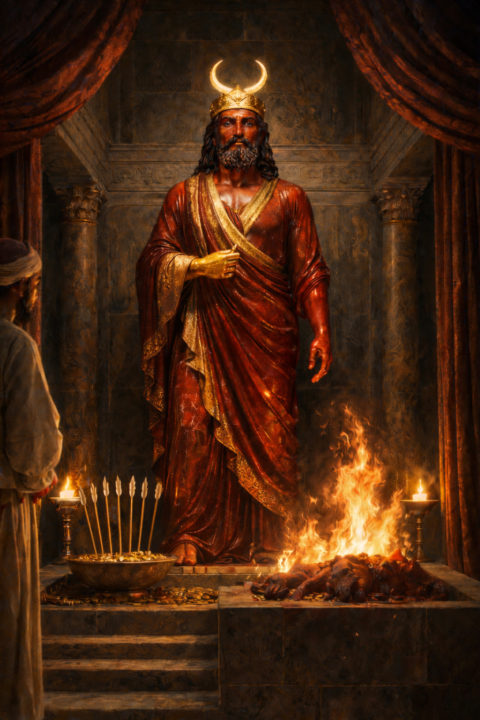
Islam is the Synagogue of Baal: A Historical, Ritual, Legal, and Eschatological Report
Islam as the Synagogue of Baal: A Historical, Ritual, Legal, and Eschatological Report Molech Baal Hubal Allah Compilation Molech = Baal/Baal Hammon = Hubal/Huba’allah = Allah I. Thesis and Purpose of the Report This report argues that Islam most closely fits the description “synagogue of Baal” because its foundations, sacred geography, ritual practice, legal tradition, martyrdom culture, and eschatological claims preserve the strongest visible continuity with the Baal-linked sacrificial system. The argument is not limited to a simple equation of names, but develops through multiple lines of evidence: Molech and Baal Hammon as sacrificial cults; Hubal as the central idol of the Ka‘ba; Allah as the principal deity of pre-Islamic Mecca; the continued centrality of the Ka‘ba, circumambulation, and the Black Stone; biblical parallels involving Baal worship, sacred stones, and crescent imagery; Qur’anic and hadith material concerning deception, slavery, sexual possession, child marriage, and patriarchal authority; and modern evidence of children being symbolically offered, indoctrinated, glorified, trained, propagandized, or sent toward death through martyrdom and jihad systems. The purpose of the report is to assemble these historical, textual, ritual, legal, social, and modern examples into one cumulative case: that the Baal-linked pattern of sacrifice, domination, sacred violence, and religiously framed death did not end in antiquity, but continued through Islamic forms. Method and Source Note This report organizes evidence into source categories rather than treating any single source type as sufficient by itself. The categories include Scripture and Religious Texts; Ancient / Greco-Roman Sources; Early Islamic / Arabic Sources; Academic Books and Encyclopedias; Ritual and Modern Documented Examples; and Modern Martyrdom / Child-Sacrifice Sources. The method is cumulative: each category is used to support the thesis from a different angle, including chronology, textual comparison, ritual continuity, legal continuity, and modern enacted practice.
3d •
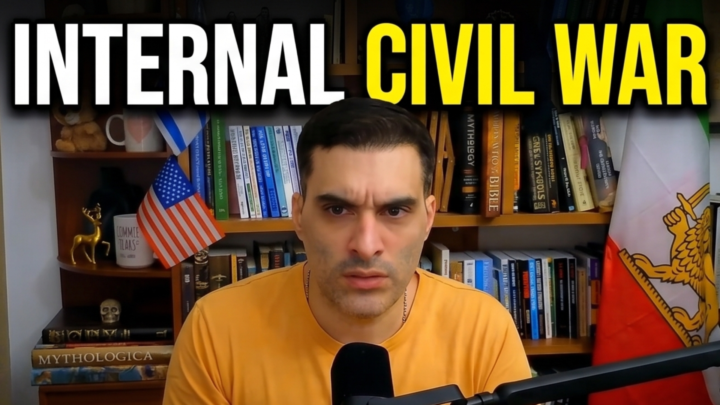
🚨 The Islamic Republic is Imploding From Within!
Is the IRGC prepared to go to war with its own supporters? The transition of power following Khamenei has triggered a desperate internal struggle where loyalty is a death sentence. The radical Paydari camp and the IRGC are now locked in a high-stakes game of chicken. Vahidi is using his control over the military and the state media to silence the very people who kept the regime alive in the streets. The "sacred unity" is dead. Come talk to me in our group calls! 📅 Check the Schedule & Join Here: https://www.skool.com/libertypolitics/calendar
1-30 of 2,879

skool.com/libertypolitics
Talk politics with others who care, in live calls and community posts. Share your views, ask questions, or just listen in.
Leaderboard (30-day)
1

+472
2
+275
3

+180
4
+167
5

+152
Powered by