
Pinned

Jan 18 •
🗽 START HERE: How to join our Group Calls!
We built this community for people who want to connect, debate, and strategize, not just scroll. The real action happens in our group calls, where we argue ideas in good faith and tackle the week's biggest global events. Here is how you can participate: 🔥 1. Open Calls These are our public town halls. Open to everyone. Whether you want to take the stage to challenge a point or just listen in, this is the "public square." 💎2. Premium Calls For members who want to go deeper. These calls are exclusive to our supporters and offer a space for more focused discussion and priority access. 👑 3. VIP Calls Reserved for our top-tier members. These are intimate, mastermind-style sessions where you get direct Q&A access with special guests and deep dives into high-level strategy. - 📅 Check the Schedule & Join Here: https://www.skool.com/libertypolitics/calendar - 💎👑 Become a Premium or VIP Member: https://www.skool.com/libertypolitics/plans Heads up: We believe these conversations are worth sharing! Our group calls are recorded and may be posted to our social media channels. By joining the stage, you’re helping us bring these important discussions to a larger audience. By participating in group calls and voice discussions, you consent to being recorded. You can read our community rules here: https://www.skool.com/libertypolitics/-/rules Moderation decisions and bans by mods are made with Armin's approval. 👋 New to the group? Say hello! We want to get to know you. Drop a comment below to introduce yourself. Tell us where you're from and what you like to do for fun (outside arguing politics!). Welcome to the community!
Pinned

Jun 16 •
Feed Traffic
We have received comments that the feed feels heavily congested, difficult to get through as well as intimidating due to such high volume of posts. We’d ask that individual members limit their daily posts to 2 or 3, so that we don’t monopolize on the space and keep it inviting for new contributors, as well as make it easier to catch up on the feed for those who log in. Thank you for your attention to this matter. -Mods


8h •
How Jews decide who to support in World Cup
https://youtube.com/shorts/6wt_zscZ2ik?si=gGRAPJO8aJVctU-G

46m •
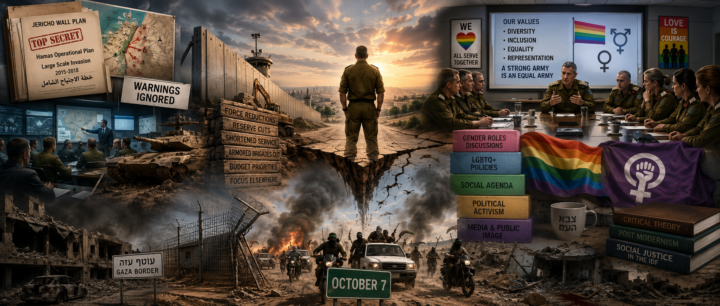
The Decade That Led to October 7
History is rarely changed by a single morning. Catastrophic events usually begin years earlier, through a long sequence of decisions, assumptions, institutional habits, and strategic misconceptions that remain largely invisible until they collapse all at once. According to the arguments presented by critics of Israel's security establishment, the disaster of October 7 was not simply an intelligence failure or an operational surprise. It was the culmination of a strategic doctrine that had been developing for nearly a decade. Public debate has focused primarily on the hours before Hamas launched its attack. Questions have centered on who failed to issue warnings, who delayed military responses, and who was responsible on that specific day. Yet these questions, important as they are, do not address the deeper issue. The more fundamental question is how Israel reached a point where such an attack became possible in the first place. The argument presented by many military critics is that the roots of the failure lie in the years following Operation Protective Edge in 2014. During that period, Hamas fundamentally changed its military doctrine. Instead of concentrating on isolated kidnappings or limited cross-border raids, it gradually developed plans for a large-scale assault designed to overwhelm the Gaza Division, penetrate multiple Israeli communities simultaneously, massacre civilians, seize hostages, and temporarily seize control of Israeli territory. According to publicly reported information released after the war began, Israeli intelligence possessed documents describing versions of these operational concepts years before October 7. The issue, therefore, is not merely whether intelligence existed, but why that intelligence failed to fundamentally reshape Israeli strategic thinking. Critics argue that by this stage Israel's senior military leadership had embraced a strategic concept built upon several interconnected assumptions. Hamas was believed to be deterred. It was believed to be primarily interested in economic stability rather than war. It was believed to lack the capability to conduct a large-scale invasion. Finally, it was believed that if such a capability ever emerged, Israeli intelligence would identify it well in advance.
0
0

1-30 of 5,388
skool.com/libertypolitics
Talk politics with others who care, in live calls and community posts. Share your views, ask questions, or just listen in.
Leaderboard (30-day)
1
+475
2

+322
3

+298
4
+222
5

+203
Powered by