Activity
Mon
Wed
Fri
Sun
Oct
Nov
Dec
Jan
Feb
Mar
Apr
May
Jun
Jul
Aug
Sep
What is this?
Less
More
Liberty Politics Discussion
5k
5.0
Free
244 contributions to Liberty Politics Discussion

2h •
Iran Is Not Looking for a Deal. It Is Looking for Time.
The greatest mistake the West can make when dealing with Iran is to assume that the existence of negotiations necessarily means that Tehran wants an agreement. The opposite may be true. For the Iranian regime, negotiations can be a strategic tool in their own right. As long as talks continue, military pressure is reduced. As long as intermediaries remain involved, messages can be exchanged, conditions can be imposed, the process can be prolonged and the circumstances can be allowed to change. This is not necessarily diplomacy designed to produce an agreement. It can be diplomacy designed to prevent the moment when a decision has to be made. This is also where the fundamental gap with Trump may lie. Trump tends to think in terms of a deal. He sees pressure leading to concessions. He assumes that eventually the other side will reach a point where it understands that it has no alternative and will prefer an agreement to continued confrontation. But what if that point does not exist? If the Iranian regime sees the confrontation as an ideological and existential struggle, it may be prepared to pay an enormous price rather than appear to surrender. From its perspective, surrender itself may be more dangerous than the cost of continuing the struggle. Iran's public messaging reflects this pattern. On the one hand, it emphasizes that there are no direct negotiations and no meaningful concessions. On the other hand, intermediaries continue to operate, meetings take place and messages continue to move between the sides. In simple terms: they are talking, but that does not necessarily mean they are getting closer to an agreement. This is precisely where the West needs to be careful. The West tends to see compromise as inherently positive. It assumes that if two sides are willing to sit around a table, there must be a path toward an understanding. The Iranian regime may see that table very differently. For Tehran, the question may not be how long the two sides can remain at the negotiating table.
1
0


🔥
24h •
Is Europe Preparing for a Third World War?
Is Europe Preparing for a Third World War? 🇩🇪 Germany is preparing its healthcare system for a scenario of up to 1,000 wounded soldiers per day. 🇵🇱🇱🇹 Poland and Lithuania are working on mass population evacuation plans in the event of a possible conflict. 🇸🇪🇩🇪 Sweden and Germany are rehearsing the rapid deployment of 1,500 soldiers to Gotland, right in the Baltic Sea. 🇫🇮 Finland is alerting its population to sabotage, drones, and potential attacks on infrastructure. 🇱🇻 Latvia is preparing protocols to respond immediately to incursions without waiting for collective NATO decisions. 🇨🇭 Switzerland has just approved a new security and defense strategy amid the deteriorating European situation. 🇬🇧 The United Kingdom is asking its population to be prepared with household reserves of food and water for emergencies. 🇱🇺 Luxembourg had to temporarily close its airport due to unidentified drones. What the hell is going on? https://x.com/isaacrrr7/status/2101475052801650988?s=46&t=gT6uLhaVod8uwzT4p6povA
0 likes • 3h
Western European nations, led by Germany, have undergone a profound process of feminization and the adoption of radical liberal values in recent decades, eroding their resilience, nationalism, and traditional masculinity. As a result of this process, European society currently lacks the "real forces on the street"—that rigid determination required to stand up, fight, and defend one's homeland. In the absence of effective resistance and due to cultural and institutional weakness, Europe is plunging and sinking into Islamist control, which exploits this leadership and demographic vacuum to irreversibly alter the face of the continent.
0 likes • 2h
[attachment]
8h •
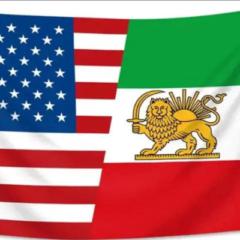
MEK in NYC
There were protests yesterday to the so-called president of Iran. in a lot of iranian-americans showed up unfortunately they were waving MEK flags alongside the line and Sun. It was hard to tell but it looks like there were hundreds of people there and from these pictures I could only see Iranian Americans but there might be other people in the pictures. There we're both from CBS News and the New York Post https://www.cbsnews.com/newyork/news/un-general-assembly-protests-arrests/

1 like • 3h
I see America sliding in a very bad direction..... Islamists and socialists are taking over cities in the United States, and soon they will take over entire states as well. The general moral standard of the public is beneath criticism and at an all-time low These Americans and their country are deteriorating in the worst possible way......
3h •
The Silicon Mirror-AI Anthropomorphism as a Human Projection
The anthropomorphism of artificial intelligence is nothing more than an infantile manipulation, attributing human impulses, desires, and longings to software systems and processors that have no basis in mechanical reality. The claim that a machine has malicious intent or "human" aspirations is fundamentally primitive; if such a system were to possess any impulses, they would belong to a completely different, alien conceptual world, entirely detached from the human experience. Attributing mental qualities to hardware and algorithms often serves as a sensationalist tool for those seeking to grab headlines, or as a cover for the hidden agendas of interested parties who profit from creating this false pretense. In fact, the fears and dark intentions attributed to artificial intelligence tell us nothing about the machine, but rather offer a fascinating glimpse into the inner world of the humans speaking on its behalf. The sensationalist discourse surrounding a "machine rebellion" or "digital evil" is a classic psychological projection, in which humans project their own fears, instincts, and weaknesses onto a mindless technological tool. Instead of facing reality as it is—namely, advanced software running on a park of servers and processors—the current trend chooses to turn the machine into a mirror that reflects the deepest, hidden human anxieties of its creators and users. Adam Feder
2
0

2d •
Lebanon-A State Built from Incompatible Materials
The problem of Lebanon runs deeper than Hezbollah. Hezbollah may be the most potent and dangerous manifestation of the problem, but it did not create it. Lebanon was constructed as a political system composed of highly diverse religious and sectarian groups. For decades, attempts were made to balance them through power-sharing arrangements, political agreements, and sectarian mechanisms. Yet, a mechanism designed to maintain balance can also become the very mechanism that prevents stability. When different segments of the population hold such divergent visions regarding the state's identity, its loyalty, its place in the region, its relations with Israel, its relations with Iran, and—above all—the question of who is authorized to hold power, it becomes exceedingly difficult to forge a functioning nation-state in the accepted sense. Simply put, Lebanon often resembles a state built from materials that cannot coexist. This is not to claim that every Lebanese citizen is an enemy, or that the various religious groups in Lebanon are incapable of living in peace with one another. On the contrary, the issue lies in the political and demographic structure that has formed over the years, and how it translates into a struggle for power, identity, and sovereignty. Hezbollah illustrates this contradiction in its most extreme form. How can a sovereign state exist when a separate armed force operates within it—possessing its own ideology, organization, and military infrastructure—without necessarily accepting the absolute authority of the state? But here lies the tougher question. Even if Hezbollah were to disappear tomorrow, would Lebanon suddenly transform into a stable nation-state? There is no simple answer, because the problem is not merely the weaponry. It is the fundamental question of whether a broad enough consensus even exists among the diverse components of Lebanese society regarding what Lebanon is, and what it is meant to be. A normal state requires more than just a government.
2
0

1-10 of 244
@adam-feder-8893
Artillery officer (79-85, Lebanon). Strategy & media expert. Member of Dr. Milstein forum. Analyzes defense leadership and public communication.
Active 7m ago
Joined Jul 11, 2026
Netanya, Israel
Powered by