Activity
Mon
Wed
Fri
Sun
Oct
Nov
Dec
Jan
Feb
Mar
Apr
May
Jun
Jul
Aug
Sep
What is this?
Less
More
1819 contributions to Liberty Politics Discussion

15h •
Macron after Hamas murdered french in Judea..
...said there's no Hamas activity in Judea (arabic indigenous word is "westbank") as Hamas is only in Gaza. There is also no water in the Seine (river crossing Paris), because water is already in the ocean.

0 likes • 14h
@Lucy Pseudonym that was exactly what he said there are no Hamas in the West Bank. I loaded an article about this yesterday.
18h •
Israeli Official: Another Round of Strikes on Iran ‘Only a Matter of Time’
September 24, 2026 An Israeli official told Saudi outlet Al-Hadath that another round of strikes on Iran appears inevitable, claiming Tehran is accelerating the transfer of its nuclear program to the Mount Pickaxe facility and seeking to advance the program ahead of a possible attack.
2
0
18h •
Iran’s economy is collapsing; why hasn’t it triggered another mass uprising?
September 23, 2026 The economic crisis that created political anger has drained the time and energy needed to organize. By Maddie Ali, The Algemeiner US President Donald Trump’s renewed economic campaign against Iran is tightening an already severe squeeze on ordinary households. Expanded secondary sanctions and a blockade of Iranian oil exports have sharply reduced Tehran’s access to foreign currency, making imports more expensive and pushing the rial to record lows. The pressure is visible in smaller purchases, postponed medical treatment, and long queues for fuel. Iran raised its domestic gasoline prices for consumers earlier this month, a politically sensitive step in a country where a sudden fuel-price increase helped ignite nationwide protests in 2019. Iranians are worried that higher transport costs could spread to bread, meat, and other essentials. “Basic groceries are now out of our reach. With fuel prices rising, the situation is only getting worse,” a Tehran resident told The Algemeiner. The Algemeiner reported earlier this month that ordinary Iranians are largely blaming their own government for the country’s current financial crisis, seeing the regime as unable to manage the economy and prioritizing anti-Western ideology and support for terrorist groups over the needs of its people. Yet Iran has not seen another nationwide uprising on the scale of the anti-regime protests that erupted in January.The absence of mass demonstrations may appear surprising as living standards fall. However, it should not be mistaken for public satisfaction with the current situation. WATCH: Inside Iran's worsening economic situation In January, authorities responded to protests with an internet blackout, mass arrests, and lethal force. Thousands of protesters were killed by the security forces of the Islamist regime, with estimates far exceeding what the regime has admitted and reportedly skyrocketing into the tens of thousands.
2
0

18h •
Senior Iranian Commander Killed in Gun Battle Near Pakistan Border
Senior IRGC commander Brig.-Gen. Hossein Zarifi was killed Wednesday during a raid on an armed cell in southeastern Iran, near the Pakistani border. Iranian authorities said the cell was preparing an attack when IRGC, intelligence and police forces moved in. Five gunmen were killed and others arrested in the ensuing firefight, according to Iranian reports. Tehran has labeled the men “terrorists” but has not identified their organization, and no group has claimed responsibility. The clash marks another deadly flare-up in restive Sistan and Baluchestan, where Baloch militant groups operate. Less than two weeks earlier, another operation in the same area left four alleged militants and three Iranian security personnel dead.
2
0

18h •
Israeli ambassador’s son stabilized, still fighting for his life
September 24, 2026 “When I got on the plane yesterday in New York, there was concern that I would land here this morning without hope,” Leiter said. By World Israel News Staff The condition of IDF reservist Neria Leiter, the son of Israel’s ambassador to the United States, stabilized Thursday morning following hours of complex brain surgery after he was critically wounded in a Palestinian car-ramming terror attack on Route 443. Shaare Zedek Medical Center said Leiter remains in serious condition and his life is still in danger. “Neria Leiter’s condition is stable after a series of tests and surgeries,” the Jerusalem hospital said Thursday. “His condition is still defined as serious and his life remains in danger. We have hope, and we are conducting assessments from hour to hour.” His father, Ambassador Yechiel Leiter, landed in Israel Thursday morning after rushing back from New York and went to the hospital to be with his son. “When I got on the plane yesterday in New York, there was concern that I would land here this morning without hope,” Leiter said. “But during the night, the doctors managed to stabilize his condition.” “We feel that we are in the best possible hands,” he added, saying the family understood that Neria had endured “a very complicated night.” WATCH: Israeli ambassador advises UK to look inward before focusing on Israel - 'London looks like Baghdad' The ambassador’s arrival came after Neria underwent emergency brain surgery lasting several hours Wednesday night. Doctors said his head injury was the most serious of the multiple injuries he sustained in the attack. Amid the family’s ordeal, Leiter revealed that another of his children was hospitalized just yards away from Neria after giving birth to a daughter overnight. Neria’s sister had initially come to Shaare Zedek to be alongside her critically wounded brother despite being on the verge of giving birth.
2
0

1-10 of 1,819
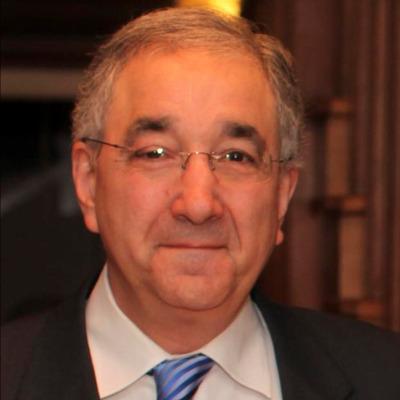
@joseph-dabby-6155
Babylonian Jew, quad lingual. Direct descendant of King David. Joined Skool Nov. 27, 2025
Active 7h ago
Joined Apr 6, 2026
ISFP
Montreal, Canada.
Powered by