
Pinned

2h •
🍂 Fall Tobacco & Leather Warmth – Up to 56% Off
🥃 Sospiro Erba Leather – 49% OFF https://get.aspr.app/SH1lrw Green leather with herbal sophistication — perfect fall statement piece. 🚬 Boadicea Tobacco Sapphire – 38% OFF https://get.aspr.app/SH1myJ Tobacco, patchouli, sandalwood, and vanilla — spicy, smoky, unforgettable. 🕯️ Atelier des Ors Noir By Night – 52% OFF https://get.aspr.app/SH1zuV Coffee, tobacco, and dark rum — nocturnal gourmand for evenings. 🌰 Bois 1920 Vetiver Ambrato – 56% OFF https://get.aspr.app/SH1zuf Warm ambery vetiver with vintage Italian autumn-leaf character. 🥃 Roja Enigma Pour Homme – 53% OFF https://get.aspr.app/SH1Pjm Cognac, tobacco, and honey — the ultimate fall gentleman's signature.
2
0

Pinned

Feb 8 •
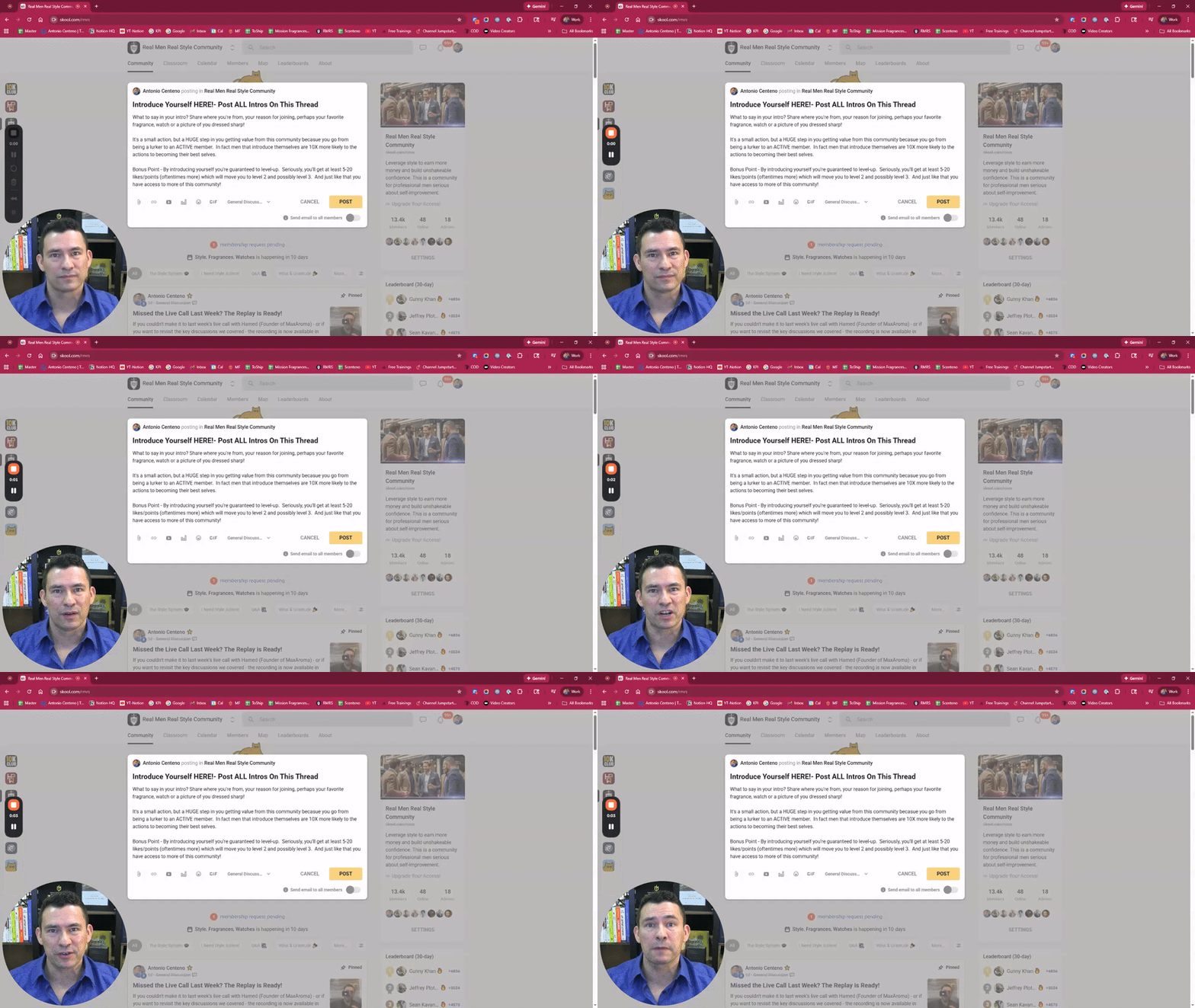
Introduce Yourself HERE!- Post ALL Intros On This Thread
What to say in your intro? Share where you're from, your reason for joining, perhaps your favorite fragrance, watch or a picture of you dressed sharp! It's a small action, but a HUGE step in you getting value from this community becasue you go from being a lurker to an ACTIVE member. In fact men that introduce themselves are 10X more likely to the actions to becoming their best selves. Bonus Point - By introducing yourself you're guaranteed to level-up. Seriously, you'll get at least 5-20 likes/points (oftentimes more) which will move you to level 2 and possibly level 3. And just like that you have access to more of this community!
Pinned

Jun 5 •
Why Join Brotherhood Of Scent Premium?
I’ve stacked so much value into BOS Premium that honestly I think it’s a no-brainer YES decision to join. https://www.skool.com/bos/plans The details: - "Inner Circle Mastermind" LIVE Monthly Call Access Q&A with Perfumers & Frag Experts - Access To 5+ Premiun Fragrance Courses Designed To Level Up Your Knowledge of Scent - $1,000+ in retail discounts & price check guarantee (always get best deal save $$$) - Access To Challenge & Prizes - As a Patron the "activity" requirement doesn't apply to you. Thank you for your support! - Complete Mission Fragrance Set ($595 Value) - Your own "Personal Fragrance Concierge" (PFC) to help choose your perfect scent - MF Academy & Mindset Coaching ($2,000 Value) - Three Travel Atomizers (value $45) & Limited Edition MF Challenge Coin (value $35) - Invite To LIVE Event (Dallas, Oct 2026) Click here to join us - https://www.skool.com/bos/plans
89
0
23m •
Weekly BOS Member Shoutouts 🔥
BOS crew, here are a few standout posts from the BOS community this week. 👏 Big shoutout to @Jordan Filley for “A New Crown Jewel In My Collection 👑💎” and sharing the excitement behind finally adding Dior Homme Parfum 2014 to his collection. His detailed enthusiasm made it a great conversation starter for fellow fragrance collectors. Post: https://www.skool.com/bos/a-new-crown-jewel-in-my-collection 👏 Shoutout to @Edgar Mertins for “Adding staple Niches to the collecction!” and explaining the thought process behind adding long-delayed niche and designer staples despite import costs. It offered a useful, honest perspective on collecting strategically. Post: https://www.skool.com/bos/adding-staple-niches-to-the-collecction 👏 Shoutout to @Lon Chaneyfield for “The Bottles Are the Collection. The Samples Are the Library.” and sharing his intentional system for using samples and discovery kits. It gave the community a smart framework for exploring fragrances beyond simply accumulating bottles. Post: https://www.skool.com/bos/the-bottles-are-the-collection-the-samples-are-the-library 👏 Shoutout to @George Hernandez for “Fragrance Review Methodology Explained” and clearly walking members through the evaluation points behind his reviews. Sharing a repeatable process helps make fragrance discussion more thoughtful and useful for everyone. Post: https://www.skool.com/bos/fragrance-review-methodology-explained 👏 Shoutout to @Stephen DeMent for “300 Slays” and celebrating his 300th tracked scent wear while working through his samples. His goal-focused approach inspired conversation about enjoying and using what is already in the collection.
6h •
Blind Barber Fragrance Sale
I wanted to share this in case any of you have ever been interested in Blind Barber fragrances. They started with a unique concept. a barbershop with a hidden bar tucked away behind the last chair. Eventually, they launched a grooming line, which now includes fragrances. Ulta currently has them on sale for 50% off. They weren’t overly expensive at $98 for 50 ml, but at $49, they’re a steal. I have two of them Shinjuku Mood and Speakeasy. Shinjuku is my favorite, it’s a tea fragrance with a sweet burst of black currant in the opening, drying down to a smooth sandalwood. It fresh and very relaxing fragrance. At this price it’s worth giving them a try.

1-30 of 45,702
skool.com/bos
#1 Fragrance Community 🏆
Our mission is to help YOU leverage the power of scent to become the man you know yourself to be.
Leaderboard (30-day)
1
🔥
+2948
2
🔥
+1579
3

+1496
4

🔥
+1273
5

+1026
Powered by