
Pinned

42m •
💎 Roja Parfums Luxury – Up to 54% Off
⚡ Roja Parfums APEX – 54% OFF https://get.aspr.app/SH1T0s A radiant fruity-ambery signature built to turn heads at full volume. 🌟 Roja Parfums Elysium – 53% OFF https://get.aspr.app/SH1NqL Champagne-toned citrus with pineapple, blackcurrant, and iridescent freshness. 🖤 Roja Parfums Enigma – 53% OFF https://get.aspr.app/SH1Pjm A cognac-tobacco-honey masterpiece — dark, brooding, gentlemanly warmth. 🔥 Roja Parfums Elysium Eau Intense – 49% OFF https://get.aspr.app/SH1bfD The intense reimagining of Elysium — deeper woods, richer projection. ⚔️ Roja Parfums Danger Pour Homme – 43% OFF https://get.aspr.app/SH1WtC Bold spicy-woody blend with saffron, patchouli, and leather warmth.
1
0

Pinned

🔥
Jun 5 •
Why Join Brotherhood Of Scent Premium?
I’ve stacked so much value into BOS Premium that honestly I think it’s a no-brainer YES decision to join. https://www.skool.com/bos/plans The details: - "Inner Circle Mastermind" LIVE Monthly Call Access Q&A with Perfumers & Frag Experts - Access To 5+ Premiun Fragrance Courses Designed To Level Up Your Knowledge of Scent - $1,000+ in retail discounts & price check guarantee (always get best deal save $$$) - Access To Challenge & Prizes - As a Patron the "activity" requirement doesn't apply to you. Thank you for your support! - Complete Mission Fragrance Set ($595 Value) - Your own "Personal Fragrance Concierge" (PFC) to help choose your perfect scent - MF Academy & Mindset Coaching ($2,000 Value) - Three Travel Atomizers (value $45) & Limited Edition MF Challenge Coin (value $35) - Invite To LIVE Event (Dallas, Oct 2026) Click here to join us - https://www.skool.com/bos/plans
78
0

1m •
Guilty
Good morning gentlemen. Off to the gym in a few minutes then work. It’s gonna be a hot day not quite as humid so I pulled this one. I was thinking this would be suitable. Lots of citrus, quite classy quite deep.
0
0


14h •
Saharian Wind - Mancera
Grabbed some Mancera samples this week - this is the first one I've tried - very impressed. prominent spice, leather, nice blend of subtle floral - backdrop of tobacco and mild vanilla. To me, there is something of the original Opium profile here, finely balanced with no small nod to Ombre Leather - would opt to wear this more in cooler and/or evening settings. decent projection and staying power too.


🔥
2h •
DO FRAGRANCE NOTES REALLY MATTER AS MUCH AS WE THINK?
The deeper I’ve gotten into perfumery, the less importance I put on a published note list. And owning and smelling a lot of originals and clones really drove that home for me. Take Creed Aventus and Armaf Club de Nuit Intense Man. You can put their note lists next to each other and see a lot of the same ideas—citrus, pineapple, blackcurrant, birch, woods, musk, amber. Now take Louis Vuitton Imagination and Zara Sunrise on the Red Sand Dunes. Again, you’re dealing with that same general citrus, ginger, amber, clean and fresh territory. But here’s my point: A note list isn’t a formula. You can duplicate every note somebody publishes and still not duplicate the fragrance. “Pineapple” isn’t necessarily pineapple oil sitting in a bottle somewhere. “Leather” doesn’t mean somebody squeezed a leather jacket into the formula. A lot of what we call notes are accords or simply the perfumer’s interpretation of an aroma. Give two perfumers the same list—bergamot, pineapple, birch, woods and musk—and you can end up with two completely different fragrances. The materials matter. The aroma chemicals matter. The quality matters. The proportions matter. The construction matters. And most importantly, the perfumer’s interpretation matters. This is one reason I think people get too caught up in Fragrantica note pyramids. Most of us can’t smell a fragrance blind and accurately identify 12 or 15 individual notes anyway. We smell the overall composition. We might say it’s citrusy. Woody. Smoky. Sweet. Green. Spicy. Creamy. Fresh. Then we look at the note breakdown and suddenly we’re smelling Sicilian bergamot harvested on a Tuesday morning. 😂 Come on. I’ve owned hundreds of clones, and that’s actually taught me to pay less attention to whether the clone copied the published notes and more attention to whether it captured the actual fragrance. Because that’s what a clone is really trying to reproduce. Not the note list. The smell. And even when a clone gets extremely close, it’s still an interpretation of somebody else’s composition. Maybe the opening is sharper. Maybe the woods are rougher. Maybe the original transitions better. Maybe the clone projects more. Maybe one ingredient is emphasized differently.

1-30 of 44,863
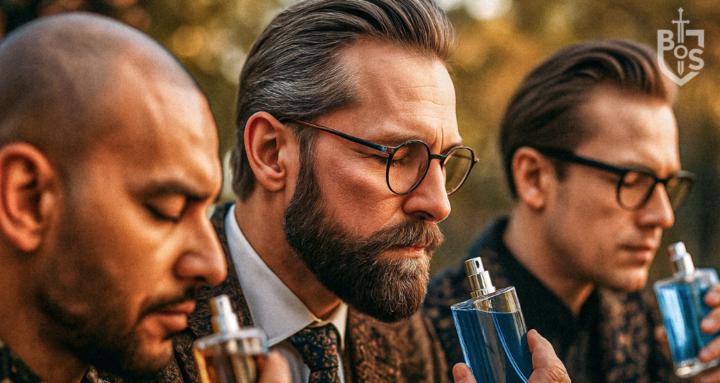
skool.com/bos
#1 Fragrance Community 🏆
Our mission is to help YOU leverage the power of scent to become the man you know yourself to be.
Leaderboard (30-day)
1
🔥
+2933
2

🔥
+1870
3
🔥
+1450
4

🔥
+1252
5

+1150
Powered by