
Pinned

⭐
Nov '25 •
NEW? START HERE 👇
Welcome to ADHD Harmony. I'm excited you're here. This community helps you turn ADHD from something you fight against into your greatest advantage. No quick fixes or productivity hacks that fall apart after a week. This is identity-level transformation, grounded in neuroscience and real experience. 👉 Get started here
Pinned
⭐
15d •
This post is just for (aspiring) practitioners
I'm sharing this here because I know many of you in this community are stuck around career/purpose/starting a business. I decided to share this here as well, to help some of you who are ready for the next step. I want to make healing more accessible through technology. So many of you are already getting real help from Harmony AI, and we want to give other practitioners the opportunity to use AI technology to help even more people too get benefits from this. If you're a (aspiring) coach, therapist, healer, or consultant or anything in between, who is great at the work but stuck on the business side, I'm opening the doors to something new. It's called Innersights Founders Cohort. 8 weeks, done with you. We extract your framework (even if you don't have one yet), build your AI assessment, train a digital twin in your voice, and ship the funnel. The same system as ADHD Harmony (but, of course, fully tailored to your target audience). Now available for 10 practitioners. There are 5 spots left. Doors close Mon May 11. Full breakdown, the walkthrough video, and checkout: http://go.innersights.io/
Pinned
⭐
18d •
🚨 15 spots left - Tracy's 6 week transformation
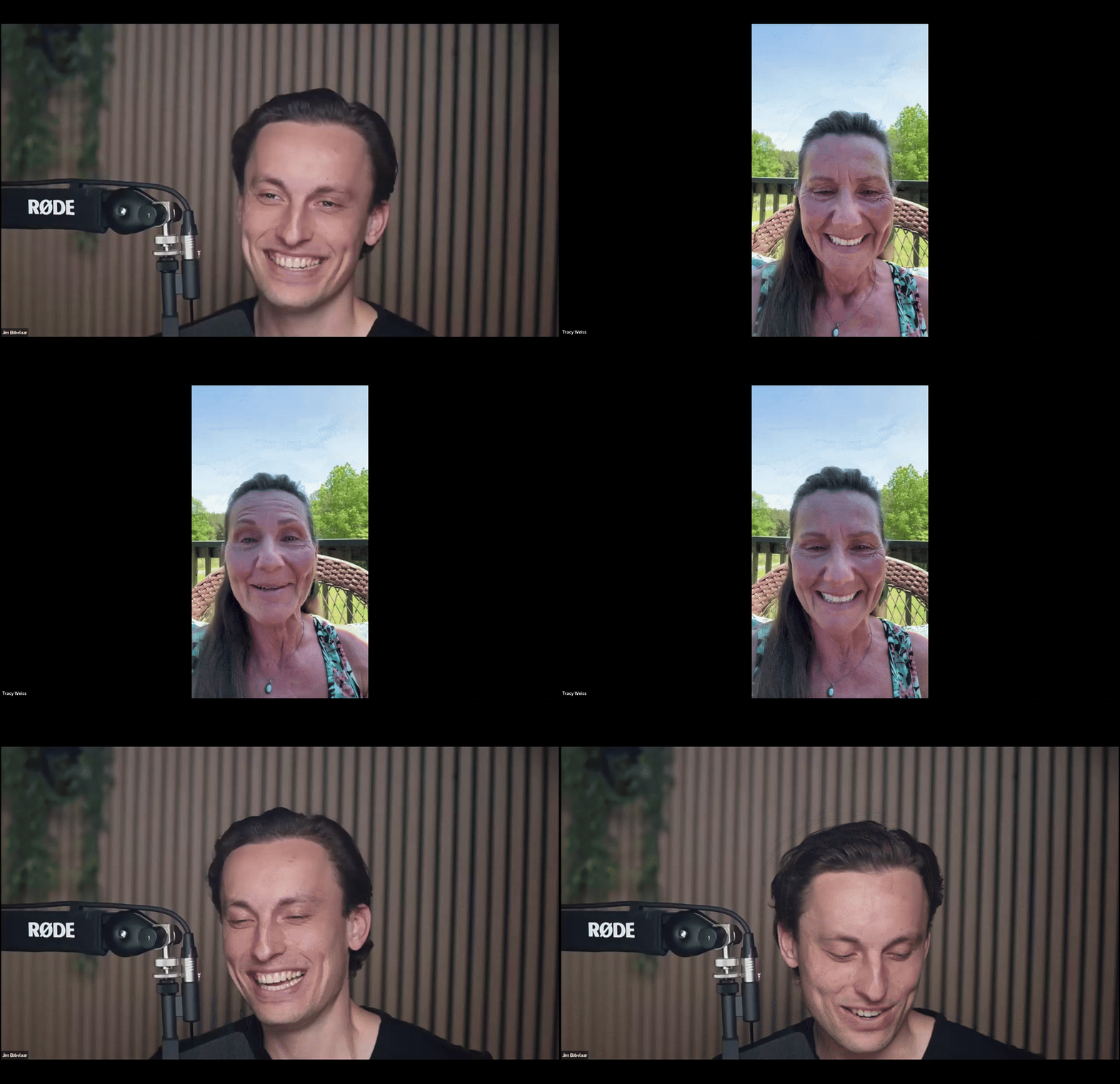
@Tracy Weiss is 66. She has a master's in counseling. Graduated summa c** laude. She's a life coach and a therapist herself. She's survived two serious brain injuries. Spent a decade with brain injury specialists, ADHD specialists, productivity specialists. She's tried 18 different productivity systems. Paid $35,000 to spend a month at the Mayo Clinic. None of it stuck. When she walked into Cohort 2, she'd been in her new house for 8 months. Still living out of boxes. Her art studio (the thing that matters most to her in the world) had become a dumping room. She hadn't opened a single box in there. She was on the couch eating popcorn at midnight. Watching whole series in one night. Convinced her brain injuries had broken her for good. I just rewatched my closing interview with her and I can't stop thinking about what she said. "I've worked with life coaches, therapists, neurologists, brain injury specialists. None of them helped me the way this program has." "This is not a program to finish. This is a practice." "I think your program is worth more than $10,000." She said all of this on camera. Unprompted. In front of the cohort. If you've been telling yourself you've tried everything, Tracy actually had. Decades of it. Real credentials. Real money. Real specialists. She still found something here she'd never found anywhere else. Cohort 3 starts soon. 15 seats left. https://go.adhdharmony.com/

17h •
ADHD and Addictions
People with ADHD are up to three times more likely to develop addictions than the general population. This vulnerability is largely driven by a brain "reward deficiency" (lower dopamine levels) and poor impulse control. Addictive behaviors provide the instant gratification and dopamine rush the ADHD brain craves. Addictions commonly observed in individuals with ADHD are divided into two main categories: substance-related addictions and behavioral addictions. 1. Substance Use Disorders Many individuals with ADHD initially turn to substances as a form of unintentional "self-medication" to quiet racing thoughts, manage social anxiety, or boost focus. - Nicotine - Alcohol - Cannabis (Marijuana) - Stimulants 2. Behavioral Addictions Because ADHD impacts impulse control and reward processing, non-substance addictions are highly prevalent. - Gaming & Internet Addiction - Gambling. - Shopping - Food Addiction/Binge Eating - Pornography and Sex Addiction For those struggling with co-occurring ADHD and addiction, medical professionals recommend an integrated approach. Treating the underlying ADHD with prescribed medication and behavioral therapies (like CBT or DBT) often significantly reduces the brain's need to seek out addictive substances or behaviors.
16h •
ADHDers and Narcissists
There is a strong, well-documented link between ADHD and the tendency to attract—or be vulnerable to—narcissists. This overlap largely stems from ADHD traits like impulsivity, an intense need for dopamine, and a history of people-pleasing. Several specific ADHD characteristics make individuals prime targets for narcissistic manipulation: - Impulsivity and Love-Bombing: ADHD brains crave quick dopamine, and narcissists are masters of "love-bombing" in early relationships. The intense, thrilling attention can feel like a perfect match, making ADHDers quick to jump into relationships before spotting red flags. - People-Pleasing and Rejection Sensitive Dysphoria (RSD): Years of being criticized for ADHD symptoms often create deep-seated shame and a fear of rejection. This makes many people with ADHD accommodating and eager to please, which is exactly what a narcissist seeks to exploit. - Trust and Forgetting the Past: Because ADHD can affect working memory, individuals may forget past betrayals or easily second-guess their own memories. Narcissists use this to gaslight partners, warping their perception of reality. - Hyperfocus: The ability to hyperfocus can lead to pouring all your energy and attention into a new partner. The narcissist feeds off this constant validation and attention. Clinical studies note that pathological narcissism or Narcissistic Personality Disorder (NPD) occurs more frequently in adults with ADHD than in the general population.
1-30 of 4,781
skool.com/adhd
#1 Free ADHD community | 5-day Challenge: Learn to finish what you start in just 5 days and turn ADHD from liability into your greatest advantage ⚡️
Leaderboard (30-day)
1

🔥
+1868
2

+1373
3

+1173
4

🔥
+1145
5
+1068
Powered by