Activity
Mon
Wed
Fri
Sun
Aug
Sep
Oct
Nov
Dec
Jan
Feb
Mar
Apr
May
Jun
What is this?
Less
More
Memberships
Coaching Resource Room
1.3k members • Free
Codex MasterClass🎓 🇩🇪
17 members • $9/month
AI-Driven Business Community
8.5k members • Free
🎵Musik und Freude im Alltag🎶
47 members • Free
Coaches Life Lab 2.0
784 members • Free
FrauenKraftArt
21 members • $29/m
Gesunde Psyche
6 members • Free
Later Starters
170 members • Free
Pinterest Skool
5.5k members • $9/month
172 contributions to Inspired Life, Empowered Being
🔥
3d •
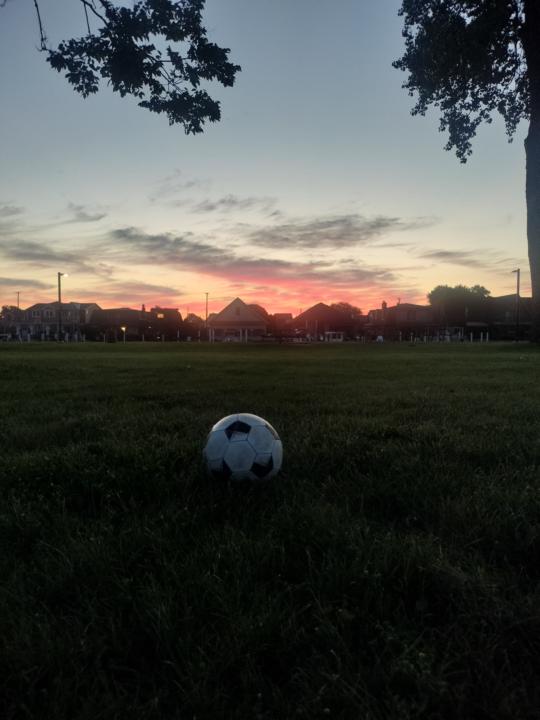
Lone soccer ball: Impermanence and Relationships
I went to catch myself a sunrise yesterday morning. On my way to 'the spot', I noticed a soccer ball sitting alone in the field--there were no people in sight (likely because it was 5:30a.m., ha!). But looking at this ball got me thinking about how we lose things or how we can be 'left behind'. Made me think about how sometimes we fumble things or we are fumbled and through negligence, distraction or to being caught in the crossfire of someone else's stuff (or them being caught in the crossfire of our own stuff) we end up losing things. Sometimes we can recover them but sometimes not. And...Sometimes those things are more important than soccer balls. Funny enough, on my way back from this walk, there were four men that were gently kicking the ball around as they were walking... Perhaps they will also leave the ball behind for different reasons, but it was also a reminder of how being fumbled doesn't have to be the end of the story. --------- Most of us don't lose important relationships because we wake up one day and decide they don't matter. More often, they fade through distraction, neglect, competing priorities, stress, assumptions, or simply the busyness of life. Sometimes it's related to wounds that they/we haven't tended to and we/they end up as collateral damage in something that doesn't even have to do with us/them. We become consumed with our own struggles or focused on someone else's, and before we realize it, something valuable has been left behind. 𝐑𝐞𝐥𝐚𝐭𝐢𝐨𝐧𝐬𝐡𝐢𝐩𝐬 𝐚𝐬 𝐥𝐢𝐯𝐢𝐧𝐠 𝐬𝐲𝐬𝐭𝐞𝐦𝐬. Like muscles, they strengthen through (healthy) use and weaken through disuse or misuse. There are things that keep relationships alive: healthy attention, responsiveness, shared experiences, shared values and visions, shared rhythm of life... Without those, emotional distance can emerge. It's not necessarily through malice (usually it's not), but through impermanence. 𝐈𝐦𝐩𝐞𝐫𝐦𝐚𝐧𝐞𝐧𝐜𝐞 𝐢𝐬 𝐚 𝐟𝐮𝐧𝐝𝐚𝐦𝐞𝐧𝐭𝐚𝐥 𝐫𝐞𝐚𝐥𝐢𝐭𝐲 𝐨𝐟 𝐥𝐢𝐟𝐞.People change (or, more likely, their focus is more likely to change). Circumstances change. Roles change. What felt effortless at one stage of life may require intention at another (think kids-when a couple could just effortlessly spend time together, now they have to be very intentional about that time).
Poll
10 members have voted

🔥
4 likes • 3d
The metaphor of the lone soccer ball beautifully illustrates the somatic reality of relational drift. In living systems, a rupture or a period of prolonged neglect creates a distinct shift in the internal climate. When a connection is fumbled, the nervous system frequently registers the resulting silence as a cue to build protective armour. Over time, this protective distance hardens into a baseline state of self preservation. The capacity for repair relies heavily on coregulation. Returning to a connection that has been left behind requires a high level of physiological steadiness. Both individuals must navigate the natural anxiety of reengagement, holding space for the historical awkwardness while consciously choosing to anchor back in shared synergy. Relational resilience expands when we treat impermanence as a supportive foundation. Because states of isolation or resentment are fluid rather than fixed, the potential for a new structural alignment is always present. A deliberate, grounded gesture of follow through provides the predictable external framework required to safely bridge the gap.
🔥
8d •
What Makes a Good Life?
What do you think makes a good life? What have been the best parts of your life? What about the small day to day moments?
🔥
6 likes • 8d
I'm celebrating every seed of success, right now the fact that I managed to add blog articles on the English page of my website ;-)))
🔥
8d •
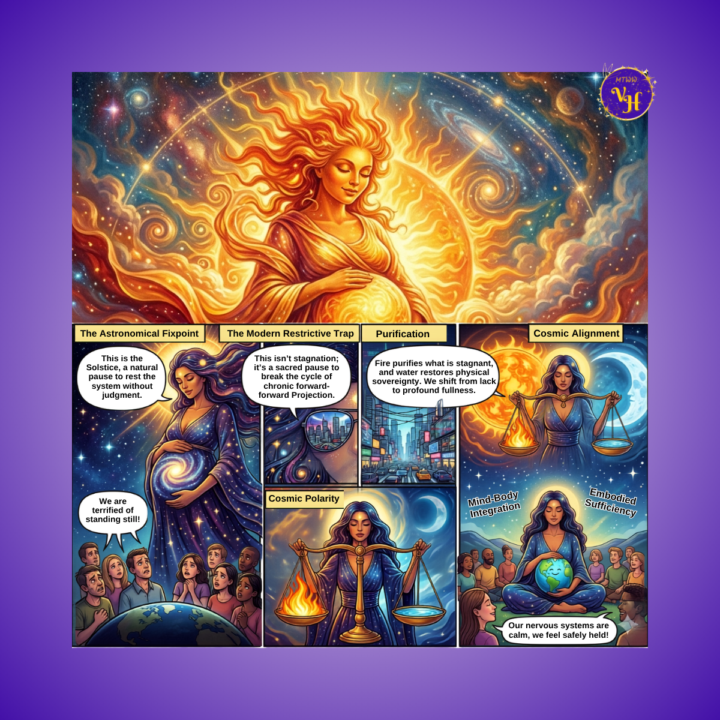
The Wisdom of the Solstice – Moving from Functioning to Being
Have you ever felt the paradox of checking off every single milestone on your to-do list, yet internally, you never quite arrive? In a culture that constantly demands forward-projection, our nervous systems are tightly wound in a loop of endless activity. We collect data, process stimuli, and plan the next horizon before the current experience has even had a chance to settle. This continuous acceleration creates a specific kind of exhaustion, which stems from a total loss of internal orientation. For a nervous system shaped by traumatic experiences, this chronic high-alert state is a deep survival strategy that keeps the body trapped in permanent sympathetic tension. The modern lifestyle functions as a restrictive trap across all areas of our lives, keeping the body in permanent sympathetic tension and cutting us off from our natural rhythms. The summer solstice offers a timeless psychophysiological fixpoint to interrupt this cycle. The word solstice, or solstitium, translates to "sun standing still," marking the precise moment the sun reaches its absolute zenith and halts its movement before changing direction. This astronomical phenomenon lasts for three full days, during which the sun appears to hover at the exact same height in the sky. Symbolically, these three days represent a dedicated cosmic window to let our achievements truly sink in, allowing the intensity of our experiences to echo, settle, and take root within our physical being before any outer movement resumes. Nature structures a deliberate phase of lingering, allowing what has grown to unfold and what has been achieved to stabilise. In trauma processing, this offers a gentle, spacious window for the nervous system to gradually notice that the immediate threat has passed, allowing the body to softly register a true sense of safety right down to the cellular level. This physical transition carries a far deeper significance that reaches far beyond a simple seasonal marker, serving as a profound template for human transformation. True stability clarifies itself when we grant the nervous system space to return to its natural baseline.
🔥
1 like • 8d
@Thomas Rua Jr. What stood out to me is your reflection on time. Human experience is deeply shaped by the reference points through which time is perceived. Extended periods in nature often bring attention to rhythms that operate independently of schedules and deadlines. Seasonal cycles, changing light, weather patterns, and biological rhythms create their own form of orientation. Over time, these rhythms can become perceptible as an organising framework in themselves. Experience gains continuity through direct participation in larger cycles that are already present and unfolding. There is something profoundly grounding in allowing awareness to settle into these patterns and noticing how they shape perception, attention, and presence.
🔥
14d •
Embracing the Messy Middle (How to Overcome Sense of Defeat)
*Feel free to skip the intro and go into the strategies at the bottom if you'd like!*** ----------------------------------------------- A few weeks ago, I felt like I hit a wall. (That sounds more extra than it is/was). I was looking around at all the things that I wanted to do and how it felt like I wasn't making any progress and also how it felt that forces outside of myself were impeding movement even when I had the energy/motivation/oomph to make things happen. I felt defeated and that is a feeling that I DO NOT experience often and I DID NOT like it one bit. I bounce back, I pivot, I change course, I remain optimistic-perhaps even delusionally so, ha! In short, I show up. I see opportunities for growth and improvement in most situations, so it's hard for me to stay down. I love this about myself so it felt extra challenging when it felt like I was stuck and when it felt like I wasn't myself. Strange feeling. I only remember feeling like this maybe 3 other times in my life. Thankfully, each time, there was a 'cause' or things that I can point to that needed tending to, so experience has taught me that this was solvable but I needed the reminder. (So super thankful for the conversations that I've had recently that helped me with recalibration. Beyond grateful). I also needed to recognize three things: 1) the values that were at play that contributed to me thinking that I had limited options , 2)the expectations and 3)the strategies to employ to get me back to feeling like movement was happening. Look at me being a human being. Who would have thought?! ha. I'm just kidding, I know I'm a human. Below I'm going to focus on some research backed strategies to help with reframing our mindset and keep the momentum alive even when things feel like they're not moving. :) -------------------------------------------------------------------------------------------------------------------- 1. 1. 𝐈𝐝𝐞𝐧𝐭𝐢𝐟𝐲 "𝐓𝐡𝐞 𝐃𝐢𝐩" 𝐚𝐧𝐝 𝐭𝐡𝐞 "𝐌𝐞𝐬𝐬𝐲 𝐌𝐢𝐝𝐝𝐥𝐞" First, know that what you’re feeling is actually a normal part of any bold venture.
Poll
6 members have voted
🔥
5 likes • 14d
This really resonated with me, especially the “messy middle” framework and the way it captures a structural phase where momentum slows down and what feels like stagnation or even defeat often appears. I’ve noticed that what is often experienced as failure or being stuck is actually the point where deeper patterns become visible — especially around trust, consistency, inner safety, and the way we relate to ourselves while building something meaningful. This shifts the experience from something personal and limiting to something that can be understood and decoded in its underlying structure. In that phase, what helps is moving from abstract interpretation into concrete structure: rescaling goals, focusing on small wins, and using simple, doable steps to restore a sense of movement and self-efficacy. This makes progress visible again, even when it feels internally blocked. At the same time, I recognize how important relationships and external grounding are in this process, especially when the internal system tends to withdraw or lose orientation. Supportive feedback can help recalibrate perception when things feel unclear. What helps me most is continuing anyway, even when the internal system is full of doubt, and consciously anchoring myself in real evidence of progress (like feedback and small results), instead of the stories that come from older wounds. This distinction between actual lack of progress and the felt sense of being stuck has been a significant learning for me.
🔥
0 likes • 13d
@Georgiana D hank you for this, what stood out to me is the way you described a forced narrowing of perceived options under value tension. That moment where it feels like only two paths exist, even though cognitively you know there are more, seems like a key feature of the “messy middle” under pressure. What feels important in that is not only the external/internal dynamic, but how quickly the system collapses complexity when multiple core values are activated at the same time. In that sense, the “stuckness” might not be a lack of insight, but a temporary loss of access to the full option space under load. I also find it significant that reconnection through dialogue helped re-expand that space again, as if the system needed relational input to restore perspective.
🔥
15d •
Challenge Day 2: Noticing Nature
There are sooo many benefits to being out in nature and noticing things in nature. Go outside and find as many nature related things as you can. A flower blossoming through the side walk, the trees that may be there, birds and other wildlife making their homes, little ants on the ground...Look for the big and look for the small. :) Be truly present with what's in front of you. Check out @Thomas Rua Jr. 's post mother-nature and share your own nature story if you'd like. :) His nature experiences sound beautiful and peaceful. Additionally, I took the last picture from @Dr. Melissa Partaka's blog website where she talks about the past/present/future and our relationship with it. " Learn from the past, plan for the future, but live in the present." Check it out here: We Have Is Now - The Blueprint Method
🔥
4 likes • 15d
thank you
1-10 of 172
🔥
@veronika-hubner-9801
Dr. Veronika Hübner |
Von der Wunde zur Wirkung |
LebensTheologin, Kinesiologin,
Dipl. psycholog. Beraterin,
Supervisiorin, Mediatorin, AHS-Lehrerin
Active 59m ago
Joined Oct 16, 2025
Wien