Activity
Mon
Wed
Fri
Sun
Jun
Jul
Aug
Sep
Oct
Nov
Dec
Jan
Feb
Mar
Apr
What is this?
Less
More

Memberships

MMC BunClub

127 members • Free

15 contributions to MMC BunClub
Happy Easter!
The rabbits are judging your egg hunting skills. Quietly. From the cages. With snacks. Meanwhile over here… No chocolate bunnies — just real ones, plotting their next pellet refill. If you’ve got a minute between family, food, and whatever chaos today brings… Now for the important question: What’s on your plate today? 🐇 Rabbit 🍖 Ham 🐔 Chicken 🥕 Or just surviving on deviled eggs and sugar? Drop it below 👇
Happy Easter!
1 like • 24d
Happy Easter! He Is Risen. Alleliia. The Easter bunnies gave me 14 new cuties. We’re having loaded baked potatoes, Mexican beans and other pot luck goodies.
Let's Talk Managment .
One of the hardest lessons new rabbit keepers have to learn is that rabbits are prey animals, and keeping prey animals safely requires planning before the animals ever arrive. Housing and predator management are not optional parts of rabbit care. They are the foundation of it. Before bringing rabbits home, you need a system in place that protects them from the things that naturally try to kill them: dogs, cats, raccoons, weasels, rats, hawks, and even neighborhood pets that wander onto your property. A safe setup usually includes a few basic things. First is secure housing. Rabbits should be kept in a barn, garage, shed, or other enclosed structure whenever possible. This creates the first barrier between them and predators. Second is proper cages. Wire cages with secure latches prevent rabbits from escaping and prevent predators from getting in. The wire spacing should also be appropriate so babies cannot fall through and predators cannot reach in. Third is height and positioning. Hanging cages several feet off the ground helps prevent dogs or other animals from reaching rabbits through the floor and reduces predator access. Fourth is barriers and management protocols. Doors, gates, fencing, or kennel panels around the rabbit area create additional layers of protection. If you have dogs on the property, rabbits must be physically separated from them. Dogs are predators. Even very good dogs can revert to instinct if given the opportunity. I learned that lesson firsthand. Years ago Bernie my mini schnauzer, Like most ratters had a very strong prey drive. One day a four-week-old kit managed to fall from a cage and Bernie did what schnauzers were bred to do and killed it. That was not the dog being “bad.” That was a management failure. After that incident I made several changes. I blocked gaps near feeders where small kits could slip out, switched sections of cages to baby-safe wire, and tightened the overall cage setup so young rabbits could not fall through or escape.
Let's Talk Managment .
1 like • Mar 24
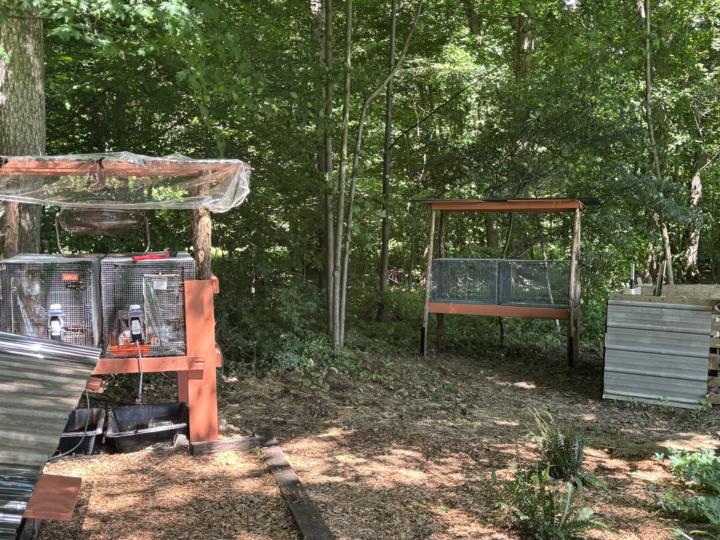
I’ve recently rearranged my rabbit set up. Plans for spring include getting a new floor in the 10x12 shed. Putting up a powerful ceiling light in the shed. And, possibly hanging the 2 “Nurture” cages where does kindle, in order to get more natural window light. It will also improve storage space. My rabbits are very secure in the shed. I leave the doors open daily in good weather because the cages are secure. At night I close them up as we do have a raccoon population around. Outdoors, I’ve already redone my dog cage cages. I’ve placed them away from the larger pen to use for isolation. Paisley, my new pretty doe from MM, is there now as she’s been sneezing some and has had some clear snot. (See picture.) She likes her hidey hole. I’ve also raised and floored my mobile tractor (grow out) cage to make it more secure, healthy and permanent. Mia and kits just moved in last Friday and are enjoying 4 times more space. Kits are drinking from bottles and a large bowl. This morning is the coldest day they’ve experienced at 36 degrees. They have wind breaks and the far end is enclosed. It’s much easier to care for them now. I didn’t find moving them daily easy or particularly beneficial. In May, I have an Amish crew scheduled to do the shed floor. I’m hoping they’ll place 6 4x4 post supports and put a clear roof over the tractor. Finally, I plan to rebuild the largest pen lids with clear corrugated roofing for added sun light. They are in full shade most of the day.
Babies due soon!
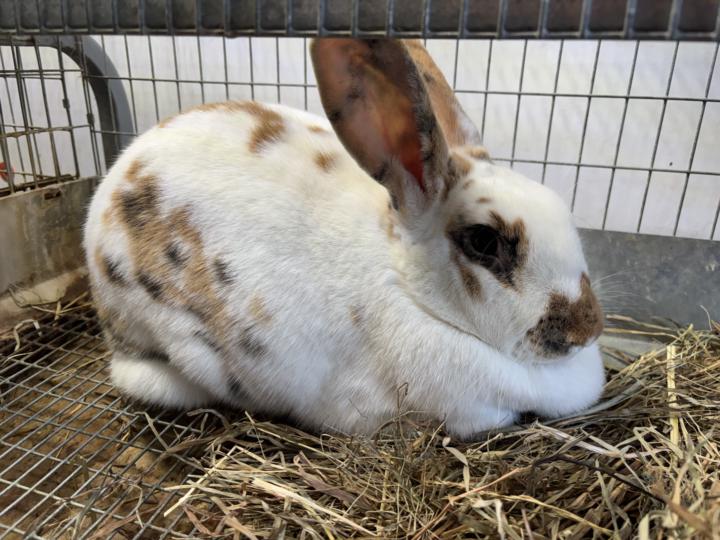
Two days ‘til due date for Mia and Collette. Mia is getting ready, but nothing from Collette. The side view photo is Collette, a Wilford daughter. And Willy is sticking his head out to say , “hi.”
Babies due soon!
0 likes • Mar 24
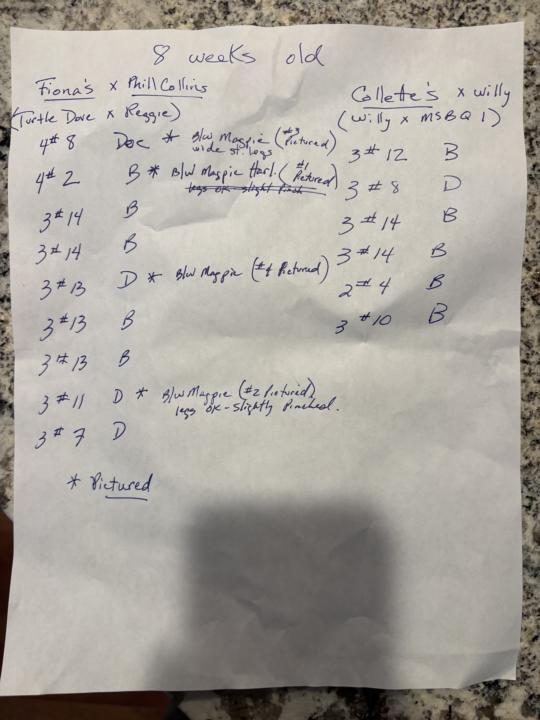
Last week I did 6 week old weights and clipped all the bunnies’ nails. It was a lovely day for that. I have 6 bucks out of nine. All tris except one Japanese blk/orange and one blue. The females are all tris. Weights ranged from 2 lbs (the original runt) and 2lbs 14oz. There are 2 females who were the largest. I’ve pictured the best larger doe. She’s a little pinched. The smallest doe has great straight wide legs. Overall conformation is similar on all 3. I plan to keep 2 to grow out as possible replacements for mom. Mia (HPBQ8) is an amazing mother at nearly 6 yrs old. Always lifts, has large litters and keeps them alive without drama.
Show day!!!!!
Show day is here, and I’m en route to the Indiana State Convention! I’ll be in Show C and the Harlequin Specialty—and yes, I’ve got some tricolor bucks available if anyone’s got a project or meat program going. But enough about me! Who’s already there, who’s showing, or who’s thinking about entering their first show? Drop your stories, share your pictures—let’s see those bunnies!
Show day!!!!!
2 likes • Feb 22
@Nicole Holland she’s pretty
Preview: Let's Talk about Homestead Myths
This graphic is built on outdated assumptions, not rabbit nutrition science. • Pellets are not a “supplement” in modern rabbit nutrition. Properly formulated MEASURED pellets are designed to be a complete, balanced diet • “LOOSE Hay as the foundation” is not evidence-based. When fed as the primary diet, it pushes nutrients through the gut too fast, leading to chronic under-nutrition despite full stomachs. Meat rabbits fed hay-heavy / pellet-restricted diets routinely take 12–16 weeks to reach fryer weight. The same genetics on a balanced, pellet-based ration reach fryer size in 8–10 weeks. That difference isn’t “corners being cut” — it’s chronic under-nutrition for excessive forage and tractor setups ie ." Feeding naturally " based on internet myths. Loose Hay-forward systems also increase disease risk: • Higher exposure to coccidia and enteric pathogens • Greater fecal contamination when hay is fed loose or in litter areas • Increased GI instability from excess indigestible fiber lignin and NDF. Longer grow-out time = more parasite cycles, more feed waste, more mortality, not healthier rabbits. FULL article for Premium members: Let's Talk about Homestead Myths - Rabbit Education Video Archive · MMC BunClub
Preview: Let's Talk about Homestead Myths
1 like • Feb 17
@Mary Margaret Conley what does “curing” plants consist of?
1-10 of 15
Theresa Swift
3
38points to level up
@theresa-swift-3701
Met Mary in FB and bought a trio of her Senitas. She’s been a terrific help and mentor.

Active 1d ago
Joined Jan 10, 2026