Activity
Mon
Wed
Fri
Sun
May
Jun
Jul
Aug
Sep
Oct
Nov
Dec
Jan
Feb
Mar
Apr
What is this?
Less
More
Memberships
Beyond Light Academy
31 members • $49/month
Beyond The Detox
72 members • Free
86 contributions to Beyond The Detox

12d •
✨ Announcement: April & May Cleanses + Protocol Timeline ✨
Hello beautiful beings ❤️🥰 We are officially moving into our next phase together, and I wanted to lay everything out clearly so you can prepare and move through this the right way. This is a layered cleanse journey, meaning each phase builds on the next. Stay consistent, stay aware, and listen to your body. 🗓 CLEANSE TIMELINE 🔹 Heavy Metal Detox (you can start sooner) Start Date: April 15th End Date: April 22nd This phase begins the process of pulling out stored metals and toxins from the body. You may start to feel things shift physically and mentally as your body begins releasing. 🔹 Parasite Cleanse (3 Weeks) Start Date: April 23rd End Date: May 13th This is where we go deeper. Once metals begin loosening, parasites tend to become more active. This phase helps you target and remove parasites while addressing the environment they thrive in. ⚠️ Important for Weeks 2–3: If you feel ready and your body is handling the cleanse well, you can go deeper. You may choose to add: • Ivermectin • Fenbendazole This can help you target parasites on a deeper level. If you decide to go this route: • You MUST increase your binders • You MUST support your liver properly • You MUST support your lymphatic system This is very important so your body can process and eliminate toxins safely. You can also choose to add additional Anti-helminthics support if you feel called, but again, make sure you are properly supporting detox pathways so you’re not overwhelming your system. That protocol can be found below 👇 Anti-helminthics Ivermectin 12mg 2-3 times a day Nicolosimide 500mg 2-3 times a day Praziquantel 600mg, 2x a day for 3 weeks Mebendazole 100mg 2 pills 2x a day And or Fenbendazole 222mg 3 times a day Pyrantel pamoate 725mg 2-3 times a day Anti-protozoals Tinidazole 500mg 2-3 times a day for 3 weeks Metronidazole 500mg, 2x a day Nitoxinide 500mg 3x a day for 3 weeks Anti fungal Fluconazole 100mg 2 times a day Itraconozole 200mg 3 times a day Nystatin 500,000 unit tablets take 3x a day.


2 likes • 6d
I am doing nothing until I come back from the retreat!
19d •
Day 9–10: Kidney Cleanse Deep Integration Phase 💧🌀
Hello beautiful beings 🤍 You’ve officially entered the final stretch of the kidney cleanse… and this is where things get really powerful. By now, your body has already moved through the initial detox layers. What you’re experiencing in Days 9–10 is deep filtration, recalibration, and integration. This is no longer just about “cleansing” this is about your body learning how to function differently. What’s happening in your body right now: Your kidneys are no longer overwhelmed the way they were in the beginning. Instead, they are now: • Filtering more efficiently • Releasing deeper stored waste + fluid • Balancing minerals and electrolytes • Supporting your lymphatic system on a deeper level At this stage, the body is refining its internal environment. You may notice: • Less bloating or fluid retention (or waves of release) • Clearer urine or increased urination • A lighter feeling in the body • Emotional shifts or calmness • Or even fatigue as the body integrates All of this is NORMAL. Why this phase matters (this is important): Most people stop detoxing right before this phase… But THIS is where: 👉 The body actually stabilizes 👉 The kidneys start functioning more optimally 👉 The system learns a new baseline If you stop too early, the body doesn’t fully lock in the reset. You’ve made it past the hard part. Now you’re allowing the body to anchor the work. What you should be doing (keep it simple): Stay consistent with what we’ve been doing: • Potassium-rich fluids / broths • Kidney teas in the evening • Keep things light and supportive • Don’t overload digestion right now This is not the time to jump back into heavy meals. Let your body finish what it started. Important reminders: • If you feel tired → your body is integrating • If you feel emotional → things are being released • If symptoms come and go → that’s layers clearing Nothing is going “wrong” Your body is working intelligently. Energetic layer (read this): The kidneys are deeply connected to:

4 likes • 18d
Had to stop this Deep Cleanse early as it was getting to be too much, especially with the retreat coming up and me going through everything in my house (20 years) and deciding what to get rid of, as well as finding homes for 4 pets!
3 likes • 17d
@Selena Lederman Looking into things at the moment.
19d •
DMSO + Chlorine Dioxide — Coming Through Strong Right Now 👀✨
Hello beautiful beings 🤍 Lately, something has been coming through very strongly… And Leo actually channeled this as well as it keeps coming up for him. DMSO and Chlorine Dioxide. Now before we go deeper… This isn’t about jumping on something blindly. This is about understanding tools that can support the body when used correctly, intentionally, and with awareness. ✨ What’s Coming Through Energetically There are layers of detox happening right now for many of you. Physical. Cellular. And energetic. And what we’re seeing is… Some of you are ready to go deeper. Not just surface-level detox… But actually moving things out of the body that have been sitting for a long time. 🧪 DMSO (Dimethyl Sulfoxide) This one is powerful. Used historically for its ability to: • Penetrate deep into tissues • Carry substances across cell membranes • Reduce inflammation • Support pain relief • Assist in cellular repair In holistic spaces, people use DMSO for: • Joint and muscle pain • Inflammation • Tissue healing • Delivering other compounds deeper into the body Some are even exploring: • Eye applications (very advanced, requires extreme caution) • Nervous system support • Deep cellular detox pathways ⚠️ Important: DMSO is a carrier. Which means whatever is on your skin… it can pull INTO your bloodstream. So purity, environment, and what you combine it with matters a lot. 🧬 Chlorine Dioxide This one has been talked about heavily in alternative spaces. What people report using it for: • Supporting the body against pathogens • Assisting in parasite protocols • Breaking down biofilms • Resetting internal terrain In detox communities, it’s often described as: • Helping reduce toxic load • Supporting gut cleansing • Assisting during deeper cleanses when symptoms flare It’s often used in very specific diluted protocols. ⚡ Why This Is Coming Up Now Because many of you are already: • Doing parasite cleanses • Supporting liver + kidneys • Opening detox pathways And your bodies are starting to say…

4 likes • 18d
I am very interested in both of these and would love a protocol for them. I have taken DMSO before and it was great. I felt really clean inside!
20d •
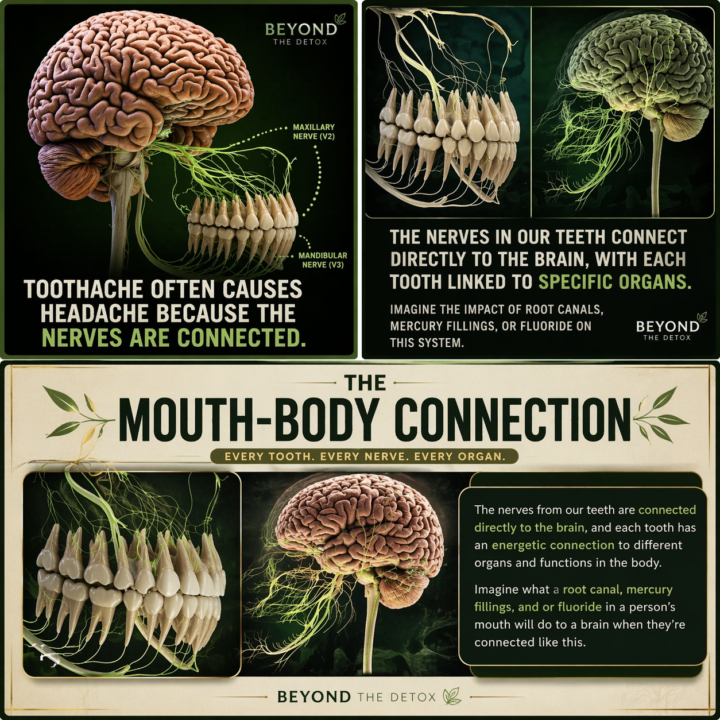
Why Biological Dentistry Matters (And What Most People Aren’t Told About Dental Work)
Dental work is not just about your teeth. It’s about your entire body. Your mouth is directly connected to your immune system, nervous system, digestion, and inflammation levels. What sits in your mouth does not stay there. If there is chronic stress, infection, or toxicity in the mouth, the body is constantly working to compensate. This is where biological dentistry comes in. A biological dentist looks at the mouth as part of the whole body, not as something separate. They focus on reducing toxic load, supporting healing, and making sure dental work is not silently stressing the system. One of the biggest areas of concern is root canals. When a tooth is root-canaled, the inner living tissue is removed. The tooth is no longer alive, yet it remains in the body. Over time, this area can become a place where bacteria hide in tiny tubules within the tooth structure. This can create a chronic stress point in the body that many people don’t even realize is there. Another major issue is mercury fillings. These fillings contain heavy metals and can contribute to the overall toxic burden in the body. A biological dentist removes them using specific safety protocols so you are not exposed during the process. When dental work is done properly, and the area is fully cleaned and supported, the body often responds in powerful ways. If you get these areas addressed correctly and support the healing process, don’t be surprised if you start noticing: • digestion improving • inflammation going down • more energy • symptoms that felt “chronic” beginning to shift This is especially true when treatments like ozone therapy and PRP (platelet-rich plasma) are used. Ozone helps to cleanse the area and reduce harmful bacteria, while PRP supports deep tissue healing and regeneration. Together, they create an environment where the body can actually repair instead of just cope. ⸻ How to Know If You’re Seeing a True Biological Dentist Ask these questions: • Do you use 3D imaging (CBCT) to check for hidden infections or issues in the jaw?
6 likes • 20d
I remember the feeling of intense clarity and joy are after having all my mercury fillings out many years ago. I think I was high for several days!
3 likes • 18d
@Selena Lederman Ouch!
23d •
🔥 Beyond Detox: Internal Mold Cleanse (Simple Daily Protocol) 🔥
A lot of you are dealing with symptoms that don’t fully shift… and one of the biggest things we see behind that is mold inside the body. Not just in your home but in your gut, tissues, and system. This is a simple daily support mix you can use to help your body start loosening, breaking down, and moving it out 👇🏽 🥄 Daily Mold Cleanse Mix Ingredients: • Pinch of cayenne pepper • Juice of 1 key lime (or regular lime) • Small pinch of Celtic salt • 1 tsp extra virgin olive oil • 1 tsp virgin coconut oil 🌀 How to Take It: • Mix everything together • Take once daily (morning is best) • You can follow with warm water if needed ⚡ What This Is Doing in the Body: • Cayenne → stimulates circulation + breaks stagnation • Lime → supports detox pathways + helps break down buildup • Salt → supports minerals + hydration at a cellular level • Olive oil → supports liver + bile flow (key for detox) • Coconut oil → antimicrobial support (targets fungus + mold) ⚠️ What You Might Notice: As your body starts moving things out, you may see: • Increased bowel movements • Changes in stool (color, texture, frequency) • Detox symptoms (fatigue, headaches, etc.) This isn’t random, your body is clearing what’s been sitting ✨ Important Reminder This is support, not the full picture Mold stays in the body when: • The terrain is toxic • Detox pathways are sluggish • The system is overwhelmed So this works best when paired with: • Clean foods (high water, plant-based) • Proper elimination • Supporting liver + gut 💬 Would You Be Interested in a Full Mold Cleanse Course? I’ve been thinking about putting together a step-by-step mold detox protocol that goes deeper into: • Removing mold from the body safely • Opening detox pathways (gut, liver, lymph) • What to eat and avoid • What symptoms mean and how to navigate them • The energetic + physical connection behind mold If this is something you’d want, comment “MOLD” below so I can see how many of you are ready for this 👇🏽

4 likes • 23d
Interested
1-10 of 86
@judith-muir-8782
I am an award wining music educator as well as a certified teacher of the Alexander Technique, with over 40 years of experience.
Active 1d ago
Joined Nov 8, 2025
New York.
Powered by