Activity
Mon
Wed
Fri
Sun
Jun
Jul
Aug
Sep
Oct
Nov
Dec
Jan
Feb
Mar
Apr
What is this?
Less
More
Memberships
Pain Puzzle
9 members • Free
Visibility
35 members • $5/m
Expanding Capacity
154 members • $49/month
✨💗🦋 Light Heart Vision
160 members • Free
Skool Marketplace
32 members • $15/m
HealthKongress.de
34 members • Free
Parenting Teens
73 members • Free
Freedom Lovers Only
30 members • Free
Neurohacking Community
976 members • Free
149 contributions to Inspired Life, Empowered Being

🔥
2d •
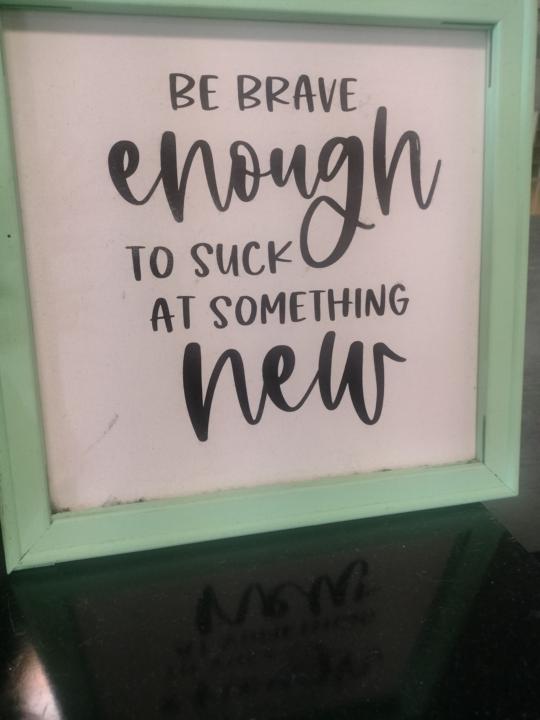
Embrace the discomfort
Saw this at a place I was visiting today and thought I'd pass it on !! When trying something new, it's probably going to feel uncomfortable! Those are new neural connections being created so there is an actual physical discomfort that's happening. That's normal! Let's embrace the process :-) get aligned and then embrace the discomfort that comes along with the change!

🔥
4 likes • 1d
@Wesley Penner The real shift occurs when you stop treating that internal whining as a crisis that needs solving and start seeing it as the inevitable friction of a system update. Trying to soothe the ego or explain the process only gives it a seat at the table it doesn't deserve, keeping you trapped in an energy-draining cycle of resistance. True sovereignty isn't about winning the argument with that voice; it is about reaching a state of total indifference, which is clearly distinct from just ignoring it. Once you stop interpreting that discomfort as a sign of failure and start seeing it as proof that you are operating outside your old comfort zone, the emotional decoupling is complete. At that point, the ego's reaction is no longer a currency you use to pay for your next move, and your freedom to act becomes absolute.
🔥
1 like • 3h
@Georgiana D thank you so much for saying that!
🔥
3d •
How to Get Really Good at Something (Beyond "getting your reps in")
I often use the phrase "get your reps in" when it comes to encouraging others (and myself) to improve on a desired skill. But, there is a caveat here because getting our reps in implies only doing something over and over and if we're not intentional (and reflective) with what that something is it can lead us to plateau or perhaps even worsen. Improvement requires more than rote repetition. As a SIDE quest in @Steve Webb 's 30 day challengers community, we read the book 𝐏𝐞𝐚𝐤: 𝐒𝐞𝐜𝐫𝐞𝐭𝐬 𝐟𝐫𝐨𝐦 𝐭𝐡𝐞 𝐍𝐞𝐰 𝐒𝐜𝐢𝐞𝐧𝐜𝐞 𝐨𝐟 𝐄𝐱𝐩𝐞𝐫𝐭𝐢𝐬𝐞. Thought I'd share some of the key takeaways here beeeecause this group is about Inspired and Empowered Living and I'd love for us to be even more equipped through life! 𝐂𝐎𝐑𝐄 𝐌𝐄𝐒𝐒𝐀𝐆𝐄: Getting really good at something is not about talent or repetition, but it's more about HOW we practice. :) 1. Again, repetition alone doesn't build expertise, deliberate practice does. This seems like an "of course" moment, but I do think that a lot of us get stuck in the cycle of just repeating something over and over and hoping that we'll improve. 𝐒𝐨 𝐰𝐡𝐚𝐭 𝐚𝐜𝐭𝐮𝐚𝐥𝐥𝐲 𝐝𝐨𝐞𝐬 𝐰𝐨𝐫𝐤? 1. 𝐁𝐞 𝐕𝐄𝐑𝐘 𝐬𝐩𝐞𝐜𝐢𝐟𝐢𝐜 about the what. What are we improving? Vague goals KILL progress. Ex: "Getting better at communicating" is not specific enough. Think about the DETAILS of what it means to get better at this. Things like "I will interrupt less", "I will make eye contact", "I will summarize what the other person said so that they feel heard and so that I get feedback on whether I understood their point" "I will ask more follow up questions"--think of observable and trackable behaviors! :) ---We talk a lot about strengths in this group, BUT this is actually about zeroing in on weaknesses and training them directly! :) 2.𝐆𝐞𝐭 𝐟𝐞𝐞𝐝𝐛𝐚𝐜𝐤 :We can't improve what we can't see. This is one of the fastest 'shortcuts' to growth--without the ability to see what's actually happening and getting 'correction'/correcting ourselves, we're more likely to reinforce mistakes or things that will be challenging to fix down the line.
Poll
7 members have voted
🔥
4 likes • 3d
The transition from mindless repetition to true mastery is ultimately a project of intentional discomfort and perceptual evolution. It requires moving beyond the clock and focusing on the degree of cognitive friction we are willing to endure, as staying within our comfort zone only reinforces existing plateaus. By treating every session as a diagnostic tool, we identify exactly where our internal systems break down, turning what feels like failure into a strategic map for growth. As these mental representations become more sophisticated, the way we perceive the work itself actually changes. The noise of a new skill resolves into a clear, actionable structure, allowing us to spot nuances and patterns that were previously invisible. This isn't about innate talent, but about a disciplined feedback system that constantly upgrades our internal operating system. By building this sharper internal model and surrounding ourselves with an environment that demands refinement, we stop reacting to challenges and start anticipating them, ensuring that our progress is a deliberate architectural choice rather than a game of chance.
🔥
7d •
Free training : rethinking ADHD with Gabor Mate
Free webinar coming up for those of you who may be interested. 🙂 https://www.pesi.com/sales/bh_s_096752_rethinkingadhd_organic-2021699

🔥
4 likes • 6d
thank you, that's such an important topic
🔥
8d •
Midlife Crisis ? Nah, more like...Life Calling!
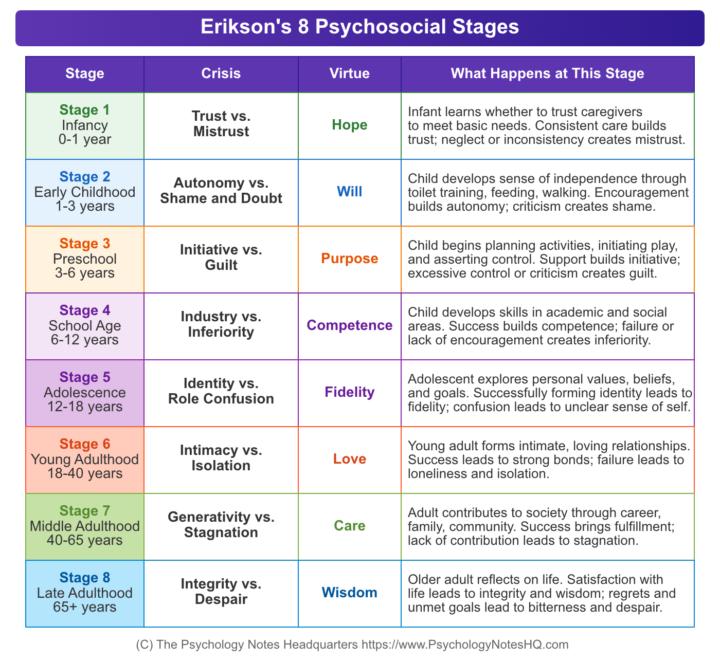
In Erik Erikson’s theory of psychosocial development, generativity vs. stagnation typically shows up in midlife (40-65) but psychologically, it can surface anytime we start asking: "Am I contributing anything that will outlast me? Am I contributing anything beyond myself?" (vs. feeling stuck, directionless, and self-focused) I look at the different developmental stages and I feel like I'm consistenly wrestling with all the stages to some extent (just maybe the more adult version of some of them, ha). I don't see it as a bad thing, I see it as opportunities for growth. Little callings to improve, little opportunities to revisit narratives. Today, we'll just focus on the 7th Stage: 𝐆𝐞𝐧𝐞𝐫𝐚𝐭𝐢𝐯𝐢𝐭𝐲 𝐯𝐬. 𝐒𝐭𝐚𝐠𝐧𝐚𝐭𝐢𝐨𝐧 𝐆𝐄𝐍𝐄𝐑𝐀𝐓𝐈𝐕𝐈𝐓𝐘 This is the desire to create, nurture, mentor, build, or guide something beyond the self. Leaving a positive mark in the world by contributing in ways that matter beyond ourselves. A lot of people think of this as parenting, but it goes beyond that and it can include: mentoring, community involvement, creative work, service, passing on of wisdom, and investing in future generations. Psychologically, generativity is linked to 𝐦𝐞𝐚𝐧𝐢𝐧𝐠 𝐚𝐧𝐝 𝐩𝐮𝐫𝐩𝐨𝐬𝐞, life satisfaction, internal locus of control, future orietnation, and identity integration. Generativity increases when people feel competent, valued, and connected. 𝐒𝐓𝐀𝐆𝐍𝐀𝐓𝐈𝐎𝐍 Stagnation isn't just about "not having kids" or lacking hobbies...It's a kind of self-absorption that blocks meaningful contribution. Self-centered living that's focused on comfort/status/personal gain and that have boredom/emptiness and a lack of deeper meaning associated with the activities we choose to involve ourselves in. (There are a lot of judgment type terms here but there's a reason why people don't indicate feeling fulfilled even when they've achieved the comfort/status/personal gains. Our current society very much promotes these things but unless those things are tied to something 'greater' than ourselves, it can feel empty or arbitrary). --There are more things to say about what stagnation looks like, but I'd like to focus more on how to increase generativity.
Poll
13 members have voted
🔥
2 likes • 8d
The idea that these stages aren't just chronological boxes to check, but rather a constant, internal dialogue, changes the whole dynamic of how we view our personal evolution. When we treat "generativity" as a recurring pulse rather than a midlife destination, it strips away the panic of the "crisis" and replaces it with a perpetual invitation to refine our impact. It’s less about a legacy left behind and more about the quality of the resonance we are creating in the immediate present. This perspective highlights a critical point: the "stagnation" we fear is often just the noise of a nervous system stuck in a loop of self-protection. If we can shift the focus from the pressure of "doing more" to the clarity of "being aligned," the contribution happens as a natural spillover. It’s a move from ego-driven legacy-building to a visceral, daily commitment to staying open. By treating our own history as a tool for others, we effectively turn our past struggles into the very fuel that keeps the stagnation at bay, making the connection to something larger a lived reality rather than an abstract goal.
🔥
2 likes • 7d
@Georgiana D Exactly, and once you stop seeing it as a finished product, the pressure to "reach" a certain stage just evaporates. It turns the whole experience into a living practice where the value isn't in the completion, but in the actual quality of the adjustment you're making right now. That kind of fluidity makes the whole journey feel much more human because it accounts for the fact that we're constantly evolving, rather than just aging through a checklist.
🔥
10d •
Sunday = Source Day
Today marks the start of a new week, what if you began it by reconnecting with your source? 🪄 Healing Hood Take a moment to tell yourself what you’ve done well, what you’ve achieved (nothing is too small!) while you're giving yourself a gentle pat on the shoulders (right and left hand on right and left shoulder, respectively). Then move your hands up and over your head (as if you were putting on a hood) and continue gently over your face down to the upper edge of your upper lip. Imagine there’s a spring of wonderful, healing energy above you, giving you exactly what you need and wish for, an unlimited source that continuously nourishes you. Enjoy how it continues to support you even after you finish the exercise and carry on with your day. Simple and yet surprisingly powerful. What is one thing you can acknowledge yourself for today?

🔥
2 likes • 9d
@Thomas Rua Jr. I've been enjoying what I was doing, being able to focus on what I had intended
1-10 of 149
🔥
@veronika-hubner-9801
Dr. Veronika Hübner |
Von der Wunde zur Wirkung |
LebensTheologin, Kinesiologin,
Dipl. psycholog. Beraterin,
Supervisiorin, Mediatorin, AHS-Lehrerin
Active 1h ago
Joined Oct 16, 2025
Wien