Activity
Mon
Wed
Fri
Sun
Jun
Jul
Aug
Sep
Oct
Nov
Dec
Jan
Feb
Mar
Apr
What is this?
Less
More
Memberships
Beyond Light Academy
38 members • $49/month
Beyond The Detox
72 members • Free
83 contributions to Beyond The Detox

2h •
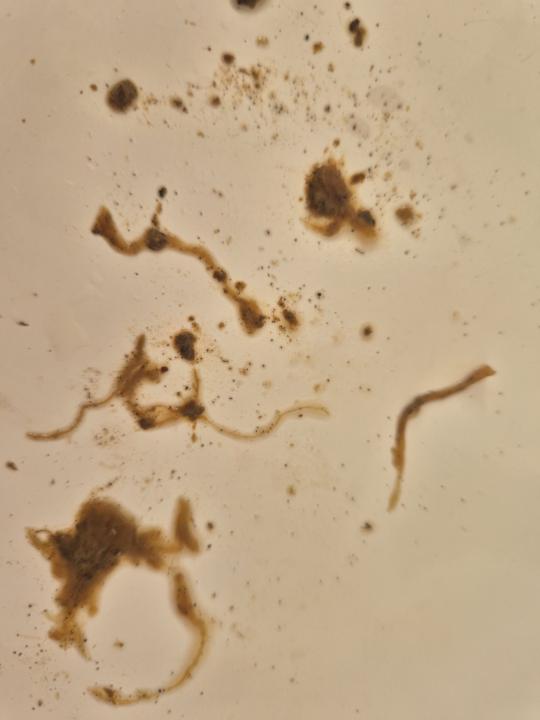
Excavation
Haven't done a parasite photo shoot recently so thought I'd share this mornings finds. My poop is basically full of helminths...it's quite hard to photo some of them as they are so fine in texture, but managed to rinse off some to share. Im not sure if the rolled up ones are flukes or flatworms, but they are interesting to look at 🥸
0
0

12h •
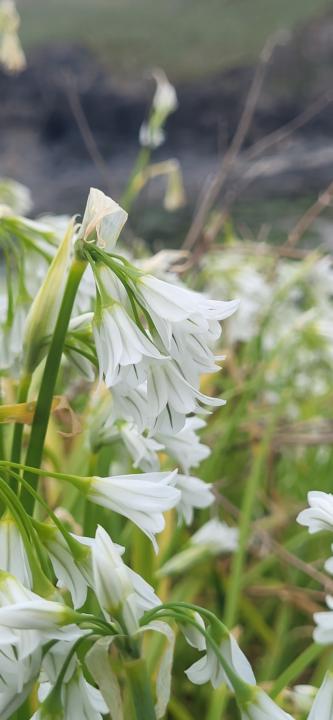
Three Cornered leek.
Have you come across these wild growing white flowers that look like white bluebells, usually growing with the bluebells. Three-cornered leek (Allium triquetrum) is fully edible and considered a delicious, invasive wild green. Every part of the plant, leaves, stems, flowers, and bulbs, can be eaten raw or cooked, offering a mild, sweet onion/garlic flavor similar to spring onions or chives. Key Culinary Uses: - Leaves/Stems: Used in salads, pesto, soups, or sautéed like spring onions - Flowers: Used as a decorative, garlicky garnish for salads and dishes. - Bulbs: Can be cooked as a substitute for small onions or garlic. Important Identification Tips: - Stem Shape: The stems have a distinct three-cornered (triangular) shape. - Smell: When crushed, the plant has a strong, unmistakable onion or garlic smell. - Flowers: Small white, bell-shaped flowers with a green stripe down the center of each petal. - Warning: It can be confused with poisonous plants like Lily of the Valley, which has broader leaves and lacks the onion scent, or Snowflakes, which have yellow/green spots at the tip of the petals. Ensure you clean them thoroughly before consumption. Regardingnutritional value, it is known to be a powerhouse of nutrients typical of the Allium (garlic and onion) family. Core Nutritional Highlights Vitamins & Minerals: It is particularly high in vitamins A and C, which support your immune system and skin health. It also provides essential minerals like iron, calcium, and vitamin K, making it a great "spring tonic" to revitalise you after winter. Antioxidants: Like its cousin wild garlic, it contains flavonoids and antioxidants that help protect your cells from damage. Sulfur Compounds: The characteristic garlic smell comes from allicin and other sulfur compounds. These are known for their antibacterial, antifungal, and antiviral properties. Potential Health Benefits Heart Health: Regularly eating alliums like three-cornered leek can help reduce high blood pressure and lower "bad" cholesterol levels.
0 likes • 2h
These look so pretty...now i know theyre edible, they look very tasty, too 😅

3d •
⚡️ Heavy Metal Cleanse MP3 is Now Live ⚡️
“Cellular Release & Trauma Unbinding” Hello beautiful beings 🤍 I’ve been tuning into all of you deeply… and I finally was able to make and release this MP3 ❤️ The Heavy Metal Cleanse MP3 is now ready and available for those of you who feel called to go deeper into this work. This is not just a meditation. This is designed to support you through the energetic side of detoxing heavy metals… because what many of you are starting to feel right now is not just physical. As your body begins to release heavy metals… It also begins to release: • Stored trauma • Emotional density • Old memories and patterns • Nervous system imprints • Deep subconscious loops And if this part isn’t supported… It can feel like: • Random emotions coming up • Irritation or overwhelm • Fatigue or heaviness • Triggers that don’t make sense This MP3 is here to help you move through that safely and powerfully. To guide you back into your body… To connect you deeper to yourself… And to allow your system to release what it’s been holding onto for so long. This is where the real work happens. Not just removing metals… But freeing what has been stored with them. ⸻ 🤍 If you feel called to receive this MP3: You can send payment through: • PayPal • Zelle • Wise Once sent, message me and I will send you the MP3 directly. (You can use this alongside your current protocol at any time during the cleanse.) Cost $37 ⸻ 🌿 Check-In I also want to check in with all of you… How are you doing with the heavy metal cleanse so far? Be honest with me: • How is your body feeling? • How is your energy? • Have you noticed anything shifting physically or emotionally? • Any triggers or patterns coming up? Drop it below 👇 I’m tuning into all of you and supporting you through this, even from a distance. I love you all deeply and I’m really proud of the work you’re doing 🤍 This is not easy work… But it is powerful. And you are doing it. Who wants the MP3? Comment Me! Or a GIF!

4 likes • 2d
Lots of anger for me, too. I managed to release a little today 😬 Flipping in and out of numbing myself as holding on to it 😪
1 like • 21h
@JoJo Light Thank you 🙏 I had a bit of a breakthrough last night and im feeling much better today 🩷 Will send the money for the HM recording later today.

2d •
Raw Food Recipe Book
If anyone wants a really good raw food recipe book, I recommend this one: https://www.amazon.com/Am-Grateful-Recipes-Lifestyle-Gratitude/dp/1556436475 I used to go to the resteraunt now and then when I was in California and they take raw food to a new level. I just made the coconut curry soup and it's delicious. It also has the recipes for making raw toast, crackers, and bread using a dehydrator. I think I'll be staying on this diet, so I want to give it all a try.
1 like • 2d
Thanks Caryn, i've found a copy here on Ebay which I may buy 💗
4d •
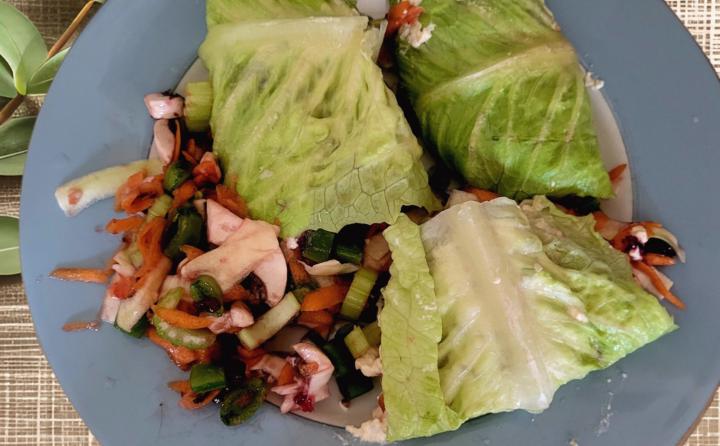
Lettuce wraps
When making meals, I usually throw things together and hope it works out. Well, this time it totally did. I thought id make some raw vegan lettuce wraps.. I mixed together in a bowl, chopped sugar snap peas, grated carrot, chopped celery, chopped chestnut mushrooms, spiralised courgette, mashed up cranberries ( you can add small teaspoon of maple syrup or honey if you want sweetness) i added fresh grated ginger. Mixed it all up Next dress the lettuce leaves in either a mint,cucumber, plant based coconut yoghurt, or hummus, or whatever you prefer. Then add the veggie mix in the center of the leaf and roll length ways. Next ......eat...nomm nomm nommm Personally, I think the ginger and cranberries were the winning ticket in this mix. Definitely making again, think I'll add some fennel next time and maybe wild rice . 😋 Very yummy 😋 🥬🥒🍴🫛💚
1 like • 4d
Looks good! Nice touch with the cranberries 🤤
1 like • 4d
@Tamsyn Hartley
1-10 of 83