Activity
Mon
Wed
Fri
Sun
Nov
Dec
Jan
Feb
Mar
Apr
May
Jun
Jul
Aug
Sep
Oct
What is this?
Less
More
Owned by Carla
Bloggers, creators, and affiliate marketers are growing together with SEO, Pinterest, traffic support, encouragement, and community.
The Boss Suite
28.7k
Free
The Simple Shift
72
5.0
$67/m
Easy AI Club
367
5.0
$9/m
Empower Collective
41
Free
One Hour to Freedom | Cheriese
41
$2,700
The Creators Community
4.6k
4.8
Free
Digital Growth Community
62.1k
Free
Heartstrong Content Studio
12
$47/m
AuthorityCam
272
5.0
$29/y
6 contributions to Bedrock Nation

Jan 10 •
The 30/30/30 Rule (Bedrock Style): A Morning Rhythm That Changes Your Day
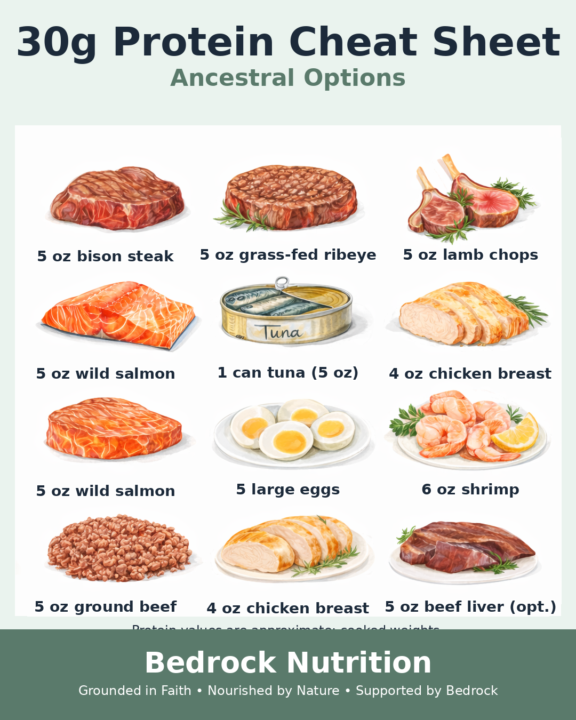
30 grams of protein, within 30 minutes of waking then 30 minutes of low-impact movement (walk, vibration plate, rebounding, easy bike) The reason this “rule” has taken off is simple: it’s not a trendy biohack—it’s a rhythm. And rhythm is where real results live. UCLA Health describes the 30/30/30 rule as a simple 3-step habit: 30g protein at breakfast, eaten within 30 minutes of waking, followed by 30 minutes of low-intensity, steady-state exercise—and also notes it hasn’t been studied as a single “plan,” even if parts of it are supported by research and common sense physiology. Below I discuss why we like it through an ancestral / functional / terrain lens—and why it can be especially powerful for women. Why this works: it stabilizes your terrain early Most women don’t have a “willpower problem.” They have a blood sugar + cortisol + under-fueled muscle problem. 1) 30g protein early = fewer cravings, steadier blood sugar UCLA points out there’s no magic in the exact number 30, but that protein in the morning helps you feel full longer than a carb-heavy breakfast, which can reduce mid-morning cravings/snacking. Functional medicine translation:When you anchor your morning with protein, you’re less likely to ride the rollercoaster of “coffee + cortisol + carbs → crash → cravings.” 2) Muscle is a woman’s metabolic “savings account” Women are trained culturally to under-eat—especially protein. But muscle is not just for aesthetics. It’s glucose storage, metabolic rate support, strength, resilience, and healthy aging. Research and position statements for active individuals commonly land higher than the bare-minimum RDA—often ~1.4–2.0 g/kg/day for many exercising people. And in menopause-focused nutrition reviews, higher protein intakes (often above 0.8 g/kg/day) are commonly discussed for supporting body composition and function as women age. Bedrock takeaway:Women don’t need less protein because they’re women. Many women need more, because they’re navigating hormonal transitions, stress load, and modern sedentary life.

1 like • Jan 10
This is what I need. Printed and starting in the morning. I drink IAMINOS, one scoop and my collagen, I need to see what this amounts to...I don't eat a lot...I eat 2 egg bites cooked in the air fryer and am full, really full after my Bio-Age strip, Aminos and Hydrate sips...
1 like • Jan 10
@Leanna Cappucci You just made my day. Now, I need to add the physical movement, most likely the vibration plate or the cycle stepper. Thank you.
Dec '25 •
Intentionality going into 2026 (goal planning)
2026 is coming—and we’re not drifting into it. We’re building it. 🔥 In our family, we start every new year with 3 simple practices that create clarity, momentum, and results: 1) Choose ONE WORD One word becomes your focus, your filter, your “no,” your standard. Not pressure—direction. 2) Set goals using the 7 F’s But here’s our twist for 2026: 33/33/33 We build around three anchors: 🕊️ FAITH (33%) — alignment, identity, obedience, peace, courage 💼 FIELD / BUSINESS (33%) — purpose, impact, income, systems, leadership 💪 FITNESS / HEALTH (33%) — energy, metabolism, strength, consistency Everything else (Family, Finance, Fun, Friendship) gets better when the anchors are strong. 3) Create a vision board Not as “wishful thinking”… but as vision + focus. What you see consistently becomes what you move toward consistently. Mindset for 2026: The impossible becomes possible when you stop asking: “What’s realistic?” …and start asking: “What would this look like if I believed it was available to me—and I acted like it?” ✨ Manifesting isn’t magic. It’s alignment + action: faith → belief → decisions → daily habits → outcomes. Your turn 👇 1. What’s your ONE WORD for 2026? 2. Which pillar needs the biggest upgrade: Faith, Business, or Health? 3. What’s ONE “impossible” goal you’re daring to believe for this year? Comment below— share your word + your pillar, and download our goal planning worksheet to help you map it out. —Leanna Rooted Faith Wellness | Bedrock Nutrition #bedrocknutrition #healthyhabits #functionalnutrition #rootedfaithwellness #newyear #2026 #goalcrusher #goalsetting #manifestation #impossblemadepossible

0 likes • Dec '25
My Anchors for 2026 🌱 Because when the roots are strong, everything else grows. 🕊️ FAITH - 33%Alignment. Identity. Obedience. Peace. Courage. Not perfection. Not control. But trusting Jehovah God enough to move before I see the whole staircase. 💼 FIELD / BUSINESS - 33%Purpose. Impact. Income. Systems. Leadership. Building something that serves real people, creates real results, and doesn’t require me to burn myself out to prove my worth. 💪 FITNESS / HEALTH - 33% Energy. Metabolism. Strength. Consistency. Because clarity is hard when you’re exhausted, inflamed, and running on fumes. ✨ Everything else - Family, Finance, Fun, Friendship...gets better when the anchors are strong. And that’s how I’m building 2026. Rooted. Intentional. Calm. Strong.
1 like • Jan 1
@Leanna Cappucci I did not, but now I have it printed out and will work on it. Thank you.
Jan 1 •
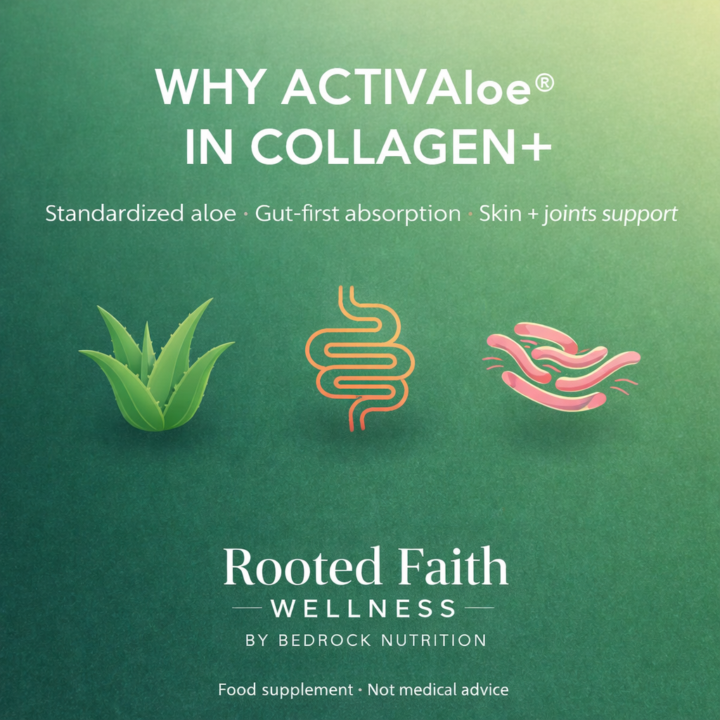
WHY ACTIValoe® IS IN COLLAGEN+
WHY ACTIValoe® IN COLLAGEN+ (and why “aloe” isn’t always aloe) Aloe is one of the most misunderstood “gut health” ingredients—because what people call “aloe” can include very different parts of the leaf, and those parts behave very differently in the body. The key distinction: - Inner leaf gel / mucilage fraction → rich in polysaccharides (often used for “soothing” GI support) - Latex / outer leaf fraction → contains anthraquinones like aloin (the classic “laxative” effect) This matters for safety and consistency. The International Aloe Science Council (IASC) states their standard for aloin in products for oral consumption is <10 ppm. And FDA ruled aloe (as a stimulant laxative ingredient) is not generally recognized as safe and effective for OTC laxative drug products due to inadequate safety data (this is specifically about stimulant laxative use, not “food-grade gel”). EFSA has also raised concerns around hydroxyanthracene derivatives (a category that includes aloe-emodin–type compounds) regarding genotoxicity/carcinogenicity risk in food contexts—another reason the industry focuses on keeping these compounds very low. Translation: the “type” of aloe—and the processing/standardization—matters. Why we prefer ACTIValoe® (safety + efficacy logic) In Collagen+, we use patented ACTIValoe® (Aloe Corp), and we chose it for 3 main reasons: 1) It’s standardized for the active gel fraction (polysaccharides) Aloe Corp states ACTIValoe® is the only supplier to quantify and guarantee 10% polysaccharide retention (dry weight) through its patented process and that they enhance polysaccharide content in a specific molecular range (50,000–200,000 Daltons). Why that matters: botanical ingredients are naturally variable. Standardization is how you get repeatability. 2) It’s built around content + purity aligned with IASC standards Aloe Corp states ACTIValoe® exceeds IASC certification standards for content and purity. And IASC’s own FAQ clarifies the <10 ppm aloin standard for oral aloe products.
1 like • Jan 1
I love aloe, it's been my go to stomach aid for over 20 years
Dec '25 •
Understanding Skool Points & Levels
The more you interact the higher you climb. Some content is ONLY available to those at higher levels, this is to encourage participation- like and comment more… and see more content! Points: You earn points when other members like your posts or comments. 1 like = 1 point. This encourages users to interact with other members in their community. Levels: As you gain points, you level up. Your level is shown at the bottom right of your avatar. The number of points required to get to the next level is shown under your avatar on your profile page. Level 1 - 0 points Level 2 - 5 points Level 3 - 20 points Level 4 - 65 points Level 5 - 155 points Level 6 - 515 points Level 7 - 2,015 points Level 8 - 8,015 points Level 9 - 33,015 points
2 likes • Dec '25
I love how Skool works.
Dec '25 •
People are drinking less, here's why (and our Alcohol Toolkit download)
Even though it’s the Holiday Season, Americans are drinking less — and it’s not just a trend. It’s biology. New Gallup data shows only 54% of U.S. adults drink alcohol right now — the lowest level in Gallup’s ~90-year tracking. Even more telling? 53% of Americans now believe “moderate” drinking is unhealthy (that’s a first). So what’s changing? A lot of people are finally connecting the dots between alcohol and how they actually feel: 1) Sleep (the “I fall asleep… but wake up at 2am” effect) Alcohol can feel sedating at first, but it’s linked to disrupted sleep architecture and reduced REM—the stage tied to mood, memory, and emotional resilience.  2) Hormones (women feel this fast) Alcohol can disrupt endocrine signaling and is associated with hormonal disturbances—often showing up as PMS flares, anxiety, hot flashes, libido changes, or “wired-tired” sleep.  3) Metabolism (fat-burning gets “paused”) Your body prioritizes metabolizing alcohol first. Heavy intake is associated with higher triglycerides and decreased insulin sensitivity, which matters if you’re working on weight, cravings, or blood sugar stability.  4) Liver function (your main detox hub) Alcohol-related fatty liver (steatosis) is the earliest sign of liver injury and is often reversible when alcohol stops—but it’s a real “check engine light” many people ignore. And yes—cancer risk is part of this conversation now. The U.S. Surgeon General’s advisory highlights a causal link between alcohol and at least seven cancers. Gallup also found that even among people who still drink, patterns are shifting: only 24% of drinkers had alcohol in the last 24 hours, and the average is 2.8 drinks/week.  If you’ve been questioning your relationship with alcohol, you’re not alone — and you’re not “weak.” You’re paying attention. Want my “damage-control” tips for the occasional drink (sleep + blood sugar + next-day recovery)? I’ll drop it below: Link to poll: https://news.gallup.com/.../drinking-rate-new-low-alcohol...
1 like • Dec '25
Since I eliminated wheat...I can't drink, win/win.
1-6 of 6

@carla-gardiner-6093
Crash Test Dummy turned Resource Queen. I test the tools and resources, so you don’t waste time, money, or sanity building your biz.
Active 3d ago
Joined Nov 10, 2025