
Write something

17d •
Why You Can’t Sleep:
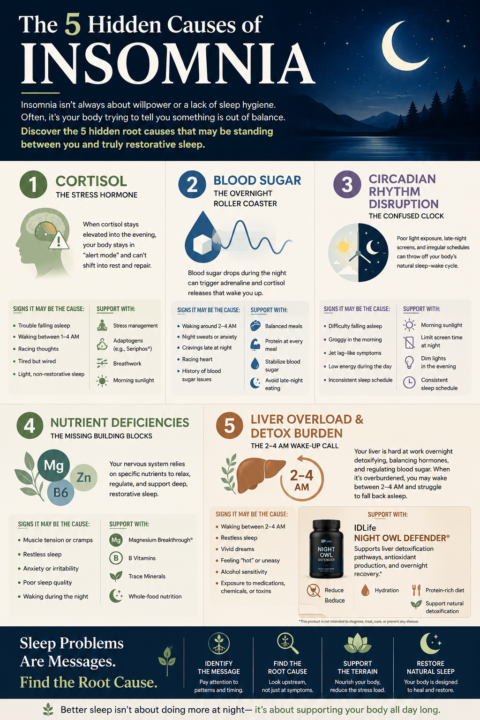
A Terrain-Based Approach to Insomnia and Sleep Disturbances Most people think insomnia is a sleep problem. I don’t. Insomnia is often a symptom of an underlying imbalance. The inability to fall asleep, stay asleep, or wake feeling restored is rarely caused by a deficiency of sleeping pills. More often, it is the result of dysfunction somewhere upstream. The body is designed to sleep. When it doesn’t, something is interfering with that design. Instead of asking: “What can I take to make me sleep?” A better question is: “Why does my body no longer feel safe enough to sleep?” Sleep Is Not Passive Many people think of sleep as a period when the body shuts down. In reality, sleep is one of the most active healing states in human physiology. During sleep, your body: - Repairs tissues - Produces growth hormone - Consolidates memories - Regulates blood sugar - Balances hormones - Clears metabolic waste from the brain - Supports immune function - Repairs cellular damage Sleep is not a luxury. It’s a biological requirement. When sleep becomes disrupted, every system in the body eventually suffers. The Four Most Common Root Causes of Insomnia 1. Stress and Elevated Cortisol This is by far the most common cause I see. Your body cannot simultaneously prepare for survival and prepare for sleep. When cortisol remains elevated into the evening, the brain receives a message: “Stay alert. We may need to deal with a threat.” The result: - Difficulty falling asleep - Racing thoughts - Waking between 1–4 AM - Light, non-restorative sleep - Feeling tired but wired Many people assume they have a sleep problem when what they actually have is a stress regulation problem. Research consistently shows that people with insomnia often exhibit higher nighttime cortisol levels and a state of physiologic hyperarousal. 2. Blood Sugar Dysregulation This is another commonly overlooked cause. Blood sugar instability during the night can trigger: - Adrenaline release - Cortisol release - Night sweats - Racing heart - Sudden awakening around 2–4 AM
4
0
18d •
Mouth Tape: A Simple Sleep Tool That Starts With Better Breathing
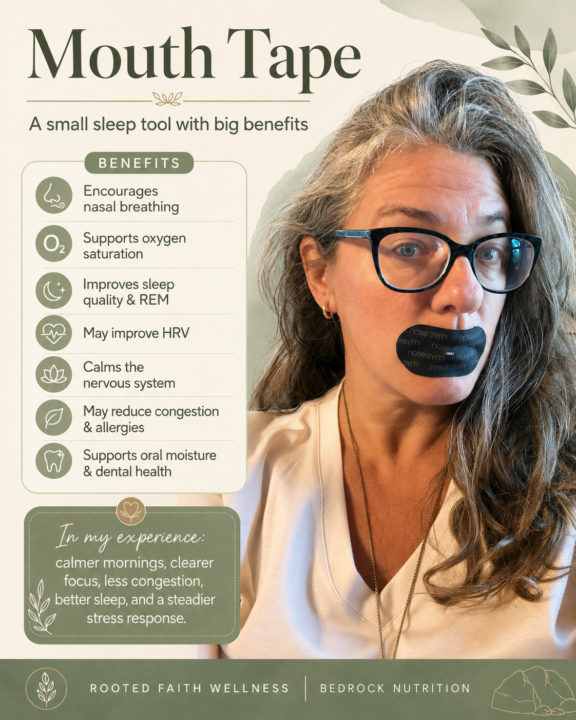
Mouth tape is one of those wellness tools that sounds almost too simple to matter. A tiny strip of tape over the mouth at night? Really? But for many people, the impact can be surprisingly noticeable: deeper sleep, less dry mouth, fewer nighttime wake-ups, improved oxygen saturation, better HRV, calmer mornings, clearer thinking, and less of that “wired but tired” stress response. I’ve experienced this personally. Using mouth tape has helped me with sinus congestion, allergies, sleep quality, REM sleep, oxygen saturation, HRV, and even my anxiety and stress response. I wake up feeling calmer, clearer, more focused, and more rested. So let’s talk about why something this simple may have such a meaningful effect. Mouth Breathing vs. Nose Breathing The mouth is a backup airway. The nose is the primary breathing organ. When we breathe through the nose, air is filtered, warmed, humidified, and regulated before it reaches the lungs. Nasal breathing also supports nitric oxide production, which plays a role in airway tone, blood flow, oxygen delivery, and immune defense. Mouth breathing bypasses much of that system. During sleep, chronic mouth breathing can contribute to dry mouth, bad breath, snoring, disrupted sleep, airway irritation, and in some cases, worsening sleep-disordered breathing. This matters because sleep is not just about being unconscious for 7–8 hours. Sleep is when the body repairs, detoxifies, regulates blood sugar, balances hormones, restores the nervous system, and consolidates memory. If breathing is disrupted, sleep is disrupted. What Mouth Tape Actually Does Mouth tape does not force better breathing. It gently reminds the body to keep the mouth closed so nasal breathing can become the default. That distinction matters. Mouth tape is not a cure for sleep apnea, chronic congestion, airway restriction, or poor sleep. But for people who can breathe through their nose and simply fall into nighttime mouth breathing out of habit, it may be a helpful training tool.
1
0
19d •
Water 101- Part 4 - Science, Marketing, and Evaluating Health Claims
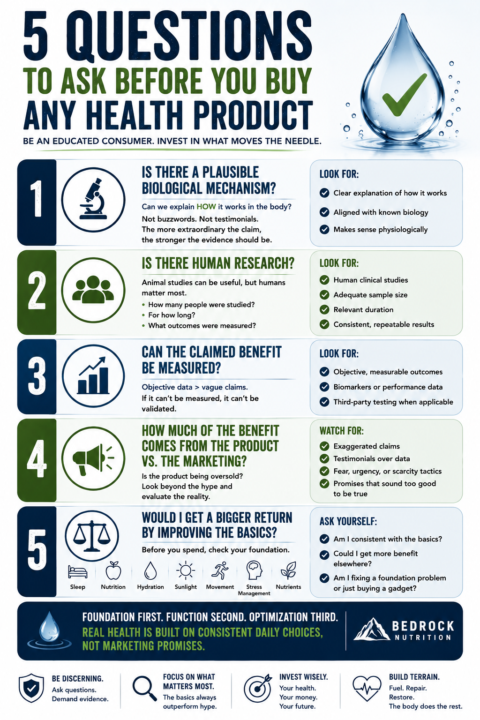
Over the last few posts we've discussed: 💧 Clean Water 💧 Water Filtration 💧 Hydration 💧 Electrolytes Now let's talk about something equally important: How do you know whether a health claim is supported by science—or just good marketing? In today's wellness industry, we're constantly being bombarded with promises. "This changes your cells." "This detoxes your body." "This boosts energy." "This reverses aging." "This is the missing piece." Some products may have merit. Some are oversold. Some are little more than expensive marketing. The challenge is learning how to tell the difference. When I evaluate a health product, supplement, device, or protocol, I start with five simple questions. 1️⃣ Is There a Plausible Biological Mechanism? In other words: Can we explain HOW it works? Not with buzzwords. Not with testimonials. Not with marketing language. Can we explain what is happening physiologically? The body is incredibly complex, but biology still follows rules. The more extraordinary the claim, the stronger the evidence should be. 2️⃣ Is There Human Research? Animal studies can be useful. Laboratory studies can be interesting. But ultimately, we want to know: Has this been studied in actual humans? And if so: • How many people? • For how long? • What outcomes were measured? One small study doesn't prove something works. But multiple studies showing similar findings begin to build a case. 3️⃣ Can the Claimed Benefit Be Measured? Some things are objective. Examples include: ✔ Blood sugar ✔ Cholesterol ✔ Blood pressure ✔ Recovery markers ✔ Exercise performance ✔ Inflammatory markers ✔ Contaminant reduction These can be measured. When claims become vague or impossible to quantify, skepticism becomes appropriate. 4️⃣ How Much of the Benefit Comes From the Product vs. The Marketing? This is one of the most overlooked questions in health. Sometimes a product isn't necessarily bad. It's simply being marketed as far more important than it actually is. Many tools may provide a small benefit.
3
0
19d •
Water 101 - Part 3 - Why More Water Isn't Always the Answer
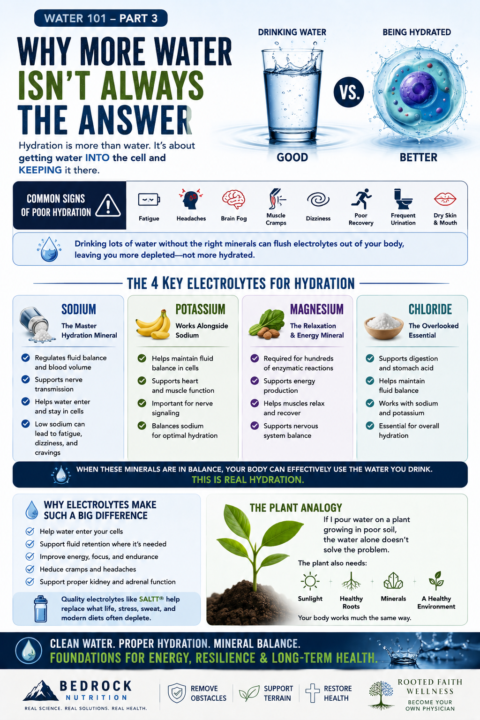
Why More Water Isn't Always the Answer One of the most common things I hear is: "I drink a gallon of water every day." My next question is always: "Do you feel hydrated?" Because hydration and water intake are not the same thing. Many people are drinking plenty of water but still struggle with: 💧 Fatigue 💧 Headaches 💧 Brain fog 💧 Muscle cramps 💧 Dizziness 💧 Poor exercise recovery 💧 Frequent urination 💧 Dry skin and dry mouth Why? Because hydration is about more than just water. It's about getting water INTO the cell and helping the body maintain proper fluid balance. Think of it this way: If I pour water on a plant growing in poor soil, the water alone doesn't solve the problem. The plant also needs: ☀️ Sunlight 🌱 Healthy roots 🪨 Minerals 🌿 A healthy environment Your body works much the same way. The four primary electrolytes involved in hydration are: 🧂 Sodium The master hydration mineral. Sodium helps regulate fluid balance, blood volume, nerve signaling, and cellular hydration. 🍌 Potassium Works alongside sodium to maintain proper cellular function, muscle contraction, and heart health. ⚡ Magnesium Required for hundreds of enzymatic reactions and plays a critical role in energy production, muscle relaxation, and nervous system regulation. 💧 Chloride Often overlooked but essential for digestion, stomach acid production, and fluid balance. This is why many people notice more improvement from adding quality electrolytes than simply drinking more plain water. At Bedrock Nutrition, we often talk about terrain. Hydration is part of that terrain. The goal isn't to force more water into the body. The goal is to create an environment where the body can properly use the water you're already drinking. Clean water matters. Electrolytes matter. Hydration habits matter. And together, they support energy, recovery, resilience, and overall health. Coming up in Part 4: Science, Marketing and how to evaluate health claims before buying! Our preferred electrolytes:
1
0
19d •
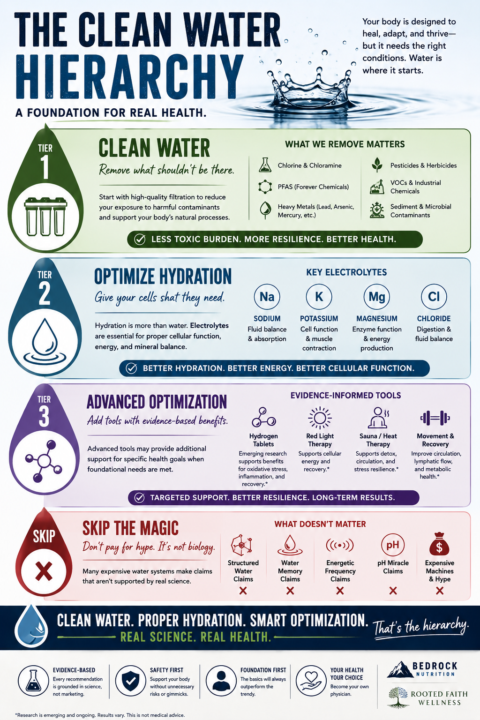
Water 101 - Part 2 - The Clean Water Heirarchy
One thing I've learned over the years in health and wellness is that people often skip the foundation and go straight to the shiny object. I've watched people tell me they can't afford quality food. They can't afford supplements. They can't afford lab testing. They can't afford electrolytes. But somehow they can afford a multi-thousand-dollar water machine financed through a loan because someone promised them "special" water. Let's talk about priorities. 🥇 Step 1: Clean Water Before we worry about making water "better," we should make sure it isn't bringing problems with it. Contaminants that deserve our attention include: • PFAS ("forever chemicals") • Chlorine and chloramine • Heavy metals • Pesticides and herbicides • VOCs and industrial contaminants Reducing exposure to these is a practical, measurable step toward improving health. 🥈 Step 2: Proper Hydration Hydration is more than water. Your cells also need: • Sodium • Potassium • Magnesium • Chloride This is why many people notice greater improvements from proper electrolyte support than from expensive water gadgets. 🥉 Step 3: Advanced Optimization Once the foundation is in place, there are some emerging tools that show promise. One example is molecular hydrogen. The hydrogen tablets we use through Fullscript have been studied for their potential role in: • Oxidative stress • Inflammation • Exercise recovery • Cellular and mitochondrial health The research is still developing, but at least there is a plausible biological mechanism and growing scientific literature supporting investigation. That's very different from claims involving: ❌ Structured water ❌ Water memory ❌ Energetic frequencies ❌ "Living" water ❌ pH miracle claims These concepts are popular in marketing, but they remain poorly supported by human clinical evidence. At Bedrock, our philosophy has always been simple: Foundation first. Clean water. Real food. Sleep. Sunlight. Movement. Hydration. Stress management. The basics may not be flashy, but they consistently outperform hype.
2
0
1-30 of 43
powered by
skool.com/bedrock-nation-8489
Free wellness community for faith based living, functional health and real connection - off social media, rooted in purpose - learn, grow and heal.
Suggested communities
Powered by