
Write something

Dec '25 •
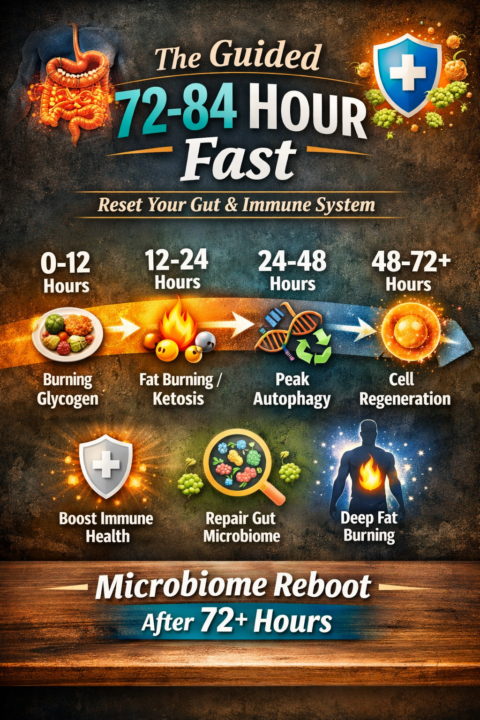
Guided 72–84 Hour Fast (Gut + Immune Reset)
Hey Bedrock Nation — if you’re feeling puffy, inflamed, snacky, or like you need a clean “reboot,” this is one of my favorite tools to reset the terrain. ✅ I just uploaded our Guided 72–84 Hour Fast handout. It walks you through: - Why 72+ hours matters (gut microbiome + immune reset signals) - The stages of fasting (what’s happening in your body at 0–12, 12–24, 24–48, 48–72+ hours) - What to expect (hunger waves, energy shifts, brain fog → clarity) - Electrolyte strategy to make this feel doable - How to break the fast correctly so you don’t wreck your gut or digestion - A simple Sunday → Thursday 84-hour schedule you can follow Important: This is designed as a true guided protocol — not just “not eating.” Your plan matters. 🔗 Download the handout here: 🧂 Electrolytes we recommend: Hydrate, SALTT or our DIY electrolyte recipe "ketoraid" and possibly, IDLife LOAD or I AM Aminos for muscle support (see your team member for help) Before you start — comment below with: 1. Your start date (Mon is my favorite) 2. Your fasting goal (bloating, cravings, insulin resistance, autoimmune flare reset, etc.) 3. Your biggest concern (headaches, low energy, sleep, social events) I’ll be watching the thread and coaching you through the common speed bumps. 🤍— Leanna For more understanding on the how and why of fasting take the FREE mini course by clicking on the classroom tab above!
Jun 3 •
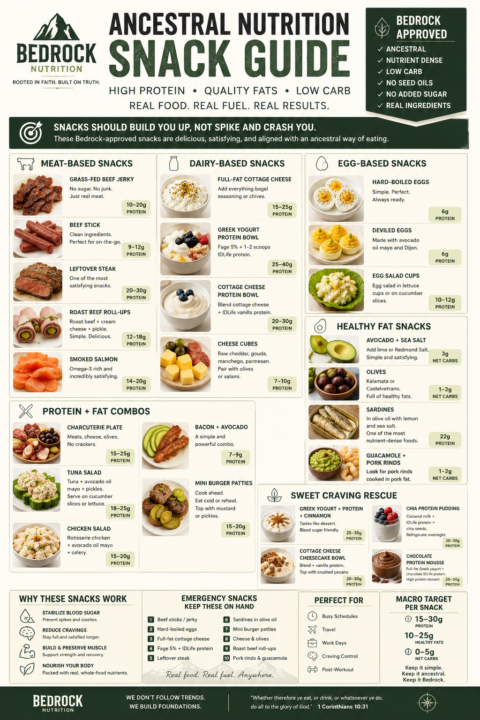
Stop Snacking Like a Modern Human
Stop Snacking Like a Modern Human: The Ancestral Snack Guide One of the most common questions we hear at Bedrock is: “What snacks can I eat?” And while that seems like a simple question, it actually reveals one of the biggest problems with modern nutrition. Most of us have been trained to think of snacks as entertainment. A bag of chips while watching TV. A granola bar between meetings. A handful of crackers because we’re bored. A sugary coffee drink for an afternoon pick-me-up. The problem is that these foods aren’t actually fueling the body. They’re stimulating it. They provide a quick hit of sugar, refined carbohydrates, artificial flavorings, and industrial seed oils that create temporary satisfaction followed by another round of cravings a few hours later. This cycle keeps blood sugar unstable, energy inconsistent, hunger elevated, and fat loss frustratingly difficult. Ancestral nutrition takes a completely different approach. Instead of asking: “What sounds good?” We ask: “What will nourish my body?” Snacks Should Function as Mini Meals Historically, humans did not have access to processed convenience foods. There were no vending machines. No drive-thrus. No protein bars. No bags of flavored chips. Food required effort. When people ate, they generally consumed foods rich in nutrients, protein, and healthy fats that provided lasting energy and satiety. The goal of a snack should not be to occupy your hands. The goal should be to provide nutrition. A good snack should: - Stabilize blood sugar - Support muscle maintenance - Reduce cravings - Increase satiety - Provide vitamins, minerals, and amino acids - Help you reach your daily protein goals If a food cannot accomplish those things, it probably isn’t a great snack. Protein Comes First One of the biggest mistakes people make is trying to satisfy hunger with foods that contain very little protein. Crackers. Pretzels. Granola bars. Rice cakes. Trail mix. Fruit snacks. Most of these foods provide calories without providing what the body is actually asking for.
3
0
Mar 30 •
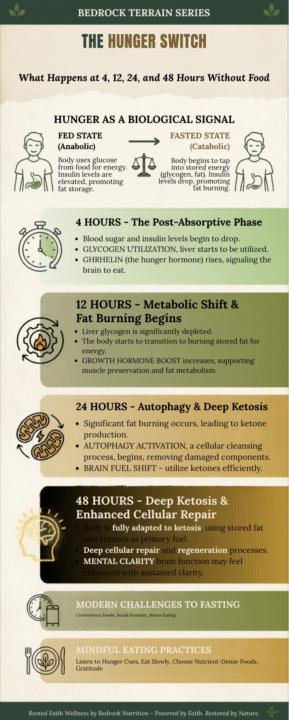
What if hunger isn’t the enemy… (the small frequent meal myth)
What if hunger isn’t the enemy, but one of your body’s most powerful metabolic signals? For decades we were told to eat constantly. “Six small meals a day.” “Never skip breakfast.” “Keep the metabolism firing.” But biologically, the human body was never designed to be in a constant fed state. For most of human history, periods of eating and periods of fasting naturally alternated. And those fasting windows triggered some of the most important repair processes in the body. When we constantly digest food, the body prioritizes storage and growth. When we pause from eating, the body shifts toward repair and restoration. This metabolic transition is sometimes called “the metabolic switch.” Instead of relying primarily on glucose for fuel, the body begins shifting toward fat oxidation and ketone production. And that shift activates several powerful biological processes. 1️⃣ Cellular Cleanup (Autophagy) Fasting helps trigger autophagy, the cellular recycling system that removes damaged proteins, dysfunctional mitochondria, and metabolic debris. This process was so important that it earned the 2016 Nobel Prize in Physiology or Medicine. Autophagy supports: • mitochondrial health • cellular repair • metabolic resilience 2️⃣ Metabolic Flexibility Many people today are metabolically inflexible — meaning their bodies rely almost exclusively on glucose for energy. Periods of fasting help restore the body’s ability to switch between fuel sources: glucose → fat → ketones This metabolic flexibility is associated with: • improved insulin sensitivity • more stable energy • better appetite regulation 3️⃣ Hormonal Recalibration Hunger is largely regulated by two hormones: Ghrelin — signals hunger Leptin — signals satiety Constant eating disrupts these signals. Strategic fasting can help restore normal hunger and fullness cues, allowing people to experience what true hunger — and true satiety — actually feel like again. But fasting is not one-size-fits-all.
Mar 23 •
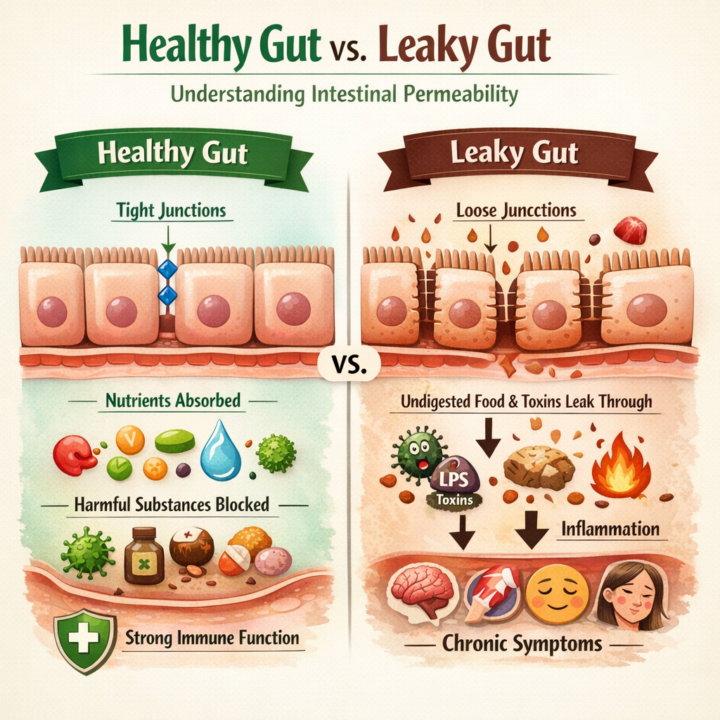
What Is “Leaky Gut”? (Part 2)
Understanding Intestinal Permeability and How We Restore the Gut Lining One of the most important concepts in functional and root-cause medicine is something called intestinal permeability—often referred to as “leaky gut.” Despite the nickname, this isn’t a trendy wellness buzzword. It’s a well-documented physiological process that plays a central role in inflammation, immune dysfunction, metabolic disease, and many chronic symptoms. To understand why, we need to understand what the intestinal barrier is actually designed to do. The Gut Lining: Your Body’s Most Important Security Gate Your intestinal lining is only one cell thick, yet it covers about 4,000 square feet of surface area—roughly the size of a tennis court. Its job is incredibly precise. It must allow nutrients to pass through, while blocking: • toxins • pathogens • undigested food particles • inflammatory molecules Think of it like a security checkpoint at the airport. The gut lining uses microscopic structures called tight junctions to regulate what enters the bloodstream. When those junctions are working properly, the barrier is selectively permeable—nutrients get through, harmful substances stay out. But when the lining becomes damaged or inflamed, those tight junctions loosen. And that’s where problems begin. What Happens When the Gut Becomes “Leaky” When intestinal permeability develops, the gut barrier stops functioning like a smart filter and begins acting more like a sieve. Substances that should never enter circulation begin leaking into the bloodstream, including: • bacterial toxins (LPS endotoxin) • partially digested proteins • inflammatory compounds • microbial fragments When these particles cross into the bloodstream, the immune system treats them like invaders. This triggers chronic low-grade inflammation, which can manifest as: • food sensitivities • skin issues (eczema, acne, psoriasis) • brain fog • fatigue • joint pain • autoimmune conditions • metabolic dysfunction
1
0
Mar 23 •
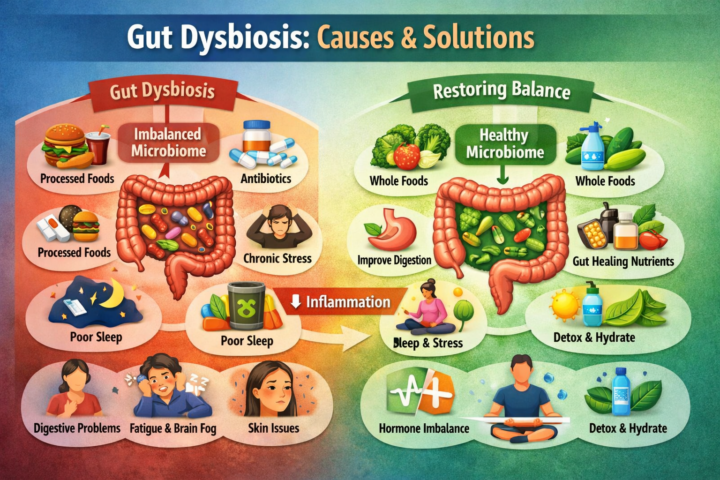
Gut Dysbiosis: What It Is, What Causes It, and How We Restore Balance (Part 1)
One of the most common root causes behind chronic health issues is something many people have never heard of: gut dysbiosis. Dysbiosis simply means an imbalance in the microbiome—the ecosystem of bacteria, fungi, and other microbes living in your digestive tract. A healthy gut isn’t sterile. It’s diverse, balanced, and resilient. Your microbiome helps regulate: • digestion • nutrient absorption • immune function • inflammation • hormones • brain chemistry • metabolism In fact, 70–80% of your immune system lives in the gut, and your microbiome produces many of the neurotransmitters that influence mood, sleep, and cognition. When this ecosystem becomes imbalanced, symptoms can start showing up almost anywhere in the body. What Gut Dysbiosis Looks Like Many people assume gut problems only show up as digestive symptoms. Sometimes they do, but not always. Common digestive signs: • bloating • gas • constipation or diarrhea • reflux • food sensitivities • abdominal pain But dysbiosis also shows up in ways that seem unrelated to the gut: • fatigue • brain fog • anxiety or depression • skin issues (eczema, acne, rosacea) • joint pain • autoimmune conditions • weight gain or metabolic dysfunction • hormone imbalance • poor immune resilience This happens because the gut acts as a control center for inflammation and immune signaling throughout the body. When the microbiome is out of balance, the entire system becomes dysregulated. What Causes Gut Dysbiosis Dysbiosis rarely happens from one thing. It’s usually the result of multiple pressures on the microbiome over time. The most common drivers include: 1. Ultra-processed foods Highly processed foods are typically low in fiber and high in refined carbohydrates, seed oils, preservatives, and emulsifiers. These ingredients feed opportunistic bacteria while starving beneficial microbes. 2. Antibiotics Antibiotics can be lifesaving when necessary, but they also wipe out beneficial bacteria. Many people never fully rebuild their microbiome afterward.
2
0
1-27 of 27
powered by

skool.com/bedrock-nation-8489
Free wellness community for faith based living, functional health and real connection - off social media, rooted in purpose - learn, grow and heal.
Suggested communities
Powered by