Activity
Mon
Wed
Fri
Sun
Nov
Dec
Jan
Feb
Mar
Apr
May
Jun
Jul
Aug
Sep
Oct
What is this?
Less
More
Owned by Leanna
Free wellness community for faith based living, functional health and real connection - off social media, rooted in purpose - learn, grow and heal.
256 contributions to Bedrock Nation

4d •
🧠 Sometimes You Need More Than a Gut Feeling (NovoPsych)
One of the tools I now have available for our Bedrock community is access to a large library of validated psychological screening and assessment measures through NovoPsych. And I think these can be incredibly useful. Not because a questionnaire should ever become your identity. And not because checking a box on a screening tool automatically gives you a diagnosis. But because sometimes we need a way to quantify what we're experiencing. Maybe you've spent years saying: “I just can't focus.” “My brain never shuts off.” “I procrastinate until the last possible second.” “I get completely overwhelmed by things that don't seem to bother everyone else.” “I've always felt different socially.” “I function really well—but it takes an enormous amount of energy.” “I don't know if this is anxiety, ADHD, trauma, hormones, stress…or all of the above.” That is where a good assessment can give us another piece of the puzzle. ADHD is one example. There are several different measures we can use depending upon what we're trying to understand. Adult ADHD Self-Report Scale (ASRS) An 18-question adult ADHD screening measure looking at current symptoms such as attention, organization, impulsivity and hyperactivity. Wender Utah Rating Scale (WURS-25) Looks backward at childhood symptoms. That matters because ADHD doesn't suddenly appear at 42 years old. Sometimes adulthood—especially hormonal changes, chronic stress, poor sleep or increasing responsibilities—simply makes lifelong executive-function struggles much harder to compensate for. ADHD Clinical Outcome Scale (ACOS) This one can actually be repeated over time so we can see whether symptoms are improving, worsening or remaining unchanged as someone works on their health. WHODAS 2.0 Instead of only asking “Do you have symptoms?”, this looks at something equally important: How much are those symptoms affecting your actual life? Work. Relationships. Household responsibilities. Social functioning. Day-to-day activities. And ADHD is only one category.
4
0
Aug 4 •
What Are Peptides—and What is the Bedrock Take on Them?
You may have heard the word peptides everywhere lately. They are being discussed in relation to metabolism, tissue repair, muscle development, sleep, cognitive performance, immune function, healthy aging, sexual wellness, and more. But what exactly are they—and where do they fit within the Bedrock approach? What are peptides? Peptides are short chains of amino acids. You can think of amino acids as individual letters and peptides as short words created from those letters. Proteins are the much longer sentences and paragraphs. Your body naturally produces thousands of peptides. Many act as biological messengers, helping cells communicate with one another and coordinating processes such as: • Hormone signaling • Immune activity • Inflammatory responses • Tissue repair • Metabolism • Sleep and circadian rhythms • Cognitive function • Growth and recovery In other words, peptides do not simply “make” the body perform a particular function. They often work by delivering a message. That distinction is important because it aligns with something we have always taught at Bedrock: The body already knows what to do. Our job is to identify what may be interfering with that communication and provide the body with the raw materials, environment, and appropriate signals it needs to do its work. What does “buccal” mean? Buccal refers to the inner lining of the cheek. With buccal delivery, a dissolving strip is placed inside the mouth so its ingredients can potentially pass through the oral mucosa rather than first traveling through the entire digestive tract. This is different from simply swallowing a capsule. Peptides can be difficult to deliver orally because digestive enzymes may break them apart and their larger molecular structures can limit absorption. The oral mucosa provides another possible route, with access to a blood-rich tissue surface and partial avoidance of gastrointestinal degradation and first-pass metabolism. However, absorption can still vary substantially depending on the specific peptide, its molecular properties, the formulation, the dose, the delivery technology, and the individual using it.

1 like • Aug 7
Got it down
1 like • 14d
@Anne Chew what doctors are prescribing are not FDA approved, its an off label use of an unapproved product. Grey market means it’s not “illegal” like black market.
Mar 29 •
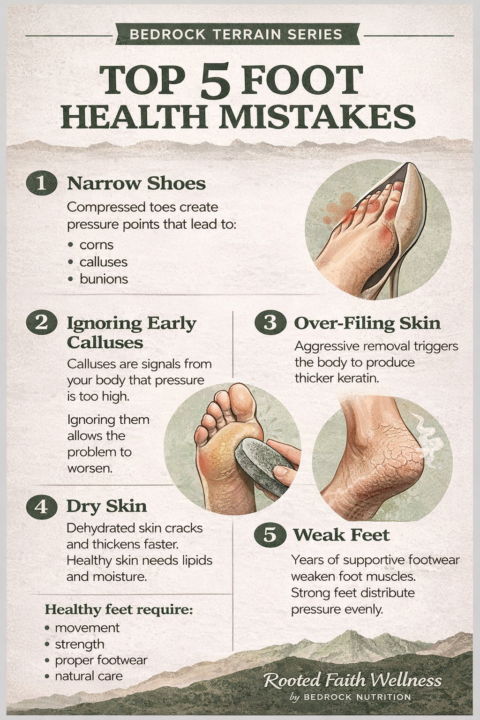
Corns & Calluses
What they are, why they form, and how modern footwear contributes Most people think of corns and calluses as cosmetic annoyances. In reality, they are a protective biological response. Your skin is incredibly intelligent. When it experiences repeated pressure, friction, or mechanical stress, it responds by thickening the outer layer (keratin) to protect deeper tissue. This thickening is what we call: • Calluses – broader areas of thickened skin • Corns – smaller, concentrated areas of hardened skin with a central core Both are forms of hyperkeratosis, meaning the skin produces extra keratin in response to mechanical stress. They are signals from the body that something about your movement, posture, or footwear is creating excessive pressure. The Difference Between Corns and Calluses Calluses are generally protective. Corns tend to form when pressure becomes concentrated in a very small area. Why Corns and Calluses Develop The root cause is almost always mechanical stress on the foot. Common contributors include: 1. Tight or Narrow Shoes Shoes that compress the toes force the foot into unnatural shapes. This creates pressure points where the skin begins to thicken. 2. Elevated Heels Even small heels shift body weight forward onto the ball of the foot, increasing friction. 3. Toe Spring Many modern shoes lift the toes upward. This prevents normal toe engagement and increases pressure on the forefoot. 4. Limited Toe Box Traditional shoes narrow at the front, compressing the toes. This leads to friction between toes and between toes and the shoe. 5. Abnormal Foot Mechanics Examples include: • flat feet• high arches• overpronation• bunions• hammertoes These alter pressure distribution during walking. 6. Reduced Foot Mobility Weak intrinsic foot muscles or limited ankle mobility can shift load to small areas of the foot. Why Modern Shoes Make the Problem Worse The human foot contains: • 26 bones• 33 joints• over 100 muscles, tendons, and ligaments It was designed to spread, flex, and grip the ground.
1 like • Aug 7
@Pat Sharp have you done this in the classroom section? https://www.skool.com/bedrock-nation-8489/classroom/f66e3070
1 like • Aug 30
@Amy Brausch depends on the shoe and the day.. the sandals and ballet flats, yes. If i’m wearing the athletic shoes i wear socks
Apr 21 •
🌿 The Bedrock Natural Medicine Cabinet
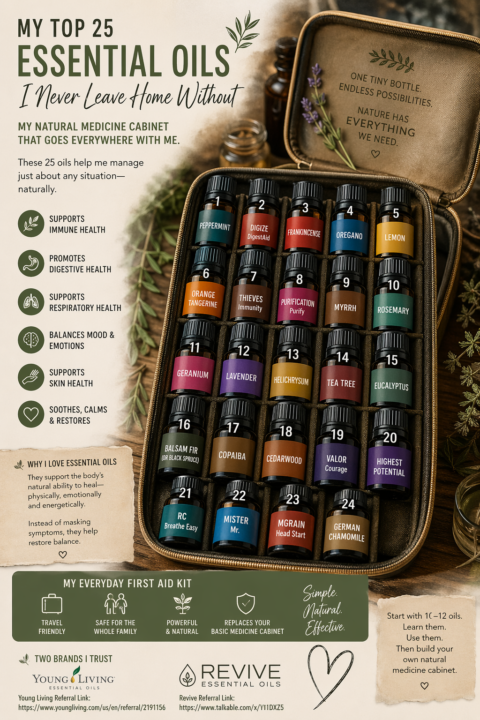
My Top 25 Essential Oils I Never Leave Home Without One thing people notice about me pretty quickly is that I rarely reach for conventional medicine first. Because most everyday issues have natural solutions that work beautifully when you understand the terrain of the body. Over the years I’ve built what I call my “Natural Medicine Cabinet.” And it travels with me everywhere. This small kit has helped us handle: • headaches• stomach issues• stress & sleep problems• immune support• minor injuries• respiratory congestion• skin irritations• hormonal balance• emotional regulation …and honestly about 90% of the little things that come up in daily life. Instead of a drawer full of random medications… I carry 25 essential oils. These are my non-negotiables — the oils I never want to be without. 🌿 My Top 25 Essential Oils (Young Living / Revive equivalents) Daily Support • Peppermint • Lemon • Orange or Tangerine • Frankincense • Lavender • Rosemary • Geranium Digestive Support • DiGize / DigestAid Immune Support • Oregano • Thieves / Immunity • Tea Tree • Eucalyptus Respiratory Support • RC / Breathe Easy • Balsam Fir (or Black Spruce) • Cedarwood Skin + Injury Support • Helichrysum • Myrrh • German Chamomile Inflammation + Pain • Copaiba • M-Grain / Head Start Emotional + Nervous System Support • Valor / Courage • Highest Potential Environmental Support • Purification / Purify Why Essential Oils Fit the Bedrock Philosophy Essential oils work because they support the body’s natural signaling systems. They help: • modulate inflammation • support immune response • calm the nervous system • improve circulation • regulate digestion • support detox pathways Instead of suppressing symptoms, they often help restore balance. That’s why they’ve been used for thousands of years across cultures. My Two Favorite Brands These are the brands I trust for purity and consistency. 🌿 Young Living https://www.youngliving.com/us/en/referral/2191156
1 like • Aug 25
@Anne Chew That would be a good time to just take an activated charcoal, a drop of digize and relax. You just never want to use charcoal more than 3 consecutive days.
1 like • Aug 28
@Anne Chew which is why that’s always the primary focus
Aug 23 •
The Bedrock Sleep Toolbox: A Master Guide to Better Sleep
If there is one habit that quietly impacts everything else in your health journey, it is sleep. Sleep affects hunger, cravings, blood sugar, recovery, mood, pain, focus, hormones, inflammation, immune function, and your ability to handle stress. When sleep is poor, almost everything feels harder. When sleep improves, food discipline becomes easier, your nervous system becomes more resilient, your body recovers better, and many people finally begin to feel like they are moving forward again. That is why I wanted to create one comprehensive sleep resource inside this community — not just a few tips, but a full Sleep Toolbox. Because the truth is: not everyone struggles with sleep for the same reason. Some people need a better routine. Some need a better environment. Some need help calming their nervous system. Some need support from specific tools or supplements. And some need to realize that their sleep issue is not just “bad habits” — it may be something deeper that deserves attention. First: sleep is not just about being tired A lot of people think sleep problems are simple. “I’m exhausted, so why can’t I sleep?” But sleep is not just about fatigue. Sleep is about rhythm, safety, nervous system regulation, environment, and biology. You can be completely exhausted and still have a brain or body that does not feel safe enough to fully settle. That is why we do not approach sleep as only a supplement issue. At Bedrock, I look at sleep through layers: 1) FOUNDATION These are the basics that matter the most: - A consistent bedtime - A consistent wake time - Morning light exposure - Better meal timing - Limiting late caffeine - Reducing screen stimulation at night - Daily movement If your sleep is inconsistent, this is always where I would start. The most important sleep habits If you only focus on a few things, focus here first: 1. Keep a consistent bedtime and wake time Your body loves rhythm. The more random your bedtime is, the harder it becomes for your brain and hormones to create a reliable sleep-wake rhythm.

1-10 of 256
@leanna-cappucci-3527
Functional Nutritionist, Mother, Free Thinker, Christian, Writer/Educator
Active 4d ago
Joined Nov 4, 2025
INTJ
Florida, USA