Activity
Mon
Wed
Fri
Sun
Aug
Sep
Oct
Nov
Dec
Jan
Feb
Mar
Apr
May
Jun
What is this?
Less
More
Owned by Brandon
Step into an old-school community apothecary. Reclaim your biological baseline, clear brain fog, and join our live weekly hearth gatherings. ❤️🔥🌲
Memberships
YES YOU CAN!
33 members • Free
Sound Healing Mastermind
248 members • Free
Webinar Masters
5.7k members • Free
Point 8 Profit Collective
344 members • $60/year
Growing Pro Community
142 members • Free
MULTIPLY your coaching
1k members • Free
Holistic CEO
756 members • Free
Inner Circle
1.5k members • Free
21 contributions to Inspired Life, Empowered Being

🔥
Mar 17 •
Disagreements
"𝘼 𝙢𝙖𝙣 𝙘𝙤𝙣𝙫𝙞𝙣𝙘𝙚𝙙 𝙖𝙜𝙖𝙞𝙣𝙨𝙩 𝙝𝙞𝙨 𝙬𝙞𝙡𝙡 𝙞𝙨 𝙤𝙛 𝙩𝙝𝙚 𝙨𝙖𝙢𝙚 𝙤𝙥𝙞𝙣𝙞𝙤𝙣 𝙨𝙩𝙞𝙡𝙡" -Quote attributed to Samuel Butler but popularized by Dale Carnegie (it seems like this quote is attributed to multiple people....so who knows who the originator is) When you've found yourself having differing thoughts with someone else, what has your approach been to the conversation? I've found that unless the other person feels seen or understood, most (not all) people are less likely to have 'buy in' into what you have to say and are more inclined to push back and really consider a different perspective. You can corner someone with logic. You can overwhelm them with facts. You can even "win" the debate and they may 'concede' the argument, but if their heart isn’t actually open, nothing really changes. Real change is chosen not coerced. If you've found yourself shifting just to keep the peace or avoid discomfort, your internal narrative likely has stayed intact and perhaps even strengthened. Additionally there may be some feelings of resentment building. The belief is still there,j ust underground and the funny thing about underground beliefs is that they end up resurfacing in other ways. I like this quote because it kind of invites us to see the other person. Instead of "forcing" someone into a belief/position, it asks us to come alongside another person so that they actually come alongside you as well. :) Maybe we ask questions and maybe we allow people to come to their own conclusions, even if it takes a bit longer. Maybe we take the time to understand their "side" before forcing them before they're ready. Who knows, we may end up learning something along the way :) Have you ever “won” an argument but lost the person? Or been on the other side where you gave in just to keep the peace but internally nothing changed? (The video's audio is kind of all over the place, but it had some good points! sorry for the imagery on the clip).
Poll
9 members have voted

4 likes • Mar 17
Im working on listening more and being more curios in these situations
🔥
Jan 20 •
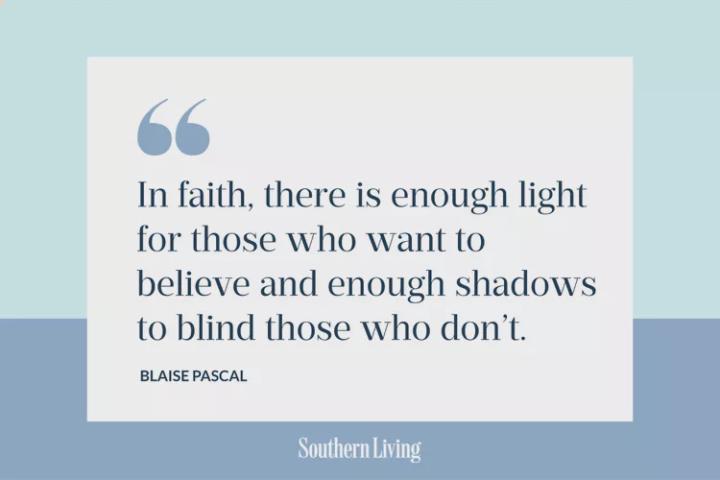
Principles of Success (Day 6: FAITH)
In the past week we've spoken about 5 principles of success as described in "The Rhythm of Life" by Matthew Kelly (more here : day-1-purpose; day-2-priorities; day-3-balance; day-4-discipline; day-5-growth). Today we delve into the sixth principle: Faith. (Just a small but important note, the term success here can be applied to many areas of life, and ultimately, it's really just about intentionally becoming the best version of yourself.) Principle 6: FAITH "Take the first step in faith. You don't have to see the whole staircase, just take the first step.": – Martin Luther King, Jr. In The Rhythm of Life, faith isn’t presented as certainty or emotional intensity but rather as fidelity/loyalty to committed action over time. Just as love is a verb, faith is also a verb...Faith grows similarly with how trust grows in psychology: through repeated, consistent choices aligned with values, especially when feelings fluctuate (and the feelings will fluctuate). It's not so much about feeling our way into faith, but rather practicing our way into it. (gulp on this one....man...) Psychologically, faith functions as kind of an organizing principle-making sense of things. It can provide a system for giving meaning to challenges, it can give direction to effort, and also a way to be regulated even amidst uncertainty. It's not blind. It is NOT just intellectual belief but rather a dynamic, living relationship, encompassing trust, loyalty, and a transformative way of life. Without it, the mind defaults to control, anxiety, or perfectionism. With it, uncertainty becomes tolerable. Just a note...faith doesn’t remove doubt but it can help so that we're not ruled by it and it can help us to ask the 'right' questions for clarity.
Poll
12 members have voted
2 likes • Jan 20
Love this
🔥
Jan 14 •
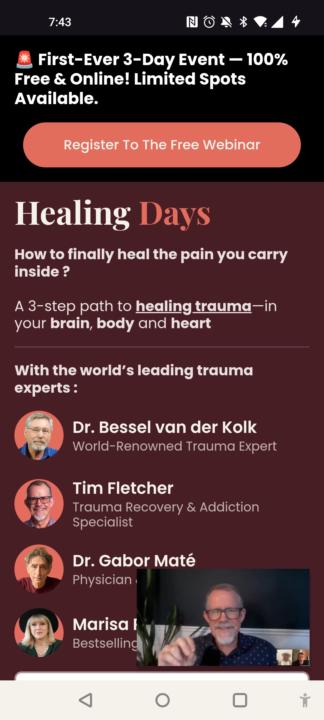
Healing days- free live webinar now
Live webinar - healing trauma! Not sure if they'll have a free playback in the future but this is great so far! Thank you so so much @Christopher LaManna for this share!! https://go.mentorshow.com/offers/healing-days-new-york
3 likes • Jan 14
So fun! Checking this out
🔥
Jan 4 •
🎉 100 Members Strong! 🎉
This past week we stealthily crossed the 100 member milestone and I'm so so excited for it! A couple of you reached out about it (thank you!!) and @Chris Wendt 's post here100-members means so so much to me... This milestone belongs to all of you! It truly does! Thank you for showing up, contributing your voices, sharing your experiences, and helping create this space into what it is today. I never anticipated how this little corner of skool was going to take shape and I am so so truly thankful for it and for you all. A gift that I never knew was needed and didn't see coming. My heart is overflowing with joy. The connections formed and nurtured, the conversations sparked, and the growth truly wouldn’t exist without your willingness to engage and support one another and me. This community is possible because of you-your presence, insight, and energy matter more than you know. Thank you for making it the special space that it is. Here’s to what we’ve built together so far, and to everything still ahead!!!!💛 Excited!!!!!

7 likes • Jan 4
Yay!!! 😀 congrats
🔥
Dec '25 •
Merry Christmas :)
For those celebrating: Merry Christmas! :) While not everyone is celebrating Christmas on the same day or in the same way, the message of hope is still there. :) Funsies calendar facts: Most of the Western world follows the Gregorian calendar, placing Christmas on December 25. Many Eastern Christian traditions follow the Julian calendar, where December 25 falls in early January. Same feast. Same meaning. Different ways of keeping time. (funsies fact: the gregorian calendar was introduced in 1582 and slowly shifted over the next few centuries; prior to this, the world operated under the julian calendar. some churches--to keep aligned with the liturgical life/component, maintained this 'older' calendar). Beyond dates, celebrations vary too. Some mark Christmas with quiet liturgy and fasting, others with family gatherings, music, food, and gift-giving. Some are in the middle of Advent; others have already arrived at the feast. Whether kept by the Julian reckoning (what a word!) or the Gregorian, Christmas proclaims the same mystery: the Eternal entered time, and the Word was made flesh. May the Light that came into the world shine upon you. Merry Christmas friends!!!! So thankful for you all! :) :) :) Do you celebrate Christmas?
Poll
12 members have voted
2 likes • Dec '25
Merry Christmas 🎁
1-10 of 21

@brandon-decremer-9183
Owner, Evergreen Foundations. Building businesses right via high-velocity Tornado Power Sprints. Scale with us in Point 8 Collective 👇
Active 5h ago
Joined Dec 6, 2025
ESFP