
6h • Shoes & Accessories
From Worn to Worthy: Restoring Heritage Footwear with Patina, Precision, and Purpose
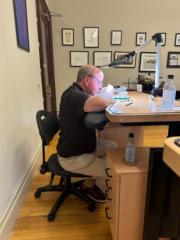
For me, shoe restoration has never been about simply making an old pair look presentable again. It is about preserving craftsmanship from an era when shoes were built with integrity, recraftability, and character. In a world increasingly driven by disposable fashion, I’ve developed a deep appreciation for restoring legacy footwear — shoes that still possess exceptional leather quality, strong structural foundations, and the unmistakable soul that only time and wear can create.
Much of my work has centered around heritage American and European footwear, including vintage Allen Edmonds wingtips, bicycle toes, and custom patina projects, along with refined European styles from Mezlan, including woven oxfords and other classic dress silhouettes. Many of these pairs arrived heavily neglected: dried and oxidized uppers, uneven factory finishes, deep creasing, dulled welts, faded color transitions, and years of embedded contamination that muted the natural beauty of the leather. Beneath all of that wear, though, there was still life in the shoes — and that is what I’m always trying to uncover.
My restoration process begins with deep leather cleaning and decontamination using saddle soap, leather cleansers, and controlled stripping agents such as acetone or professional deglazers to remove failing finishes, wax buildup, silicones, and surface contaminants. I approach this carefully because the goal is never to aggressively strip the leather, but to reveal its natural character while preserving its integrity.
Once stripped, the leather is slowly rehydrated and nourished using products such as Saphir Renovateur, Venetian Shoe Cream, and penetrating conditioners designed to restore flexibility, richness, and depth back into tired calfskin. I allow the leather time to absorb and stabilize before moving into color work. Leather responds best when it’s treated patiently.
The artistic process begins with custom patina development. Rather than applying flat, uniform color, I build depth through layered dye applications using alcohol-based dyes, creams, and tonal blending techniques that create movement and transparency across the upper. My work consistently gravitates toward rich cognacs, museum browns, tobacco undertones, espresso burnishing, and antiqued transitions that give the shoes an old-world European character without looking artificial or overdone.
Burnishing is selectively applied around the toe structure, heel counters, and natural flex points to enhance contour and visual depth. On woven shoes especially, tonal control becomes critical because the texture itself changes how light moves across the leather. I focus heavily on maintaining dimensionality while respecting the original identity and proportions of the shoe.
The finishing process matters just as much as the restoration itself. Welts and edges are refinished with edge dressing to restore clean framing and contrast, while soles are refinished and conditioned when appropriate. For advanced structural work — including resoles and Triumph toe plate installations on select pairs, particularly vintage Allen Edmonds models — I’ve outsourced the work to highly skilled cobblers whose craftsmanship aligns with the traditional standards I value. I believe good restoration is collaborative when necessary, and there is honor in respecting specialized trades.
The final stage involves cream polishing, layered wax applications, hand brushing, and mirror-finishing techniques designed to create richness, clarity, and elegance without suffocating the leather beneath heavy product buildup. I’ve always preferred finishes that feel natural, refined, and lived-in rather than overly glossy or artificial.
What matters most to me is preserving the soul of the shoe. I never try to erase its history completely. The small imperfections, the softened contours, the way the leather has aged over time — those things carry character. My role is to restore dignity, depth, and individuality back into the footwear while honoring the craftsmanship that made it worth saving in the first place.
Over time, my work has developed a recognizable signature: deep museum patinas, espresso antiquing, layered cognac transitions, softened burnishing, and a classic masculine elegance inspired by old-world European shoemaking traditions. Every pair becomes a balance between technical restoration and artistic interpretation.
To me, restoring fine footwear is ultimately about respect — respect for craftsmanship, for materials, for heritage, and for the stories these shoes continue to carry long after most people would have discarded them.
If this kind of work speaks to you — if you have a pair of shoes with history, quality, or meaning that deserves a second life — contact me. Some shoes are too well made, and too full of character, to be forgotten.
10
13 comments
From Worn to Worthy: Restoring Heritage Footwear with Patina, Precision, and Purpose

skool.com/rmrs
Leverage style to earn more money and build unshakeable confidence. This is a community for professional men serious about self-improvement.
Leaderboard (30-day)
1

🔥
+4616
2

+3182
3
🔥
+2965
4

🔥
+2690
5

🔥
+2294
Powered by