
Pinned

💎
⭐
16h •
🚀New Video: Claude + HyperFrames Just Solved Video Editing
In this video I'm showing you how to edit videos end to end using Claude Code as the orchestrator, with HyperFrames handling motion graphics and video-use handling the trimming. You drop in a raw video, tell it what you want in natural language, and it cuts the filler words, syncs animations to your exact timestamps, and renders the final video. I walk through the full setup, the prompting style that actually works, and how to iterate fast with the new timeline editor. GITHUB REPO
Pinned
💎
⭐
2d •
🚀New Video: Claude Design Builds Beautiful 3D Websites Instantly (full tutorial)
I used Claude Design to rebuild my AI Automation Society site and my personal site in about 20 minutes each, and the results felt way more polished than what I had before. In this video I walk through the full process of going from an idea to a deployed website, including how to plan with Claude, use Claude Design's tweaks and comments, push everything to GitHub, and host it on Vercel. I also break down what actually eats your usage limits so you can stretch every session a lot further
Pinned

🔥
6d •
🏆 Community Wins Recap | Apr 11 – Apr 17
From first AI roles and paying clients to live receptionist systems and enterprise training deals - this week inside AIS+ showed what happens when execution meets consistency. 🚀 Standout Wins of the Week inside AIS+ 👉 @Griffin Maklansky went from being laid off to landing a role as an AI Workflow Builder in just 1 month. 👉 Duy Nguyen moved from fear to action, built a full AI-operated business, and already landed 2 paying clients through word-of-mouth. 👉 @Narsis Amin built a fully working AI restaurant receptionist handling bookings, availability, and CRM logging end-to-end. 👉 Michael Wacht closed a deal to deliver AI training for 200 employees, stepping into enterprise-level impact. 👉 @Dion Wang received his first official testimonial, validating real client results and around 40 hours/month saved. 🎥 Super Win Spotlight | @Debbie DeMarco Bennett Debbie joined AIS+ at a moment when AI was starting to disrupt the business she had built for 13 years. Instead of staying scared, she decided to learn how to work with the technology. Since joining, she has: • Automated multiple parts of her business and freed up major time • Built her own admin dashboard and secure internal systems • Started DeMarco Bennett AI • Landed her first client and began rebuilding their business systems Her biggest shift? From thinking “I’m not technical enough” to realizing that with the right support, iteration, and community, she could absolutely build. Debbie’s journey is proof that you do not need a tech background - you need the willingness to learn, ask questions, and keep building. 🎥 Watch Debbie’s story 👇 ✨ Want to see wins like this every week? Step inside AI Automation Society Plus and start building assets that compound 🚀


4h •
Cold outreach dead? Or just harder than it used to be?
Curious what others are seeing right now across cold email / outbound. For those actively running outreach in 2026: - What reply rates are you seeing lately? - Are certain niches still responding better than others? - Are you finding the problem is list quality, offer, messaging… or just overall channel fatigue? - Are you seeing better results with narrower personalization, sharper offers, or just much higher volume? Not looking for guru answers — just real operator feedback from people actually sending. Feels like open rates can still be decent, but replies are a different story. Would love to hear what’s working, what’s not, and whether you think cold outreach is still a solid channel right now.

🔥
47m •
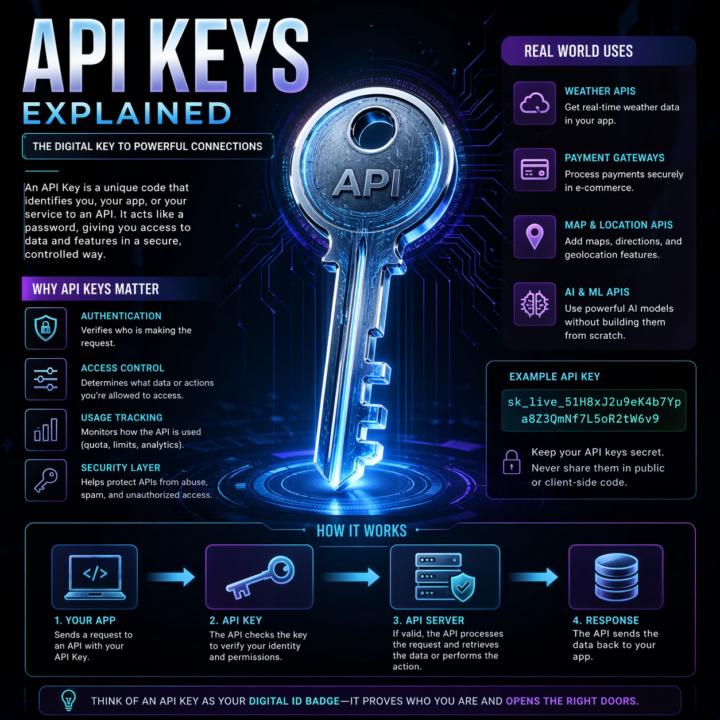
APIs, explained the way I explain them to clients
Most automation problems I see trace back to a fuzzy mental model of what an API actually is. So here's the frame I use with clients. An API is a remote control for software. Your app presses a button (sends a request). Another app does something and sends back a result (a response). You don't see how the other app works inside. You just follow the rules printed on the buttons (the docs). That's it. That's the whole concept. Two analogies that work in client calls: Restaurant menu. The menu lists what you can order and how to ask for it. Kitchen is hidden. Meal is the response. Light switch. Flip the switch (request). Wiring, grid, power plant are hidden. Light turns on (response). Same idea either way: clear inputs, clear outputs, hidden complexity. The actual call pattern: 1. Client asks (your app, browser, script) 2. Request goes out with a URL, a method (GET, POST, etc.), and any data the server needs 3. Server does the thing 4. Response comes back, usually JSON Break any of those rules and you get an error, not data. Why this matters for builders: - Reuse beats rebuild. Use Stripe's API instead of building payments from scratch. - Complexity stays hidden. You don't need to know how Twitter stores tweets to pull the last 20. - Access is controlled. APIs decide what's exposed, who can call it, and how often. Security still depends on the implementation, but the boundary exists by design. - Apps mix APIs like ingredients. Maps, payments, email, auth, all stitched together. When two pieces of software talk in a structured, agreed way, they're using an API. Every n8n node, every Claude Code tool call, every trigger. All APIs under the hood. What analogy do you use when a non-technical client asks what an API is? Share in the comments what lands for other builders? Highly recommended related information: Check out @Michael Wacht's Daily Dose: https://www.skool.com/ai-automation-society-plus/ai-terms-daily-dose-api-use?p=5c08d0bf
1-30 of 15,917
skool.com/ai-automation-society
Learn to get paid for AI solutions, regardless of your background.
Leaderboard (30-day)
1

+5288
2

🔥
+3393
3

🔥
+3041
4

+2015
5

+1320
Powered by