Activity
Mon
Wed
Fri
Sun
Apr
May
Jun
Jul
Aug
Sep
Oct
Nov
Dec
Jan
Feb
Mar
What is this?
Less
More
Memberships
AVALON
31 members • Free
4 contributions to AVALON

Feb 3 •
Help Getting Started
I just joined here after seeing Shane’s amazing talk at a seminar about his Wellness Arc. Thank you for the fantastic talk! I’ve been studying this area and trying to improve it for a while, but the talk helped illuminate several things I missed. I have these questions for getting started: Should you use sunscreen? What should you use for toothpaste, if anything? What should you use for shampoo/soap when showering, if anything? Do I need to worry about lectins? What brands of activated charcoal, spirulina, the third one, as well as glass bottles of spring water do you recommend getting? Both a budget option, and a long term higher-quality option if different. Do you recommend creatine? In my experience so far it’s seemed to help improve my brain’s ability to focus. Thank you!
1 like • Feb 8
I love brushing my teeth with Tesla mineral crystals. You can get that on guriji.com I only use that. Dentist are asking me what I do! I have never used sunscreen & innately am opposed to it But that’s me best for me. That’s my thought on things :) Tracy
Feb 4 •
Introduction, hi!
Hi there, I'm Nick. 🍕 What is your Favorite Food? A tree ripened fresh tropical mango, guava, or cacao pod. Nothing like foraging fruit. I build food forests because I love quality fruit so much. 🦫 What is your Spirit Animal? Mountain Goat. Many people have told me this, seperately, 🗺️ Where do you Live? Minneapolis,Minnesota 🐦🔥 What is your Wellness Goal? I have a very mild autoimmune skin condition, hoping to fully get it to go away! Currently learning how much the circadian rhythm has to do with skin health, so I'm focusing on that right now. Also would love to get rid of my gynecomastia, I've had it for 10 years. I'm so healthy and avoid all endocrine disruptors, not sure what's up with that!
1 like • Feb 8
Hi from Tracy in California

Feb 2 •
Real Vitamin D 🐟
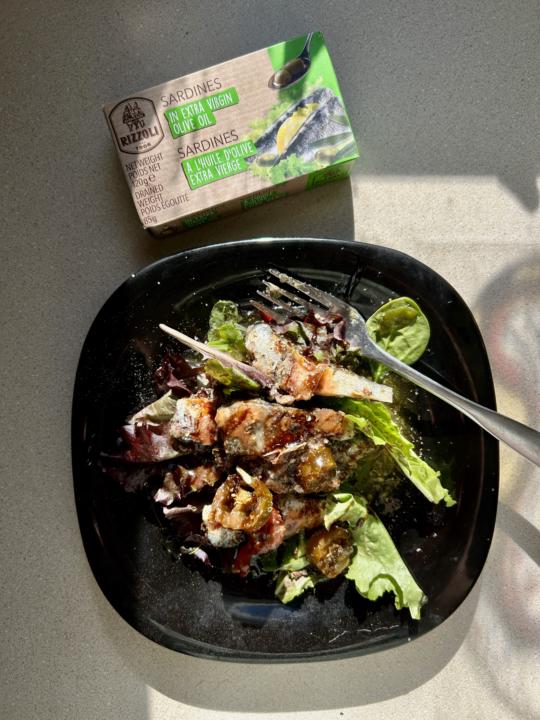
Sardines are a good move in the winter when you are not getting enough sunlight. Most people think Vitamin D comes only from pills or rays, but that's just lazy thinking. A small can gives you a solid 200 IU or so—nothing flashy, but reliable, bioavailable, and loaded with extras like omega-3s, protein and calcium. You can make them taste good with some olive oil, balsamic vinegar, and some pickled peppers (also rich in Vitamin C). Forget the hype around taking mega doses of 4,000 IU. They function more like a bioidentical hormone steroid than a vitamin, and it could be argued that they are not adequately absorbed. Certainly not as absorbable as something like Sardines which also come packed with healthy fats (EPA and DHA) to help transport and utilize the Vitamin D in them. Sardines capture the sun in an edible form, and are a long proven and practiced form of nutrition by ancient long lived cultures. They are easily found in stores as “wild caught” and don't pretend to be anything they're not. Eat them a couple times a week, handle the deficiency, and let nature do what supplements try and fail to imitate. Simple as that. 🐟
2 likes • Feb 3
Andrew & I have been practicing sun gazing. Staring into the sun for 5 minutes. It activates your natural dmt. Flooding your brain with good stuff. After you must sit & acclimate the colors … then you are good to walk again. Really powerful. More details to come. Gotta run XO
1 like • Feb 4
Morning
Jan 31 •
Queen of the Fairies of the DragonFly Clan here
Hello. I truly believe in all things magical. Our thoughts create our experience. Crows. Dragonflies. Frogs are huge in my life ... But Tiger my kitty is my heart. I love eating & cleaning healthfully. My purpose in life is to empower people to theirs highest potential… gently Eggs. Gosh I love eggs & I make the most incredible channeled soup. I swear sometimes my grandmother Mutti is up there guiding me to tasty delights. Finally. I long to return to my flexibility & less weight. :) & brainpower is always good to strengthen. ThankYou Shane for your magic & sharing what your do best … being you … being enthusiastic & spilling over with details of health. I love that. Rockstar !!! Hello family 💜💕💜 love Tracy in California
1-4 of 4