Activity
Mon
Wed
Fri
Sun
Jun
Jul
Aug
Sep
Oct
Nov
Dec
Jan
Feb
Mar
Apr
May
What is this?
Less
More
Memberships
Club de Editores
194 members • Free
The Facebook Ads Clinic
4.8k members • Free
Facebook Growth Lab
208 members • Free
The Aspinall Way
31.4k members • Free
AI Automation Society
364.3k members • Free
Fowl
3.3k members • Free
BYOB: Bring Your Own Business™
1.3k members • Free
InstaIncome School
810 members • Free
Insurance Sales Success!
14.3k members • Free
4 contributions to AI Automation Society

4d •
Stop Trying to Fully Automate Instagram (This Is Why You’re Stuck)
Most people overcomplicate Instagram automation… and that’s exactly why they don’t stay consistent. The truth is, you don’t need 10 tools or some crazy setup. You only need 3 things: 1. Content that’s easy to produce (AI can help you with this) 2. A simple scheduler so you’re not posting manually every day 3. A way to respond faster (DM/comment automation but keep it human) That’s it. Automation isn’t about removing yourself…It’s about removing friction so you can actually show up consistently. The people winning right now aren’t fully automated they’re just smart with their time. If you had to pick one thing slowing you down right now… Is it content, posting, or engagement?
1 like • 4h
@Gustavo Odone Yeah that makes a lot of sense I’ve been seeing the same thing. Getting attention isn’t really the issue anymore, it’s what happens after that where most people drop the ball. A lot of the time it’s not even a lead problem, it’s just no system to manage and follow up properly, so everything kind of fades out. On my end, it’s pretty similar once there’s a simple structure in place for replies and follow-ups, conversions usually improve without needing more traffic. Out of curiosity, have you been deep into digital marketing for a while now, or did that come more naturally as you started working with founders?
1 like • 3h
@Gustavo Odone Haha yeah exactly “pretty content doesn’t pay the bills” is something a lot of people learn the hard way. For me, I didn’t really start deep in tech. I was more on the side of trying to understand why people weren’t getting results or staying consistent, and that’s what led me into marketing and then automation. It just clicked that most people don’t have a traffic problem they have a system problem. Once you fix that, everything feels way more controlled. I like that you’ve got both sides though creative + backend is a strong combo. Curious, when you’re working with clients now, do you lean more into the strategy side or are you still heavily involved in the creative direction too?

4d •
Space Data Centers Are Cool. Workflows Are the Real Opportunity
AI data centers in space sound like science fiction. But the bigger lesson is more practical: Compute is becoming infrastructure. A few years ago, the question was: “What AI tool should I use?” Now the better question is: “What workflow can I build that becomes more valuable as AI gets cheaper, faster, and more available?” For me, the opportunity is not chasing every new model or announcement. It is building repeatable workflows around a specific business use case. In my lane, that means commercial real estate tax strategy — cost segregation, bonus depreciation, 179D, after-tax cash flow, and turning that into broker-safe overlays, investor tear sheets, and content that helps buyers see the tax layer earlier. The space data center story is exciting. But the real takeaway is this: The people who win will not just have access to more AI. They will know what to feed it, how to structure the output, and where that output creates business value. AI does not remove judgment. It rewards people with a clear lane, real experience, and a repeatable process.
1 like • 4d
@Nick Coppola This is a really sharp take especially the shift from “tools” to “workflows.” Most people are still stuck in that first phase, jumping between models and features, but what you’re describing is where the real leverage is: building something that compounds as the underlying tech improves. What stood out to me is how clearly you’ve defined your lane. When the inputs are consistent (like CRE tax strategy), the outputs become predictable and that’s exactly what makes a workflow valuable instead of just interesting. It also reframes AI from being a “capability” to being more like a multiplier on structured thinking. If the thinking is clear, the output scales. If not, it just creates faster noise. I’m curious in your workflow right now, which part actually took the most iteration to get right: the inputs you feed in, or how you structure the output for brokers/investors?

4d •
Instagram Automation
I am looking for some resources that can help me on automating my Instagram account including content generation and posting. Anyone can assist where I can find the know how to automate my Insta acct ?
1 like • 4d
You can definitely automate your Instagram, but the best way is to break it into 3 simple parts: For content → use AI tools to generate captions, post ideas, and even carousel text For posting → use Meta Business Suite (free) or tools like Later to schedule everything in advance For engagement → tools like Many Chat can help automate replies to DMs and comments That setup keeps things efficient without risking your account, which is really important now. Most people try to fully automate everything, but the accounts that grow fastest still keep a bit of manual touch especially in conversations. What kind of content are you planning to post? That’ll help narrow down the exact tools and setup you should use.

🔥
6d •
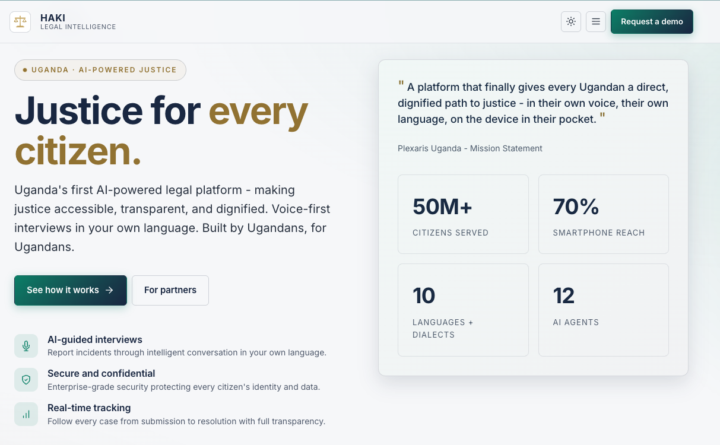
Today felt like a milestone worth sharing here.
https://www.haki.legal/ is live. yesterday we started testing with the actual platform itself It's just a website but for the team in Kampala, it's months of work finally having an address. A place you can point people to. A signal that this is real. We're not at launch yet. The platform itself is in active testing internally with the team, and with the first stakeholders we've brought in to use it the way it's meant to be used. That's where the real lessons come from. A few things I'm sitting with today: → Shipping the website is the easy part. Shipping the right product is the work. → Stakeholder feedback in week 7 is worth 10x stakeholder feedback in week 19. → The team has been heads-down for weeks. Days like today matter. If you're curious what we're building, take a look: https://www.haki.legal/ Happy to answer questions in the comments. 🙏
0 likes • 5d
@Frank van Bokhorst This is seriously thoughtful you’re not just tweaking UI, you’re shaping how people judge truth. That’s a different level. The “invitations to verify” idea stands out a lot. That flips uncertainty from a weakness into something actionable, which most products completely miss. And what you said about tone is spot on a confident wrong answer is way more damaging than a cautious right-ish one. Feels like you’re catching a really important nuance early. Now I’m curious have you heard much about MRR models or even how platforms like Shopify approached building trust early on? Not saying it’s the same space, but there might be some interesting parallels in how they balanced simplicity with reliability. Would be interesting to hear your take on that
0 likes • 5d
@Frank van Bokhorst That’s such a sharp observation especially the point about sequencing complexity instead of hiding it. Most platforms either overwhelm professionals immediately or oversimplify to the point where trust disappears. What Shopify and Stripe understood early is that confidence compounds when users feel in control at every stage, even before they fully understand the system. What stood out to me in what you said is the idea that lawyers don’t want to “adopt AI,” they want to stay in flow while the product quietly proves itself. That framing feels incredibly important because it shifts the platform from being perceived as software to becoming infrastructure almost invisible until its absence would slow them down. And your point on trust being embedded into defaults, tone, and error states is probably the most overlooked advantage in AI products right now. A lot of founders talk about accuracy, but very few talk about emotional predictability. The feeling that the platform behaves the way a professional expects under pressure. That’s where long-term retention actually comes from. Out of curiosity, when you think about “depth on demand” for legal specifically, where do you think the boundary is between automation and professional control? Because it feels like the companies that win this category will be the ones that know exactly when to step forward and when to deliberately stay out of the way.
1-4 of 4

Active 3h ago
Joined May 5, 2026
Powered by