Activity
Mon
Wed
Fri
Sun
Aug
Sep
Oct
Nov
Dec
Jan
Feb
Mar
Apr
May
Jun
Jul
What is this?
Less
More
Memberships
useful AI
23.5k members • Free
Oscar's Community
7.4k members • $39/m
Grounded Leaders
603 members • Free
Castore: Built to Adapt
1.1k members • Free
15 contributions to Castore: Built to Adapt

Mar 12 •
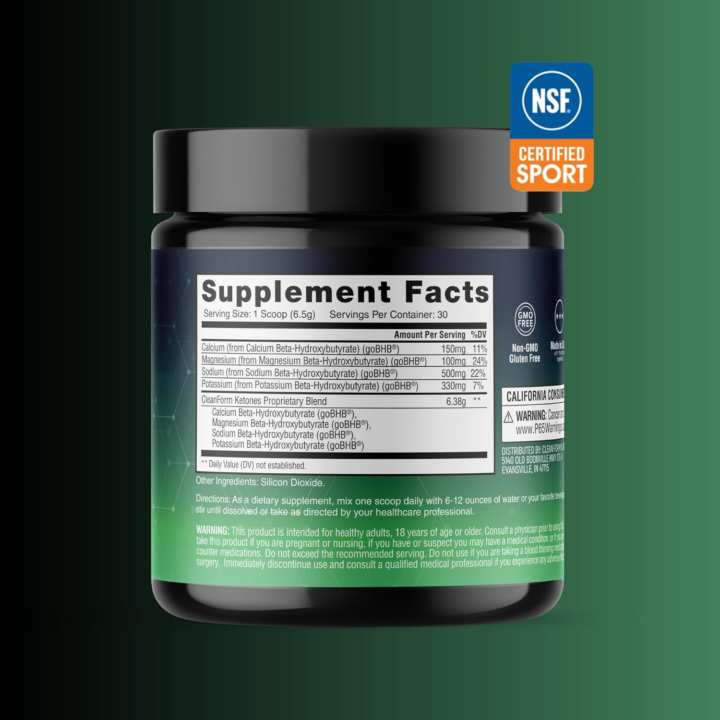
can BHB with electrolytes cause anxiety?
My friend's 72 year old mother had a stroke a year ago and recently tried ketones (not the kind you recommend, but the one pictured) and her aides said it made her difficult and anxious. I'm curious as to why or how this could do that. Do you think she needed a smaller dose to start with or is the electrolytes in this formulation the cause of throwing her off balance?

1 like • Mar 12
I have experienced this personally. My wife and some close friends too. I find it’s very dependent on the person. If I have focus work to do or activity planned I find the added benefit of any kind of exogenous ketones tend to be helpful if I have the right dose and formulation. If I take them (the salts in particular) and just sit around or want to relax it tends to make me antsy or anxious. Even if I’m going to be active but I’m already stressed or worn out the ketone salts can sometimes exacerbate that for me. I find that the dose needs to be reduced considerably to avoid this if I’m going to just be relatively calm or if I’m already a bit stressed. Also, I have found that everyone I know tends to have their favorite ketone product. Some people love the bhb salts and don’t like the feeling of 1,3 bd. Others feel better with the 1,3 and get all out of sorts on the salts. When you factor in the difference in formulations of each product and the dosing recommendations and it adds plenty of additional variables to consider. In my experience it’s tough to find your ideal fit in terms of formulation, dose, brand, etc if you’re a bit more sensitive as I imagine your mother is (I have had some severe cognitive issues so I can relate to some degree). Just wanted to share my experience for context as I know there are some people that can take anything and they are fine. Those of us that are a little more prone to side effects need to do some serious self experimentation to figure out what is right for our unique biology/situation. She’s definitely not alone in this but Anthony likely can make some sense of it all 😎
0 likes • Mar 16
@E. Allison James so kind of you to write this!
Feb 21 •
liver effects of 1,3-Butanediol
Hi Anthony, I recently saw this rodent study done by Ben Bikman's lab on BHB and 1,3 BD. https://www.mdpi.com/2072-6643/18/4/675 This study found: "1,3 BD induces significant hepatic stress characterized by ATP depletion, oxidative stress, and lipid accumulation. These results align with and extend recent findings by Ari and D’Agostino demonstrating formulation-dependent hepatic outcomes of chronic ketone supplementation, where ketone salts preserved liver health while BD-based ketone esters and precursors drove inflammation and steatosis" What are your thoughts on their findings? Does their study design bias the outcome? Are there similar studies that show that 1,3 BD is neutral in its effects? Does KineticPro or KE4 use ketones that are different than what was studied here? (It looks the same to my naive and uninformed eyes, so that's why I'm asking.)
0 likes • Mar 12
@Mike T Nelson very cool to know about this!
0 likes • Mar 12
@Phuong Ngo I think we have to look at this as part of a holistic plan to achieve our unique goals. I doubt a little 1,3 is going to do serious harm if used appropriately/intermittently but I don’t think I’d take it multiple times a day on an ongoing basis (that goes for most things lol). I find that I gravitate towards 1,3 for specific times and situations but I keep two things in mind…. The first is whether or not I want the spike of ketones for some short lived performance bump or if I want to take it after a meal to draw out the curve and maybe counteract any post meal fatigue or cognitive issues like when I have a work call after lunch. I get enough testing done to see changes in liver markers and haven’t seen anything change when taking more 1,3 but I’m also I’m only taking smaller doses if I’m in a cycle of more regular use or don’t have other ketone options on hand. Just sharing my experience for context as you think your way through this. The impact on each individual tends to be so unique that I dont know if anyone can say for sure what is right for you. You might just have to feel it out and do some self experimentation and see what feels right after trying different products, dosing, timing, etc. Keep an eye on how it all makes you feel and check your markers every once in a while. I feel like this applies to almost every intervention we add into our protocols. If it’s right for you, you know it (if you’re honest with yourself lol). If it’s not you can continue to tweak or find other ways to accomplish the same goal.

Feb 3 •
DHA IS NOT JUST A FAT PART 5
VISION, POSTURE, COGNITION, AND PERFORMANCE: HOW MEMBRANES GOVERN THE WHOLE ORGANISM Up to this point, we’ve stayed mostly at the cellular and membrane level. Conductors, buffers, mitochondria, failure modes. That work matters, but if it stays abstract it risks feeling disconnected from lived experience. So in this part, we zoom out. Membrane health doesn’t just determine what happens inside cells. It determines how an organism perceives the world, organizes its body, and decides how much stress it can tolerate. This is where DHA stops being a biochemical curiosity and becomes something you can see in posture, feel in cognition, and observe in performance. Let’s start with vision. Vision is often treated as a sensory add-on. Something that delivers information to the brain, where the “real work” happens. That framing is backwards. Vision is a primary regulator of autonomic tone. The retina is not just detecting light. It is converting photons into electron movement. That electron movement sets timing signals that propagate through the nervous system. These signals influence circadian rhythm, arousal state, muscle tone, and spatial orientation. The retina is one of the most DHA-dense tissues in the human body for a reason. Phototransduction is a high-frequency, high-precision process. Light hits photoreceptors, electrons move, ion channels open, and signals propagate in milliseconds. The system must respond quickly and reset just as fast. Any noise or delay degrades perception and increases stress. DHA allows retinal membranes to maintain signal fidelity under constant flux. It improves signal-to-noise and shortens recovery time between inputs. When DHA is insufficient, or when membranes are oxidatively unstable, the retina becomes noisy. The system compensates by increasing sympathetic tone. The body becomes more vigilant, more guarded, less adaptable. This is not psychological. It is electrical. From the retina, this tone propagates. Visual instability increases neck and jaw tone.
1 like • Feb 3
@John O'Mahony very cool to hear how he’s responding! I recently redid our lighting in the whole house as well. In my case I’m the one noticing the most profound impact but it’s likely because I had the most profound disruption. Awesome to hear that your family is onboard. I too had my wife looking at my funny for. While but it’s funny how quickly we can all adapt. My son has PANDAS. While not autism, his neurological condition has just started to respond in the last few weeks. He always slept well (thank goodness) but he used to be really reactive and often quite mean to his little sister when he was especially disregulated. He’s been a completely different person with her and the only big change was the lighting stuff. Just sharing to reinforce your great decision. Keep up the good work!
0 likes • Feb 6
@John O'Mahony it’s a weird one as not many docs understand it well. Please don’t hesitate to reach out if you explore that route. Either way, my son’s doc is Laure Lee Stone and she’s pretty amazing with kids in this world. She had one of her kids with autism recover to the point where he graduated from college and got married and another with PANDAS that she healed. Set her down a path helping other folks like us. She helped us take my son from a 4/10 to a 8/10 in about a year. Worth a chat with her if you ever get curious about what else is out there!
Jan 31 •
DHA IS NOT JUST A FAT PART 3
DHA, PLASMALOGENS, AND MITOCHONDRIAL MEMBRANE POTENTIAL: POWER WITHOUT INSTABILITY At this point in the series, one thing should be clear: membranes are not passive. They are active regulators of signal timing, electron flow, and system stability. Nowhere is that more consequential than in the mitochondria. Most conversations about mitochondria focus on output. ATP. Energy. Fuel utilization. Fat versus glucose. Those discussions matter, but they start too late in the causal chain. Mitochondria do not fail because they lack fuel. They fail because electron flow becomes unstable. To understand why DHA and plasmalogens matter here, we need to talk about mitochondrial membrane potential, often abbreviated as ΔΨm. ΔΨm is usually described as voltage. A battery. A charge gradient across the inner mitochondrial membrane. That description is technically accurate, but conceptually incomplete. ΔΨm is not just how much charge exists. It is how controlled that charge is. A stable membrane potential means electrons move smoothly through the electron transport chain, protons are pumped predictably, and ATP synthase can operate efficiently. An unstable membrane potential means electrons back up, leak, and react with oxygen in places they shouldn’t. This is where most mitochondrial dysfunction actually begins. The inner mitochondrial membrane is not just a lipid barrier. It is a highly specialized electrical interface. It contains densely packed protein complexes, curved membrane structures, and unique lipid compositions. Its job is not to hold charge. Its job is to manage electron flow under load. DHA and plasmalogens directly influence how well it does that job. DHA alters the dielectric properties of the membrane. In practical terms, it changes how electric fields behave within the membrane. It reduces resistance to lateral electron movement and improves the probability that electrons move forward through the chain instead of backing up. This matters at Complex I and Complex III in particular, where electron congestion commonly occurs.
1 like • Jan 31
Loving this series! So insightful 🙏

Dec '25 •
A plea for insight/help
Hey friends, I’m reaching out because I’m walking through something really scary right now, and I would really appreciate your wisdom, experience, and prayers. About three weeks ago, I was hit with a really rough virus. I thought I was on the mend… and then about a week ago I suddenly started losing vision — first in my left eye, then in my right. I ended up in the hospital terrified and confused, not understanding what was happening to my body. While I was there, they ran a ton of tests — full blood panels, autoimmune workups, MRI, and even a lumbar puncture. Most of the autoimmune conditions they tested for have been ruled out, but I’m still waiting on a few more results that take longer, including the GFAP panel. Right now I’m sitting at about 50% vision loss in both eyes, which has been one of the most emotional and humbling experiences of my life. The neuro-ophthalmologist said ischemic optic neuropathy is still a possibility, but there are signs that make him hopeful it could instead be post-/para-infectious optic papillitis — inflammation of the optic nerve triggered by the virus I had. This is treatable, but recovery can be slow, sometimes taking a month or more before improvement begins. I’ve been on steroids for a week now with no major changes yet. I’m also feeling some nerve pain behind my right eye, which can happen during healing, but it’s hard not to worry when you’re living it. To support myself, I’ve been using: - Steroids - BPC-157 - Anti-inflammatory + gut support - Rest and as much calm as possible But this community has so much collective wisdom, especially around peptides, neuro repair, and post-viral healing — so I’m reaching out. If you have experience with optic nerve inflammation, optic neuritis, nerve repair, or post-infectious healing — what peptides, supplements, or approaches would you consider supportive right now? (ARA-290, TA-1, SS-31, MOTS-c, glutathione, SPMs, NAC, high-dose omega-3s, etc.) This whole situation has really tested me but I’m doing everything I can to support healing while staying safe. Any insight, personal experiences, or encouragement would mean the world to me right now.
1 like • Dec '25
@Beverly Haffeman thank you! Work in progress for sure but in my way 🤓 Sorry to hear about your fracture and glad your vision has come this far. I agree the homeopath is can be finicky but fortunately I have found peptides have a lot greater margin for error. Especially the ones in these eye drops. I have used small “normal” doses of each but on occasion when called for I have gone many times over the standard daily dose most people use and have seen great results. Can’t say that for all peptides by any means but these three are soooooo foolproof in my opinion. No experience with ocular issues but I can’t imagine you won’t see some benefit from these. Wishing you all kinds of awesomeness!
1 like • Dec '25
@L S agreed on all fronts!
1-10 of 15
@nick-deck-5772
Hit some health bumps this year, but I’m very blessed to be living in this body and eager to do it as long as possible with my littles my and lovely.
Active 5h ago
Joined Oct 27, 2025
Playa Del Carmen
Powered by