Activity
Mon
Wed
Fri
Sun
Jun
Jul
Aug
Sep
Oct
Nov
Dec
Jan
Feb
Mar
Apr
May
What is this?
Less
More
Owned by Naomi
For ND mums and their kids whether 5, 15 or 35 (one or both ND) who are done with carrying guilt, want to feel calmer, connected af, and not so alone
Documenting my journey: real, raw life as a neurodiverse mum. First solo trip to Bali 🏝️
Memberships
Rising Soulpreneurs Collective
37 members • Free
BYOB: Bring Your Own Business™
1.2k members • Free
Skool Extensions 🧩
434 members • Free
UK Skoolers
359 members • Free
SkoolHers
564 members • $9/month
36 contributions to the skool CLASSIFIEDS

4h •
The A–Z of Neurodiversity… is DONE
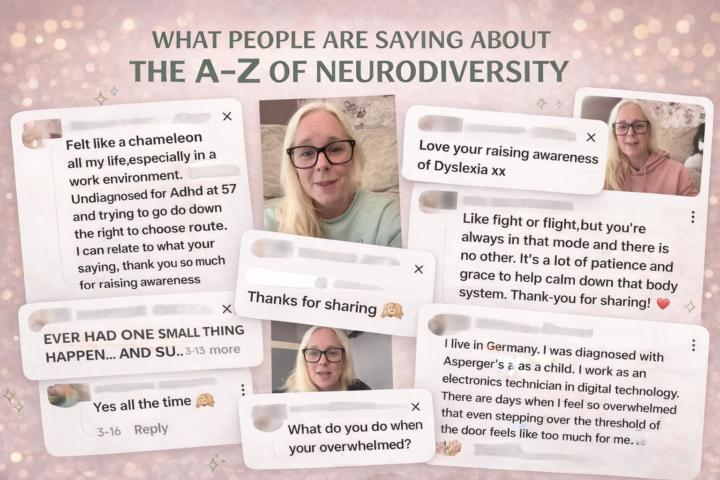
And I didn’t expect it to hit the way it has. Because the more I created these, the more I realised something… It’s not that people don’t careIt’s that people don’t understand So many things get labelled as “bad behaviour” “lazy” “too much” “overreacting” etc When actually… that’s not what’s going on at all So I created the A–Z of Neurodiversity Not a boring glossary. Not clinical definitions. Not stuff you read, listen to and forget But short, real-life videos, that explain what this actually looks like day to day… in real homes… with real kids And now Round 1 is complete: A – AuDHD B – Brain Fog C – Central Auditory Processing Disorder D – Dyslexia E – Emotional Dysregulation F – Focus Paralysis G – Global Developmental Delay H – Hyperfocus I – Interoception J – Justice Sensitivity K – Kinetic Seeking L – Low Demand Parenting M – Masking N – Nervous System O – Overwhelm P – PDA Q – Quirky Traits R – RSD S – Sensory Processing T – Tics U – Unmasking V – Vagus Nerve W – Window of Tolerance X – X-linked Conditions Y – Yelling Z – Zoning Out And the biggest thing I keep hearing is… “Ohhh… that makes sense now” Which is exactly the point You can watch these on YouTube, TikTok, and my socials BUT… Inside Mums Embracing Neurodiversity this is where we actually talk about it This is where you can say “that’s my child”“that’s me”“I thought it was just us” No judgement. No fixing. No pretending Just real conversations with people who get it If you’ve seen any of the A–Z videos… Which one hit you the most? And if you haven’t yet… Pick oneStart there You don’t need to understand everything, you just need one thing to click
1
0
3d •
I DISAPPEARED FOR A BIT… AND THERE WAS A VERY REAL REASON 🌴🔥
So I have been very quiet lately, and honestly… life has been a lot. As some of you know, Lily and I have been on a huge journey moving from our home in the UK to Bali. And I won’t dress it up… it’s been highs, lows, dysregulation, all of it. At times it got too much. 𝗪𝗛𝗘𝗡 𝗘𝗩𝗘𝗥𝗬𝗧𝗛𝗜𝗡𝗚 𝗛𝗜𝗧𝗦 𝗔𝗧 𝗢𝗡𝗖𝗘… 𝗦𝗢𝗠𝗘𝗧𝗛𝗜𝗡𝗚 𝗛𝗔𝗦 𝗧𝗢 𝗚𝗜𝗩𝗘 I had to drop a few things just to stay focused on the move, because that was the priority. And it took a lot more than I expected… physically, emotionally, psychologically. So I stepped back. Not because I didn’t care.But because I needed to keep us steady. 𝗕𝗨𝗧 𝗛𝗘𝗥𝗘’𝗦 𝗧𝗛𝗘 𝗦𝗛𝗜𝗙𝗧… We’re now in Bali. And I can’t even fully explain it… but within a couple of days, something settled. We feel calm. Regulated. Lily is loving it here. And me?I just feel like I’m home. 𝗔𝗡𝗗 𝗡𝗢𝗪 𝗜’𝗠 𝗖𝗢𝗠𝗜𝗡𝗚 𝗕𝗔𝗖𝗞 𝗜𝗡𝗧𝗢 𝗠𝗬 𝗪𝗢𝗥𝗞 𝗪𝗜𝗧𝗛 𝗔 𝗩𝗘𝗥𝗬 𝗗𝗜𝗙𝗙𝗘𝗥𝗘𝗡𝗧 𝗘𝗡𝗘𝗥𝗚𝗬 💥 Not rushed. Not forced Not trying to “keep up.” But grounded. Clear. Actually able to think again. And it’s made me realise something… You can have all the tools in the world, but when your nervous system is maxed out, sometimes the most powerful thing you can do is pause and stabilise before pushing forward. 𝗥𝗘𝗔𝗟 𝗧𝗔𝗟𝗞… Have you ever hit that point where everything just becomes too much… And even the things you care about start to feel heavy? How did you handle it? Or are you in that space right now? 💬
1
0

28d •
THIS IS WHY “JUST BE CONSISTENT” IS BS WHEN YOU’VE GOT KIDS AT HOME
Working from home with kids is a whole different story and I think I forgot just how much. Because normally it’s just me and Lily. She’s 13, she’s very self-sufficient, I can work, I can think, I can actually function. But this week, I’ve had the grandkids here and it’s been chaos. I couldn’t even have my quiet time in the morning to do anything they were up early, so that space I normally have. Just gone. And I was still getting up, still trying to work but I just couldn’t do as much as I wanted to. There were just so many distractions going on around me, constantly. And it’s not even just “busy” it’s constant. Like, there has to be someone in the room at all times- noise, meltdowns, people talking, needing something, every time I move into another room, they follow me. I even said the other day “I can’t type or text when people are talking around me because I’ll literally start typing what they’re saying.” That’s where my brain gets to. So trying to get anything done like that, it’s just, really hard. And I think that’s the bit. I felt like I failed a bit. Because in my head I’m like you should be doing more, you need to be doing more But my brain just couldn’t comprehend it. Because you can’t switch off, you can’t think straight, you can’t focus, and you’re still trying to show up and get things done. But, this is the shift I’ve had this week, I’m not beating myself up about it anymore. Because I still worked. I still showed up. I just didn’t do as much as I thought I “should”. And normally I’d go to bed thinking for f sake you didn’t do this, you didn’t do that, but this week it’s been different I’ve been like actually, I got so much done in the house that needed doing, and I feel lighter for it. Because sometimes it’s not that you’re not doing enough it’s that you’re trying to function like everything’s normal when it’s not. How are you actually coping this half term honestly? PS - If you’re feeling overwhelmed, reactive, like your brain just can’t function with everything going on, this is exactly what I support mums through.

0 likes • 26d
@Mimi Ramsey Thank you!! It has been a HUGE lesson for me as beating myself up was one of the things that saw me in the spiral. It can be chaos to juggle so many things but soon it will be calmness all the way

Mar 30 •
Parents, I’m curious about something...
How are things really going with your teen son right now? Not the “he’s fine” version. The real version. Is he moving toward becoming the kind of young man you’d respect…or does it feel like he’s drifting, stuck, or slowly pulling away? And more specifically: - What’s one situation lately where you tried to guide him… and it didn’t land? - What did you say in that moment? - How did he respond? It’s not that boys reject expectations. It’s that they shut down when expectations feel like judgment without backing. Most communication accidentally falls into one of two traps: - High standards, low support → comes across as pressure, criticism, “I’m not enough.” - High support, low standards → comes across as softness, “nothing is expected of me anyway.” Both kill momentum. The sweet spot is different. It’s when a young man feels two things at the same time: “You expect a lot from me.” AND “You believe I can actually do it.” That combination is rare. But when it lands, something shifts. Instead of resistance, you get engagement. Instead of shutdown, you get movement. Instead of:“Why are you always on your phone? You need to do better.” Try: “I know you’re capable of more than this. I’m not worried about if you can step up, I just want to figure out what’s making it hard right now.” If this is helpful and you're curious to learn more about communicating with teen men, step inside the Lighthouse Sons community 🤓 Now I'm curious: Where do you feel you’re currently at? - Leaning more toward pressure? - Or more toward being overly accommodating? - Or somewhere in between?
2 likes • Apr 1
What an EPIC community you are building and much needed support/work with parents in a time that there is so little help out there.
1 like • 27d
@Max Orlewicz That we do!! You are so welcome 😁
Apr 2 •
I CAN SEE IT’S WORKING… I’M JUST NOT FULLY CAPTURING IT YET
This is a bit of an honest one… My content is actually starting to get seen now Like people I don’t know are following me they’re sharing my videos saving them it’s all starting to move… And I’m not gonna lie, that part is really really very exciting for me because for a long time it just felt like I was putting things out and nothing was really happening But now I can see it is, happy dance feeling And I think the bit I’m realising is this… Being seen is one thing but actually bringing people INTO your world is another And I know that’s the bit I’m not fully doing yet like the connection is happening but I’m not always directing it anywhere So now I’m starting to look at that properly instead of just thinking “oh this is nice” and leaving it there because I don’t just want views I want actual conversations actual people actual connection especially with the kind of work I do around emotional mastery and supporting mums navigating neurodiversity… It’s not just about putting information out there, it’s about people actually being in a space where they can understand it, talk about it, and feel supported with it… And I’m building that more intentionally now instead of hoping people just find their way there So I’m curious… Is anyone else in that stage where you can SEE things are starting to work…but you’re not quite turning it into something yet? PS. if you are in that space and you want somewhere that actually goes deeper than just content… I’ve created Mums Embracing Neurodiversity for exactly that,not just information, but real conversations and support.

1-10 of 36

@naomi-quinn-1637
Emotional Mastery Expert For Neurodiverse Mums and their kids whether 5, 15 or 35 (one or both ND)
Active 3h ago
Joined Dec 23, 2025
INFJ
Bali
Powered by