Activity
Mon
Wed
Fri
Sun
Apr
May
Jun
Jul
Aug
Sep
Oct
Nov
Dec
Jan
Feb
Mar
What is this?
Less
More
Memberships
Rooted Alchemy
241 members • $40/month
34 contributions to Rooted Alchemy

2d •
Introduction
Hello from Edmonton, Alberta, Canada. I am very new to Tai Chi. I am very much looking forward to learning from this community!!

2 likes • 13h
It's brilliant. I've only been here a few months and I've leart SO, SO much! Highly recommended. Over here in the UK I'm counting down the days until the sun dries out the winter rain, and British Summer Time next weekend. Oh to practice outside! I guess it must be more extreme too (relative to California) in Edmonton? That said, I did manage to do some outdoor practice in northern Scotland in January. On one occasion when my year-round swimmer wife bathed in the River Nevis, mountain melt water from Ben Nevis!
1 like • 10h
@Kay Race Cheers! Miranda is a year-round sea and freshwater swimmer. Also a life-long Prefab Sprout fan and a big fan of Newcastle, Northumbria and County Durham (St Cuthbert land!), although originally from way further south on England's North Sea coast from estuarine Essex. I'm originally a Londoner, ancestrally real Cockney inner-London "Eastender" with strong connections to Brighton and the Sussex Channel coast. Oddly, I found practicing outdoors in the sub-zero January Scottish Highlands way, way easier than down here in the relatively warm winter South of these islands, where, because of climate change, it just rains and rains and rains and rains. Turning the ground to thick chalk or clay (depending on where you are) Battle of the Somme-like mud, and ruining footpaths, even roads. We're even getting invasive species flora and fauna up from the Mediterranean here! There was something very Qi-enhancing about the cold Scottish Highlands and Islands air!
5d •
Sunday Qi Talk
Hey everyone—this Sunday we’re kicking off our monthly Qi Talk series 🌀 Qi Talk is a relaxed, open Q&A space for our community. You can ask questions about Tai Chi, Qigong, training, or just share what you’ve been working on and experiencing in your practice. The Qi Talk will start at 10:15am this Sunday following the Qi & Flow class and a short break. To get things started, drop your questions or topics in this thread ahead of time so we can make sure to cover them. Even if you can’t attend live, you’ll still benefit from the discussion. And of course, you’re welcome to join live and ask questions in real time. Looking forward to hearing what’s on your mind and seeing some of you there 🙏
0 likes • 10h
In the QG session before the TJ one and the Qi Talk, I really appreciated the connections Sonny made between Elemental and Brocades, connections I'd suspected (I've been doing a lot of QG since the Holidays), but which it is good and informative to have confirmed by a Master. Which Sonny clearly is: the humility and humour, and his passion for the practice(s), from a perspective of multidisciplinary expertise confirms that. The eclectic ways forward seem so much the WTG: I'm reminded of the true athleticism of the triathlete or decathlete as against the hyper-specialist. Although a TJ Master under whom Sonny studied liking Shot Put says it all. In the best of ways! Ways forward? From my PoV I'd like to see: - Dedicated Daily Qi videos on the Monkey and Fox QG/Warm Ups: awesome! And; - More on Bagua: I'm a nube to TJ and QG, but I've dipped the terminal joint of my great toe into the Begua ocean, basically just the few Bagua videos on RA, and watching jaw-dropping what Bagua Masters can do. Wow! For me there is something that really "clicks" about Bagua: the twisting movements, the flat-footed step and stance, the intricacy of the hand movements, the circularity, its use of deception (in the positive MA sense), and, how cn I put it, it's "lightness". I find it easier and more natural to me than TJ. But I know little about it beyond the RA videos and watching Masters (and Mistresses, if that's the right word?). Why? Interesting. As I've mentioned on other threads, I'm very "left-sided" fundamentally the way my brain-body co-ordinates. Also, when as a younger man I danced I'd find choreographed footwork difficult, but more expressive, more "natural" to me techniques easy, even quite extreme ones. Lastly, I am high-function neurodivergent (Autism and ADHD, as is my younger daughter Rebecca), there's something about Bagua that just feels "FY!" Hope that's useful!

4d •
Introducing the 8-Week Tai Chi Training Cycle (Please Watch the Video)
We’re excited to share that our Qi & Flow (Tai Chi) live classes are evolving into a new structured format designed to help you build real Tai Chi skill. This new 8-week Qi & Flow training cycle gives us a clearer path to develop both: - Strong Tai Chi foundational skills - A deeper understanding of the Beijing 24 Form 🌱 Why This New Format? This structure allows you to: - Build skills progressively and intentionally - Connect Tai Chi fundamentals directly to form practice - Revisit the same material each cycle—going deeper every time - Stay organized without losing the natural, flowing quality of Tai Chi - Supports both beginners and experienced students Think of it like stepping into a moving river—you can join anytime, and each pass brings more depth. 🔄 How These Classes Will Be Structured Each week follows a consistent and purposeful flow: 🗓️ Tuesday — Foundations - Yin–Yang Qigong - Tai Chi Stances - Tai Chi Walking 🗓️ Thursday — Internal Development - Silk Reeling: Covering movements from all 24 forms - Ocean Stepping: Develop coordination, flow, and internal connection 🗓️ Sunday — Form Practice - Beijing 24 Form: Apply everything into real form training ❓Can you join at any time, in any week? 👉 Yes. You can jump in whenever you’re ready! - Check which week we’re currently on and jump right in - Use past recordings to catch up at your own pace - Each cycle repeats, so you’ll continue building deeper understanding over time We’ll also be introducing a future 8-Week cycle for the second half of the Beijing 24, so you can eventually learn the full form. We’re really excited about this shift. It’s a very intentional way to train, while still keeping the practice natural, flowing, and alive. Looking forward to seeing your growth through this cycle. Please let us know if you have any questions🌱
2 likes • 12h
Sonny's exposition of this afternoon, as to where he might take this community, sounds absolutely awesome. I'm a big fan, in multiple very different areas of endeavour, of eclecticism informed by knowledge, and practice accumulated over decades. Okay, I'm a nube, but I really think he should consider developing a unique "form" of TJ or KF, or a MMA discipline. The lineage thing is interesting too: it reminds me quite a bit of the master > student > master > new students dynamic one finds in the "silsilats" ("chains") of Sufism (Muslim mysticism), or in Jewish (and particularly Chassidic) Kabbalistic mysticism, hardly surprising as China too is a non-Western Asian culture that has attempted to address the problems of Modernity before there was such a thing as Western Modernity! I guess a meeting point (especially regarding Persianate Sufism) must be Central Asia? About 10 years ago, on the recommendation of a friend, I tried a course in London in Silat (Sufic martial art mainly from South East Asia), but it was very self-defence orientated: hard falls on hard floors, how to defend against a street opponent with a knife more or less 101. I was then in my mid-50s and not that fit. The absolutely awesome Indonesian Master suggested to me I'd jumped in at the deep end a bit and suggested I study Tai Chi first. In my ignorance and arrogance I associated "Tai Chi" with seniors waving their arms in the air. Sounds a horrible dis, but as I said I was ignorant and arrogant. Even in my mid-to-late 50s. Trying to walk before I could run. A wake-up call particularly for guys. And particularly for PhD educated guys who think they know it all. Who think all they have to do is go to the gym a bit and jog for a bit and they'll be 30 again. Now I know different: about myself and about Tai Ji. And I'm here, in Rooted Alchemy. It took a fall health crisis to get me here. And I feel fitter than I have in a long time. Certainly a lot fitter than when I dabbled in Silat. If only I'd been the now-me then. Who knows, granted enough life and health I may even retread that path, perhaps in my 70s (I'm 67 in July). Or a different one.

2d •
Chuck Norris Passing
It’s with a heavy heart that we acknowledge the passing of Chuck Norris. A true legend, not just in martial arts and film, but in the way he carried himself—with strength, humility, and unwavering discipline. For decades, he inspired millions through his iconic roles, his dedication to fitness, and his larger-than-life persona that somehow still felt grounded in real values. Whether you knew him from action films, TV, or the countless stories of his toughness, there was always something admirable about the man behind the image. Chuck Norris wasn’t just a symbol of strength—he represented perseverance, integrity, and the idea that with enough determination, anything is possible. Rest in peace to a true icon. Your legacy will continue to inspire generations to come.
1 like • 13h
@Kirby Mannon I've just watched that fight. Wow! I was gratified to recognise Bruce Lee's warm-up drills, although of course he does them *slightly* more athletically than me! ;-) But wow, what skill, both of them! Even if it's for the cameras you can see the art in it. Perfection! I was going to mention Yin and Yang training days today, achieving the balance between "harder" training, fast, and athletic, and "soft": slow, more connected to the meditative, the philosophical, mindful, the spiritual. I've been playing around with this for a couple of weeks and it really seems to work. I mention that here because I read that Bruce, despite his extreme athleticism, did both. Their artistry lives on.
19d •
March Daily Chi Accountability Thread🌿
Here’s the March Daily Chi Accountability Thread. This is a supportive space to show up for your practice, build consistency, and move together as a community. Whether you joined a live session, practiced along with YouTube inside the community, or completed a self-paced course, it all counts. What matters most is that you showed up. This thread will stay pinned for daily check-ins, connection, and encouragement. ✅ How to Check In Each Day After you finish your practice, post a short check-in using these four steps: 1️⃣ Intention What did you want to focus on or cultivate today? 2️⃣ Practice What practice did you do today? Live session, YouTube, or self-paced are all welcome. 3️⃣ After How do you feel after completing your practice? One short sentence is perfect. 4️⃣ Visual Share a photo or short video of your practice, your screen, or your setup. ✨ Sample Check-In Intention: To slow down and reconnect with my breath Practice: Live Session 12-21-2025 After: Feeling grounded, calm, and present Photo or video attached There’s no right or wrong way to participate here. Show up in a way that feels good to you, support others when you can, and enjoy the process. One day. One breath. One practice.
5 likes • 5d
Arrgh! Idiot goof time. I did Three Centres and Brocade in the morning as kinda wake-up, delaying eating until after the practice for reasons of metabolic efficiency. So far, so good. I had other stuff to be getting on with, so I did that until about 14.00 GMT, then just hung around in the garden taking in the still weak but nonetheless welcome Spring sun with a glass of green tea and lemon, anticipating the live QG and TJ sessions starting 16.00. Except it wasn't starting 16.00, it was starting 15.00! Entirely my bad as there were reminders as to time. More positively, I tried something new instead. For about a month I've been cross-referencing QG and TJ practices with informed stuff from Western sports and health science PoVs. I've been very impressed by how again and again QG and TJ not only "get" best sports science practice, but at the same time offer so much else more organically and collaterally. As I grown into my practice I can see this more and more: it's far from being merely exercise with exotic "Oriental" trimmings, it offers so much more besides. Nonetheless, I've incorporated some Western stuff such as isometrics into my practice, and some of the science of metabolism. Generally, so far, so good: I'm amazed how well my initially none to healthy 66 year-old body has responded to all this, body, and mind and spirit. The downside of the approach of the past month or so, however, is that my intention became more "sporty", even kinda competitive, as if I were competing with the me of, say 30 (my son, who I sometimes practice with, does gym, soccer, and rugby, and is 29!). Again, my body has responded very well, except my main physical weakness, my knees, injured decades ago in sports accidents and now somewhat osteoarthritic with circulation issues around the right (and more serious) injury. Generally, my overall leg strength has come on leaps and bounds, including the knees, but at the price of a fair bit of knee pain. So I experimented with giving my knees rests a couple of times a week, still practicing, but doing:
1-10 of 34
@mike-diboll-7246
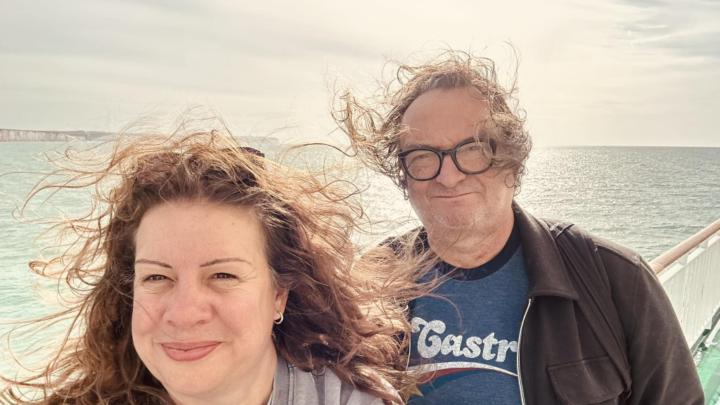
Hi, I'm 66, based in Sussex, England, a retired academic. I'm new-ish to Qi Jong and Tai Chi, and want to consolidate and develop fitness, wellbeing.
Active 6h ago
Joined Jan 26, 2026
Powered by