Activity
Mon
Wed
Fri
Sun
Jul
Aug
Sep
Oct
Nov
Dec
Jan
Feb
Mar
Apr
May
What is this?
Less
More
Memberships
Powerhouse Fitness for Women
13.9k members • Free
Castore: Built to Adapt
979 members • Free
Beyond Tomorrow
81 members • Free
9 contributions to Castore: Built to Adapt

6d •
Your Dog’s Joint Pain Might Not Be a “Joint Problem” at All
There’s a really interesting shift happening in veterinary medicine right now and most pet owners probably haven’t noticed it yet. For years, canine osteoarthritis care was largely framed around symptom suppression. Dog slows down. Dog limps. Dog struggles getting onto the couch or into the car. Maybe there’s stiffness after rest. The solution pathway usually looked pretty predictable. Anti-inflammatory medications. Weight loss recommendations. Joint supplements. Maybe laser therapy or rehab if someone was lucky enough to have access to a good clinic. Now there’s this growing tension emerging in the field between symptom management and regenerative signaling.That distinction matters. Biology does not really think in terms of pain versus no pain. Biology thinks in terms of stress, tissue integrity, signaling environment, energy availability, immune coordination, and mechanical loading. Pain is just one output of a much larger conversation. And once you start viewing osteoarthritis through that lens, a lot of things begin to make more sense. Take a dog with chronic joint degeneration. Most people imagine the cartilage as something that simply “wore out” like old tires. That analogy is incomplete. Tissues are alive. Cartilage is metabolically active. The synovial lining is active. Bone underneath the joint is active. Immune cells are active. Nerves are active. Mitochondria inside all of those tissues are constantly sensing stress and responding to the environment around them. The joint is less like a dead hinge and more like a neighborhood under chronic construction.Now think about what happens when the construction crew never gets coordinated instructions. Inflammation rises, but repair signaling is weak. Mechanical loading becomes abnormal because the dog moves differently to avoid discomfort. Muscle mass starts dropping because movement decreases. Mitochondrial energy production inside local tissues becomes less efficient. Oxidative stress rises. Synovial fluid quality changes. The immune system starts maintaining a low-grade inflammatory environment instead of resolving it.

2 likes • 5d
@Anthony Castore I would love to share this insightful information with the Ignite group. We are putting together the first ever Human, Horse & Hound Performance/Resilience Summit ( H3 Ignite) for Competitive sports to be held in 2027. This group contains the world's top vet and professionals in Olympic and national level global equine and canine sports. I might need to recruit you for our event!!!! https://www.igniteforequineathletes.com/
1 like • 16h
@Anthony Castore how can I share your post?
12d •
The Mitochondrion Was Never a Battery: What 2026 Cellular Medicine Is Quietly Getting Right
Something is changing in mitochondrial medicine that most people, even most clinicians, have not yet absorbed. For three decades the field treated the mitochondrion the way you treat a furnace. If the room is cold, throw more wood on. If the patient is tired, boost the metabolism. If the athlete is plateaued, add more ATP precursors. That entire model is collapsing in 2026, and what is replacing it is not louder, it is smarter. The new framework treats the mitochondrion the way an electrical engineer treats a power grid. A grid does not just need more electricity. It needs clean lines, balanced loads, redundant pathways, intelligent monitoring, and a maintenance crew that recycles broken transformers before they take down the neighborhood. That is the conceptual leap happening right now across longevity, performance, and chronic disease medicine. The mitochondrion is not a single fuel station. It is an entire infrastructure system, and the most exciting therapies coming through the pipeline are designed to upgrade that infrastructure rather than just feed it. The first major shift is the rise of combined metabolic activators, often shortened to CMA. The classic stack being studied combines nicotinamide riboside, N acetylcysteine, L carnitine, and serine. Each of these compounds restores a different part of the mitochondrial economy. Nicotinamide riboside lifts the NAD+ pool, which is the currency that drives oxidative phosphorylation, sirtuin signaling, and DNA repair. N acetylcysteine donates the cysteine your cells need to build glutathione, your master intracellular antioxidant. L carnitine carries long chain fatty acids across the outer and inner mitochondrial membranes so they can actually be burned for fuel. Serine supports one carbon metabolism, glutathione synthesis, and phospholipid integrity in the mitochondrial membrane itself. None of these compounds alone fixes mitochondrial dysfunction in any meaningful way. Together, they restore the network. Translational data are showing improvements in Parkinsonian metabolic dysfunction, cognitive performance, mitochondrial respiration, and exercise tolerance in mitochondrial disease models. The deeper insight is conceptual. The field is finally admitting that one target equals one disease is a dead model for energy metabolism. Mitochondrial dysfunction is a network failure, and network failures need coordinated repair. Think of it like a stalled assembly line. You can flood the line with raw material, but if the conveyor belt is broken, the welders are tired, and the trash bins are overflowing, your raw material just piles up and rots. CMA logic addresses raw material, machinery, waste removal, and quality control simultaneously. That is why combined approaches are outperforming single agents in the clinic.
1 like • 11d
@Anthony Castore this is fascinating, timely and meaningful post. Thank you. I've noticed the general shift in the approach toward building healthy mitochondrial function, but you have literally provided the roadmap with translation tools and guidance. I'm curious how and if HIT workouts, like the Carol bike sprints would facilitate biogenesis.
12d •
You’re Wasting Your Peptides…And It’s Not the Peptides’ Fault
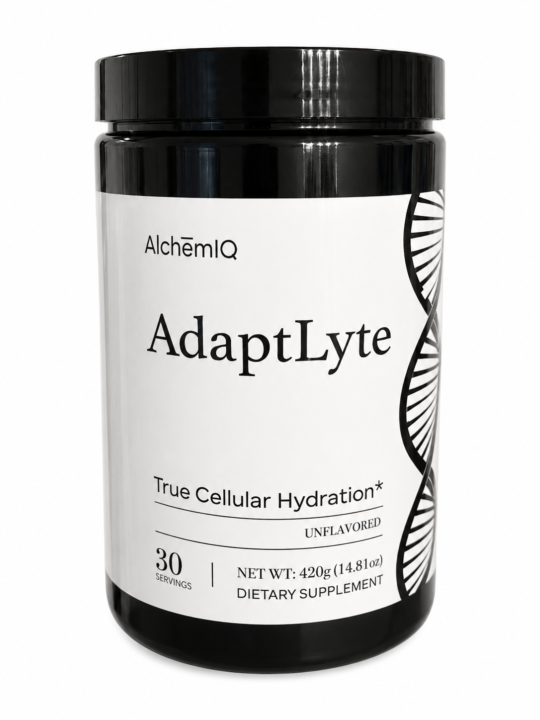
You probably aren't as hydrated as you think. “Drinking water” and “becoming hydrated” are two very different conversations Most people think hydration is solved at the kitchen sink. Fill the bottle. Drink the bottle. Repeat. Maybe toss in some electrolytes if training was hard or the sauna ran long. The internal scorecard says hydrated, the body says something else, and we keep moving. Here is the uncomfortable part. You can drink water all day and still have cells that are under-volumed, undercharged, and under-resourced. The water moves through you. It does not always move into you not where it counts. This article is about where it counts. The Two Compartments Almost Nobody Talks About When you drink water, that water enters the extracellular space first, the bloodstream and the fluid bathing your tissues. That is the easy compartment. It moves fast, it dilutes quickly, and you can pee most of it out within an hour if the terrain is not set up to hold it. The compartment that actually drives performance, recovery, and adaptation is the intracellular space. That is the water inside the cell. Roughly two-thirds of your body water lives there. It is the environment where mitochondria make ATP, where ribosomes build protein, where signaling cascades fire, where peptide messages get translated into actual biological responses. A useful analogy: extracellular water is the rain on the roof. Intracellular water is the rain that actually reaches the roots. You can have a lot of one and very little of the other, and the plant will tell you which one matters. The goal of real hydration is not to soak the roof. The goal is to get water to the roots. Cell Volume Is a Signal, Not a Side Effect This is the piece that reframes everything once you see it. A well-hydrated cell is not just a wetter cell. It is a cell with a different internal pressure and that pressure is interpreted by the body as a signal. The biochemist Dieter Häussinger’s work established that cell swelling, within normal limits, tends to bias the cell toward an anabolic, building, repairing state, while cell shrinkage tends to bias it toward a catabolic, stressed, breakdown state.
1 like • 11d
@Anthony Castore I would love to order AdaptLyte as well.
Feb 7 •
Most Fatigue Advice Fails Because It Confuses These Two Very Different Problems
Low energy is one of the most common complaints in medicine, coaching, and everyday life, yet it is one of the least precisely understood. People describe it as fatigue, burnout, brain fog, weakness, lack of motivation, or feeling “offline.” Athletes feel it when they cannot train. Patients feel it when they cannot work. High performers feel it when discipline no longer works. The problem is that “low energy” is not a diagnosis. It is a surface description of a system-level failure, and two people can experience nearly identical symptoms while the underlying biology is completely different. Treating them the same way helps one person and harms the other. To understand low energy correctly, you have to stop asking how to boost energy and start asking why energy is being limited in the first place. At the deepest level, there are two dominant failure modes. In one, the body cannot produce enough energy. In the other, the body is deliberately suppressing energy production. The first is mitochondrial damage, a capacity problem. The second is inflammatory inhibition, a regulatory decision. One is a broken engine. The other is a functioning engine with the brakes applied. Subjectively they feel similar. Biologically they are opposites. Everything that follows depends on recognizing which one you are dealing with. A simple model helps. Imagine the body as a car. The mitochondria are the engine. They take fuel and oxygen and convert them into usable energy in the form of ATP. Inflammation acts like the central control computer, deciding how much power the engine is allowed to produce. If the engine is damaged, pressing the accelerator does little. If the computer is limiting output, the engine could perform, but is being intentionally restrained. In both cases the car goes slow. Only one responds to pushing harder. Mitochondria exist inside nearly every cell and are responsible for producing ATP, the molecule that powers muscle contraction, nerve signaling, hormone synthesis, immune regulation, tissue repair, and cognition. Without adequate ATP, nothing in the body functions well. Energy production depends on intact mitochondrial membranes, functioning enzymes, proper redox balance, sufficient oxygen delivery, and a steady supply of micronutrients. When any part of this system is damaged, the maximum amount of energy the body can generate drops. This is not a motivational issue. It is a hard ceiling.
1 like • Feb 8
I'm fascinated with this topic as it is more pervasive than people realize. The rush to NAD+ and Mblue is often not the best first move.
Jan 3 •
The Most Important Muscle You Aren’t Training (And Why It Matters)
Let me tell you a story about the most important muscle in your body that almost nobody trains, almost nobody understands, and almost everybody is slowly losing. The diaphragm is not just a breathing muscle. That description is like calling the brain a “thinking organ.” It’s technically true, but it misses the point so badly that it becomes misleading. The diaphragm is a living interface between structure and signal, between chemistry and physics, between voluntary and involuntary control. It is a biological transistor. A gatekeeper. A conductor that coordinates pressure, charge, rhythm, and information across the entire organism. If you understand the diaphragm, you understand how the body integrates itself. If you lose the diaphragm, the body fragments. Let’s start simply, then go deep very deep. At the most basic level, the diaphragm is a dome-shaped sheet of muscle that separates the thoracic cavity from the abdominal cavity. When it contracts, it descends. When it relaxes, it recoils upward. This movement changes pressure in the chest and abdomen and drives airflow in and out of the lungs. That’s the textbook version. It’s also the least interesting. The diaphragm is the only skeletal muscle in the body that is both voluntary and involuntary. You can control it, but it doesn’t need you. That alone should make you suspicious that it sits at a crossroads no other muscle occupies. Embedded in and passing through the diaphragm are some of the most important structures in the body: the inferior vena cava, the esophagus, the aorta, lymphatic channels, and dense autonomic nerve plexuses. Every breath mechanically massages blood, lymph, and nerves. This is not a side effect. This is the design. Each diaphragmatic contraction creates a pressure wave. That wave propagates through fluid-filled tissues, fascia, and organs. Pressure waves in biological tissue are not just mechanical events. They are information-bearing phenomena. They alter ion channel behavior, membrane tension, protein conformation, and mitochondrial function.
1 like • Jan 30
What are your thoughts @Anthony Castore on Hypoxia training for help in this area? I tried the HypoxBreath and have never felt so much space open in my diaphragm.
1 like • Feb 1
I thought it might be helpful to provide this to you. Thank you for your curiosity and willingness to learn more. This is one of my favorite things about your membership platform.
1-9 of 9

@jacqueline-kennard-3439
I love to inspire creative endeavors. I'm a mother, equestrian, lover of nature, health and fitness. I am the Longevity Curator.
Active 16h ago
Joined Dec 10, 2025
Powered by