Activity
Mon
Wed
Fri
Sun
Aug
Sep
Oct
Nov
Dec
Jan
Feb
Mar
Apr
May
Jun
Jul
What is this?
Less
More
Memberships
Tech Snack | Vibe Coding & AI
19.5k members • Free
Brojo: Confidence & Integrity
510 members • $9/month
15 contributions to Brojo: Confidence & Integrity

Jan 25 •
Rejection Therapy
Dana and I set ourselves the rejection task of asking to pet a strangers dog yesterday. We both felt better for it. Today we have set ourselves the task of playing paper scissors rock with a random person. During the social confidence challenge, when I was doing the challenges and breaking out of the norms that we all live inside.... I felt anything was possible... keen to continue

2 likes • Jan 26
@Jason S Love that reframe. You WANT to get a fun, interesting connection out of this. But if that's not on offer, it's all good cos now instead you're looking to get a NO. I gotta remember that the next time I do social challenges :D

Jan 17 •
🔥 Day 19: Stop Waiting to Feel Motivated
Motivation is an unreliable emotional state that fluctuates constantly. Discipline is the ability to recognise that you don't need any particular emotional state to do what's right. Finish this sentence honestly: “When I don’t feel motivated, I usually…” Now finish this: “When I act anyway, even when I don't feel like it, the result is…” Your task: Choose one daily action you’ll do regardless of mood. Post below: Name the action. For more on this, check out the Secrets of Motivation mini-course https://www.skool.com/brojo-the-integrity-army-6491/classroom/ab33c57a REMINDER! This 30 day challenge is not just a planning exercise for your year, it's also an opportunity to win $1000s worth of 1:1 coaching and other valuable prizes. To be eligible to claim these prizes, you must be a paying Premium or VIP member.
5 likes • Jan 19
The one thing I'm committed to doing everyday, regardless of mood or motivation, is my morning journalling and reflection ritual
2 likes • Jan 25
@Travis Whitney Nice one! Focusing on your wins is great for so many reasons, not least of which that it makes journaling more fun!
Jan 22 •
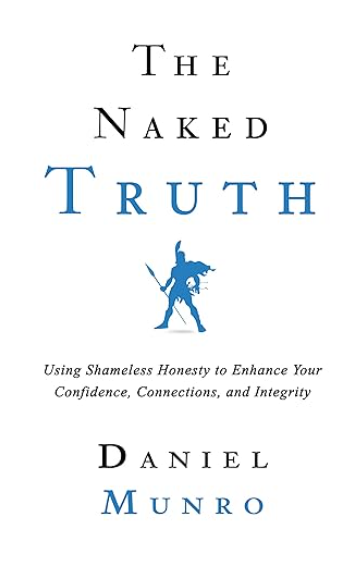
The Naked Truth - audiobook giveaway (first 10 comments win)
Yo everyone Today I'm giving away access to the audio version of my book "The Naked Truth: Using Shameless Honesty to Enhance Your Confidence, Connections and Integrity" I'll give it to the first 10 people who comment below telling me what their favourite video, podcast, article or course is from my content collection - to help me get a sense of what I should be doing more of. GO! BACK COVER: “In this book, Dan Munro does something that many books on authenticity actually fail to do. He speaks from the heart in his own voice and provides the reader with a living example of the sort of integrity he's advocating.” - Donald Robertson, author of How to Think Like a Roman Emperor: The Stoic Philosophy of Marcus Aurelius Most of us are living a lie. We like to think of ourselves as “good people”, and because of this we come to the conclusion that we must also be honest people, because a good person isn’t dishonest, right?And yet, in order to believe this story, we must overlook a few things. Like how we are falsely agreeable with people we’re attracted to or intimidated by. Like how we pretend to feel positive emotions so that people don’t feel burdened by our darkness. Like how we hold back on speaking our minds to avoid confrontations. Like how we don’t call out our family on their bad behaviour. And, let’s face it: how we often straight-up lie. For some of us, this has become more than just a habit or a reaction to difficult social situations, it’s become a lifestyle. We create a persona - a performance - that was originally designed to prevent rejection, embarrassment and conflict, but has since become an ongoing act that we automatically play out without even thinking about it. And what’s wrong with that? Everything. After more than 10 years spent coaching people on how to become more honest and confident by living with integrity, I’ve come to realise that dishonesty is at the heart of nearly all our suffering. It’s the reason you lie awake with anxiety. It’s the reason there’s so much conflict in your relationships. It’s the reason your friendships are superficial, your job is unsatisfying, and your self-worth is declining. Why? Because dishonesty is the cause of shame.
1 like • Jan 23
In no particular order, the following podcasts have stood out to me: - Escaping The Red Pill Trap put me on a healthier track with respect to dating and relationships https://www.youtube.com/watch?v=6UfKdKSzwWk - Same with the podcasts you did about Manipulation. - I think you have two podcasts about decision making (Shortest path and Chess analogies), both of which I have found very useful - Your podcast on Parenting with Integrity. I don't plan on becoming a parent myself anytime soon but I did listen to it with my mom. And it enabled us to connect in a really cool and different way.
Jan 21 •
The Post-Truth Era by Ralph Keyes
A great excerpt from a classic book about dishonesty: ---- Post-Truthfulness Even though there have always been liars, lies have usually been told with hesitation, a dash of anxiety, a bit of guilt, a little shame, at least some sheepishness. Now, clever people that we are, we have come up with rationales for tampering with truth so we can dissemble guilt-free. I call it post-truth. We live in a post-truth era. Post-truthfulness exists in an ethical twilight zone. It allows us to dissemble without considering ourselves dishonest. When our behavior conflicts with our values, what we’re most likely to do is reconceive our values. Few of us want to think of ourselves as being unethical, let alone admit that to others, so we devise alternative approaches to morality. Think of them as alt.ethics. This term refers to ethical systems in which dissembling is considered okay, not necessarily wrong, therefore not really “dishonest” in the negative sense of the word. Even if we do tell more lies than ever, no one wants to be considered a liar. That word sounds so harsh, so judgmental. Men in particular are extremely careful to avoid giving other men any opportunity to say “You callin’ me a liar?” Once those fatal words are spoken, it’s hard for dialogue to continue without fists being thrown, or worse. The word lie itself is both a description and a weapon. According to the Oxford English Dictionary, this term “is normally a violent expression of moral reprobation, which in polite conversation tends to be avoided.” That’s why we come up with avoidance mechanisms: rationales for dishonesty, reasons why it’s okay to lie, not nearly as bad as we once thought, maybe not so bad after all. The emotional valence of words associated with deception has declined. We no longer tell lies. Instead we “misspeak.” We “exaggerate.” We “exercise poor judgment.” “Mistakes were made,” we say. The term “deceive” gives way to the more playful “spin.” At worst, saying “I wasn’t truthful” sounds better than “I lied.” Nor would we want to accuse others of lying; we say they’re “in denial.” That was sometimes said even of Richard Nixon, the premier liar of modern times, who went to his grave without ever confessing to anything more than errors of judgment. Presidential aspirant Gary Hart admitted only to “thoughtlessness and misjudgment” after reporters revealed Hart’s dishonesty (not only about his sex life but about his age). When, during a primary debate, John Kerry referred to a nonexistent poll that put his popularity well above Hillary Clinton’s, an aide later said Kerry “misspoke.” And it isn’t just male politicians who parse words this way. In the course of writing The Dance of Deception, Harriet Lerner asked women friends what lies they’d recently told. This request was invariably greeted with silence. When Lerner asked the same friends for examples of “pretending,” they had no problem complying. “I pretended to be out when my friends called,” said one without hesitation.
2 likes • Jan 22
@Daniel Munro Yeah, it seems like as humans we just default to rationalizing whatever we observe ourselves doing. That's why I reckon even though we all get to choose our own core value set according to our unique preferences, there are certain meta-values, like Honesty and Awareness (or Presence) that everyone needs in order to even make valued living possible
Jan 15 •
🔥 DAY 15 – Discipline Beats Motivation
Motivation is unreliable - too emotional to depend on. Discipline is different; it's a rational decision to do what is RIGHT rather than what feels good in the moment. Answer honestly: 1. What do I wait to “feel ready” to do? 2. What would disciplined action look like instead? Then choose one reminder you’ll follow regardless of your mood. E.g. I will often ask myself, “What is the best thing to do right now for my future self’s success?” Post below: “My discipline principle for this year is…”
3 likes • Jan 19
My discipline principle for the year is ""What does tomorrow-me need from today-me?"
1-10 of 15