Activity
Mon
Wed
Fri
Sun
Mar
Apr
May
Jun
Jul
Aug
Sep
Oct
Nov
Dec
Jan
Feb
What is this?
Less
More
Owned by Daniel
Die umfassendste, lehrreichste und interaktivste Health Community der Welt
Memberships
TPC ARMY
187 members • $200/m
Castore: Built to Adapt
764 members • Free
7 contributions to Castore: Built to Adapt

2d •
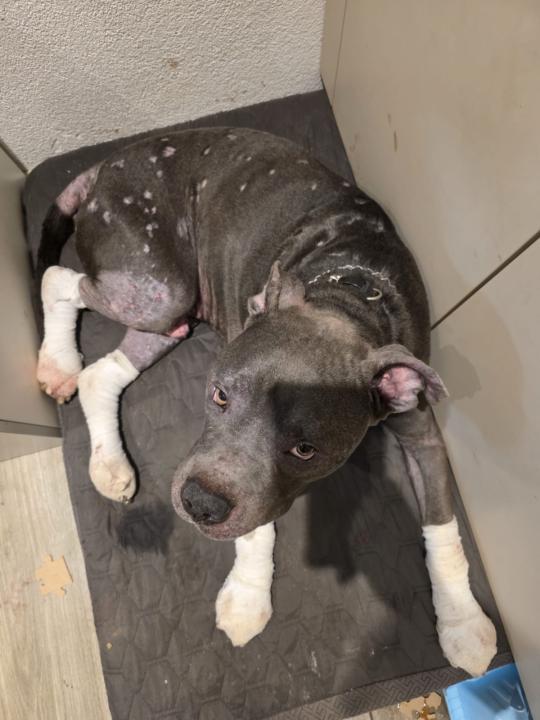
HELP needed for a friends dog!
The dog of a friend of mine looks terrible. He had some allergic reactions to something and got some cortison over a half a year. Now he is off the medications and even when it doesnt look like it he feels better. Now they are working with many supplements. I thought about throwing in thymosin alpha 1 and TB500 for a while?! He is getting a lot of supps at the moment and non-allergic food. Glutamin Probiotica Curcumin with pepper Quercetin Deer bone meal Colostrum Enterogan Greenzyme Allrounder Pahema B komplex Omega 3 Aloevera Cocos oil Hemp oil Can someone please help and tell me how is the dose of TA1 and TB500 and how long and what other supps/peptides should we through in? Please help!! 🙏🏽🙏🏽🙏🏽🙏🏽
1 like • 22h
Wow! Awesome response! Thank you very much. I appreciate it a lot 🙏 Do you have a good recommendation of a lactulose product? @Anthony Castore When introducing KPV and later BPC157 starting with the lowest dose possible or need dogs higher amount because of a higher metabolism compared to humans? He is around 31kg right now.
0 likes • 21h
@Anthony Castore thanks a lot as always 🙏 it seems its very hard here in europe to get a good lactulose product but as I now heard from the owner of the dog is that the Stool is healthy, however, the dog's farts smell enormously bad 😅😂 maybe lactulose isn't needed when the stool is regularly?

Jan 2 •
Memberships Options: Read This If You’re New or Deciding How to Engage More Deeply
This community exists to correct a problem I see every day: smart, motivated people making avoidable mistakes because they are reacting to information instead of reasoning through it. Everything here is built around clear thinking, proper sequencing, and confident restraint. There are several ways to engage. Each one is designed for a different level of responsibility. The question is not whether to invest. The question is where you are right now. The Cellular Intelligence Circle For Orientation, Context, and Staying Current The Circle is where confusion gets resolved before it turns into action. This is the right place if you want to: - Understand emerging science without overreacting to it - Learn how decisions are actually weighed - Separate signal from noise - Avoid unnecessary intervention It is a content-first environment designed to compound over time. Membership provides access to a growing, curated body of work that functions as a reference library, not a feed to keep up with. Inside the Circle: - Peptide of the Month (mechanism, context, restraint) - Protocol and case reasoning breakdowns - Science article reviews focused on interpretation, not hype - Monthly live Q and A - Periodic synthesis webinars The Circle is not coaching. It is not protocol delivery. It is where judgment is built. Pricing - $79 per month - $219 for three months - $499 for twelve months This level is appropriate when your primary goal is orientation, understanding, and staying sharp. One-Time Consultations For Specific Decisions. Consultations exist for moments when a decision needs to be handled correctly. They focus on: - Identifying what actually matters - Removing unnecessary complexity - Clarifying what not to do Pricing - One hour consultation: $350 - One hour consultation with follow-up: $500 This option makes sense when a single decision needs careful thought. Ongoing Advisory Core For Continuity and Guardrails. This is for people who no longer want to think through complex decisions in isolation.
1 like • 22h
Im in for the Circle 🙏
13d •
Any idea for treating/reducing symptoms Parkinson?
Is here someone who has experience with it? 🙏
1 like • 10d
thank you very much for the detailed explanation 🙏 Is there a good source for ketones monoester and plasmalogens around europe? Its hard to find a good source
0 likes • 7d
great, thank you very much 🙏 with ketoneAid KE4, how much is a serving or what do you recommend to take daily? Its not the cheapest one as I see but when the serving per day is little then is more than a good price :)
Dec '25 •
The Brain Doesn’t Break From Damage—It Breaks From Energy Debt (And Almost No One Thinks This Way)
Let’s begin by looking at aging and longevity through the lens of neuron survival. Most conversations about aging revolve around damage. Oxidative damage. DNA damage. Protein damage. The story we are usually told is that aging is the slow accumulation of wear and tear until the system finally breaks. That framing sounds intuitive, but it is incomplete. Cells do not usually fail because damage suddenly appears. They fail because their ability to repair damage, buffer stress, and maintain energy quietly erodes over time. Aging, at its core, is better understood as a progressive loss of energy resilience. Neurons are one of the earliest and clearest indicators of this process. They are among the most energy-demanding cells in the body, and unlike many other tissues, they cannot easily be replaced. They must maintain electrical gradients every second, transmit signals across long distances, repair DNA continuously, and coordinate complex networks that never truly shut off. This means neurons live very close to their energetic limits even under normal conditions. As NAD+ availability declines with age, neurons become less capable of surviving inflammatory stress, metabolic stress, and excitotoxic stress. Long before neurons actually die, this loss of resilience shows up as slower processing speed, poorer stress tolerance, impaired memory consolidation, reduced emotional regulation, and diminished adaptability. People feel “off” years or decades before anything that would qualify as neurodegeneration appears on a scan. From a longevity perspective, this reframes the goal entirely. Longevity is not primarily about adding years at the very end of life. It is about preserving cognitive, emotional, and functional capacity across the middle decades where most people actually live. Strategies that stabilize energy metabolism and reduce unnecessary NAD+ depletion are therefore plausibly longevity-aligned even if they do not regenerate tissue or reverse existing damage. The key shift is this: longevity is less about creating new cells and more about preventing avoidable cell loss.
0 likes • Jan 9
is there a way to recover the nervous system better/faster after a workout instead of just having more rest days and wait until the nervous system is ready again? I heard inj-carnitine could be an option but I never felt a better recovery of my system through this compound
Dec '25 •
EBV Treatment?
Is there some solution or life quality/energy increasment when having the Epstein Barr Virus? Some lifestyle hacks and Supplement/Peptides stack? 🙏
0 likes • Dec '25
Im asking for a friend because he has low energy and I have no clue what kind of solutions there is :)
1-7 of 7

Active 8h ago
Joined Aug 1, 2025
Zurich, Switzerland
Powered by