Activity
Mon
Wed
Fri
Sun
Nov
Dec
Jan
Feb
Mar
Apr
May
Jun
Jul
Aug
Sep
What is this?
Less
More
Calisthenics Inner Circle
362
Free
MM Creator Academy
541
Free
Grow With Evelyn
3.4k
5.0
$29/m
Pain-Free Performance
552
Free
Mobility & Injury Prevention
250.8k
Free
CO-LAB
1.4k
Free
Frank Boxing Academy
1k
5.0
Free
Built To Perform: Daru Strong
859
5.0
Free
Real Athletes Club
845
Free
86 contributions to Built To Perform: Daru Strong

14d •
The Top Three Things I Have Learned from Performance Journaling
I was asked to write about what I have learned from keeping a Performance Journal - this is that. I have been keeping a Performance Journal for about eight months now. I have never been someone who journals, but I am finding real value in it. I am also learning that consistency is key, just as it is with almost anything worth doing. My Performance Journal has primarily centered on pistol shooting, training and competition. More recently, it has begun to include other areas of my life, particularly fitness and mental management. My goal is to eventually journal consistently about everything I am working to improve, whether that is shooting, fitness, self-defense training, building cigar box guitars or wood carving. I am not there yet, but it is like me to keep working until I am. Here are the three most important things I have learned. 1. I am harder on myself than I realized. My journal revealed far more negative self-talk than I expected. Some would argue that there should not be any, and I am beginning to understand why. Recognizing this pattern led me to Mental Management and Lanny Bassham’s book, With Winning in Mind, which I have now read about five times. I am learning that what I think, say and write directly shapes my self-image, and my self-image directly affects my performance. I have also learned the power of affirmations. If I believe something, say it and write it often enough, it begins to become true, whether it is something I want or not. That makes the words I use about myself matter. I am learning to move on from the failed attempt, the one bad shot or the repetition I could not complete. Those moments are information. They give me something to learn from, but they do not define me. You do not learn much by standing on the summit of Mount Everest. You learn from the climb. 2. Consistency is key. According to the Big Five personality assessment, Openness is by far my strongest trait. That serves me well because I am naturally drawn toward the ambiguous and unknown. I enjoy learning, exploring and solving the next big problem.

2 likes • 14d
I've been journaling my day for a few years now. Writing down my workout session, nutrition, mood and recovery. I started this to get away from the phone and to avoid the distractions that come with it. Now it's like breathing to me. I geel more connected with my purpose for the day and I feel more accountable myself.

Aug 5 •
Website tipps
Hey everyone, I'd really appreciate some honest feedback on my website. It's currently in German, but maybe you can still get a feel for the structure, layout, and overall user experience. If anything feels confusing, missing, or just "off," I'd love to hear your thoughts. https://phildynamics.com/ Thanks in advance—I really appreciate your time!
1 like • Aug 6
The layout is clean🔥 Did you list your services twice on your page? I could be wrong because I don't speak German, but when I look at the page I see a section that list what you offer and scrolling further down there is a section that looks like pricing and sign up. If that's the case, I would just list the services once with the option to sign up. Other than that, it's easy to navigate and looks great.
Aug 3 •
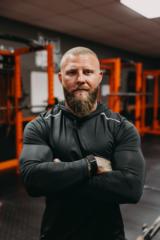
Book Cover Poll
Which cover photo do you like the most for my new book Fight Ready. Comment 1 or 2

0 likes • Aug 4
2
Jun 22 •
Good Morning!
It’s been some time since I’ve posted. Been doing the family bonding thing. Important. Back in the gym today. Still struggling with getting enough protein in my body. Thinking about prepping meals for the week. Anyone doing this and can pass on some pointers?. Sounds like a lot of work. 🙏
1 like • Jun 22
I've been meal prepping consistently for the last 4 months and I've been rotating my protein sources between tuna(I add 2-3 hard boiled eggs with it) and ground beef (mixed with bison and venison). Meal prepping has helped me stay within my protein goal. Not everyone can do this but I eat pretty much the same thing everyday which takes the guess work out of am I eating enough.
1 like • Jun 23
@Philipp Josef Wansch I agree. If it's a complicated process you'll end up not doing it.

Jun 20 •
Hello
Hello everyone! My name is Igor and I work as a Personal Trainer, Strength & Conditioning Coach. I specialize in strength development, functional training, sports performance and working with athletes and recreational athletes, with multiple certifications in the fields of training, nutrition and conditioning. I am glad to be part of this community and look forward to sharing knowledge and experiences with colleagues.
1 like • Jun 21
Welcome to the group Igor!
1-10 of 86

@damien-edmondson-1234
Owner of My Three Sons Fitness
Strenght/Conditioning coach
Former amateur boxer
Active 8h ago
Joined Oct 20, 2025
Powered by