Activity
Mon
Wed
Fri
Sun
May
Jun
Jul
Aug
Sep
Oct
Nov
Dec
Jan
Feb
Mar
What is this?
Less
More
Memberships
Bedrock Nation
142 members • Free
2 contributions to Bedrock Nation

Jan 1 •
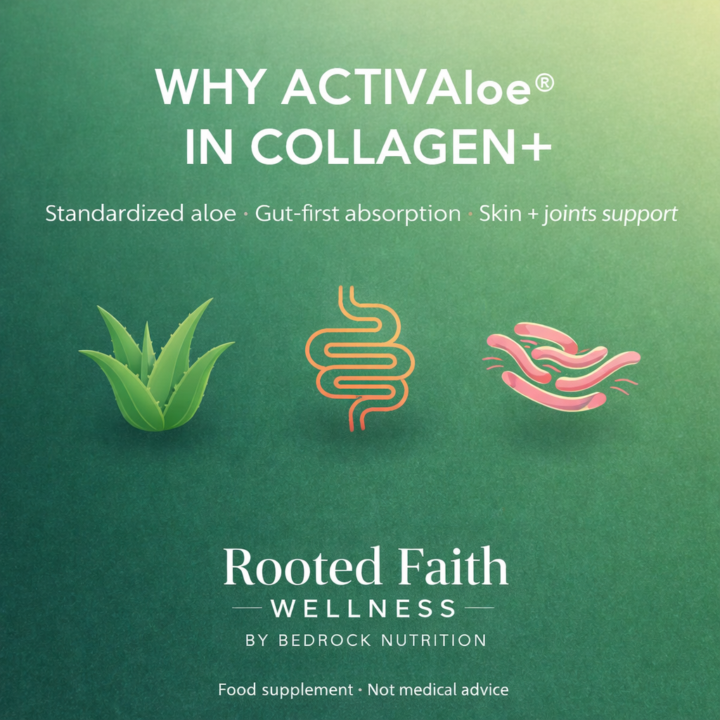
WHY ACTIValoe® IS IN COLLAGEN+
WHY ACTIValoe® IN COLLAGEN+ (and why “aloe” isn’t always aloe) Aloe is one of the most misunderstood “gut health” ingredients—because what people call “aloe” can include very different parts of the leaf, and those parts behave very differently in the body. The key distinction: - Inner leaf gel / mucilage fraction → rich in polysaccharides (often used for “soothing” GI support) - Latex / outer leaf fraction → contains anthraquinones like aloin (the classic “laxative” effect) This matters for safety and consistency. The International Aloe Science Council (IASC) states their standard for aloin in products for oral consumption is <10 ppm. And FDA ruled aloe (as a stimulant laxative ingredient) is not generally recognized as safe and effective for OTC laxative drug products due to inadequate safety data (this is specifically about stimulant laxative use, not “food-grade gel”). EFSA has also raised concerns around hydroxyanthracene derivatives (a category that includes aloe-emodin–type compounds) regarding genotoxicity/carcinogenicity risk in food contexts—another reason the industry focuses on keeping these compounds very low. Translation: the “type” of aloe—and the processing/standardization—matters. Why we prefer ACTIValoe® (safety + efficacy logic) In Collagen+, we use patented ACTIValoe® (Aloe Corp), and we chose it for 3 main reasons: 1) It’s standardized for the active gel fraction (polysaccharides) Aloe Corp states ACTIValoe® is the only supplier to quantify and guarantee 10% polysaccharide retention (dry weight) through its patented process and that they enhance polysaccharide content in a specific molecular range (50,000–200,000 Daltons). Why that matters: botanical ingredients are naturally variable. Standardization is how you get repeatability. 2) It’s built around content + purity aligned with IASC standards Aloe Corp states ACTIValoe® exceeds IASC certification standards for content and purity. And IASC’s own FAQ clarifies the <10 ppm aloin standard for oral aloe products.

2 likes • Jan 1
Thank you for this information.
Nov '25 •
Food for faith Friday episode 1 - community
💚 Food for Faith Friday “All the believers were one in heart and mind… they shared everything they had.” — Acts 4:32 This verse reminds me why community matters so deeply — in life, in faith, and in our wellness journeys. At Rooted Faith Wellness and Bedrock Nutrition, we’re not meant to walk alone. Healing, growth, and transformation are stronger when we do it together. 🤍 Let’s keep building each other up — mind, body, and spirit. To do: Read Acts 4: 32-35 and comment below your thoughts on community, unity, and faith. #FaithBasedWellness #RootedFaithWellness #BedrockNutrition #FoodForFaithFriday #FaithAndHealth #ChristianHealthCoach https://youtu.be/8pWAeJQEzOg?si=79PujX1n7V6cGBl3
0 likes • Nov '25
I wish more people had this mindset. Today it’s all about self and how to get ahead. Not what can I do for my neighbor.
1-2 of 2

Active 10d ago
Joined Nov 10, 2025