
Write something

18d •
The Real Reason We Can't Stop Scrolling
Hint: It's Not Dopamine. If you've spent any time on social media lately, you've probably heard people talk about "dopamine addiction." Dopamine detoxes. Dopamine overload. Dopamine fasting. Dopamine being the reason we can't put our phones down. But what if dopamine isn't the problem? What if we're blaming one of the body's most important systems for a problem it never created? Dopamine isn't bad. In fact, dopamine is one of the most remarkable systems God designed into the human body. Without dopamine: • You wouldn't pursue goals. • You wouldn't feel motivated. • You wouldn't experience anticipation. • You wouldn't enjoy learning. • You wouldn't strive for improvement. • You wouldn't seek meaningful connection. Dopamine is part of the system that helps move us forward. It was designed to reward behaviors that help us survive, grow, learn, connect, and fulfill our purpose. So if dopamine isn't the problem... Why can't we stop scrolling? Because modern life has learned how to trigger the reward without requiring the growth. For most of human history, dopamine was tied to effort. You learned a skill. You built something. You solved a problem. You worked toward a goal. You spent time with people you loved. You served others. You deepened your faith. You accomplished something meaningful. And dopamine reinforced those behaviors. Today, we can access the reward without the process. A notification. A like. A comment. A reel. A short video. A purchase. A swipe. A scroll. The brain receives a reward signal, but often without the growth, purpose, or fulfillment that was originally meant to accompany it. Over time, that disconnect can create imbalance. But I think there's an even deeper question worth asking. Why do some people scroll for ten minutes and put the phone down... While others lose three hours? Why can one person enjoy social media without becoming dependent... While another feels compelled to check every notification? The answer is usually much bigger than dopamine.

20d •
Food for Faith 6/16/26: “Peace”
Peace Begins at Home When people come to us for help, they’re usually focused on symptoms. Fatigue.Anxiety.Weight gain.Digestive issues.Hormone problems.Poor sleep. And while nutrition, lifestyle, and supplementation matter tremendously, there is another factor that often gets overlooked: The atmosphere we live in every day. Our homes can become places of refuge and restoration. Or they can become places of tension and stress. Scripture repeatedly points us toward peace. Jesus said: “Peace I leave with you; my peace I give unto you.” (John 14:27) The peace Christ offers is different from the world’s version of peace. The world says peace comes when circumstances improve. Jesus says peace comes when He is present. That distinction changes everything. Many of us are carrying burdens that don’t show up on lab work: Unresolved conflict.Bitterness.Frustration.Hurt feelings. Fear. Worry. Fimamcial pressure. .Relationship struggles. These things affect more than our emotions. They influence our nervous system, our sleep, our stress hormones, our digestion, and our overall health. Proverbs reminds us: “Better is a dry morsel, and quietness therewith, than a house full of sacrifices with strife.” (Proverbs 17:1) In other words, peace is worth more than abundance. A peaceful home is one of God’s greatest blessings. Matthew 5:9 says: “Blessed are the peacemakers: for they shall be called the children of God.” Notice Jesus doesn’t say blessed are the peacekeepers. Peacekeepers often avoid hard conversations. Peacemakers pursue restoration. They extend grace. They forgive. They choose humility over pride. They seek understanding before being understood. This week I want to challenge you to examine the atmosphere you’re helping create. What would happen if we: • Spoke more gently?• Listened more carefully?• Forgave more quickly?• Prayed more often?• Extended more grace? Peace isn’t something that magically appears. It is something we intentionally cultivate.

Jun 4 •
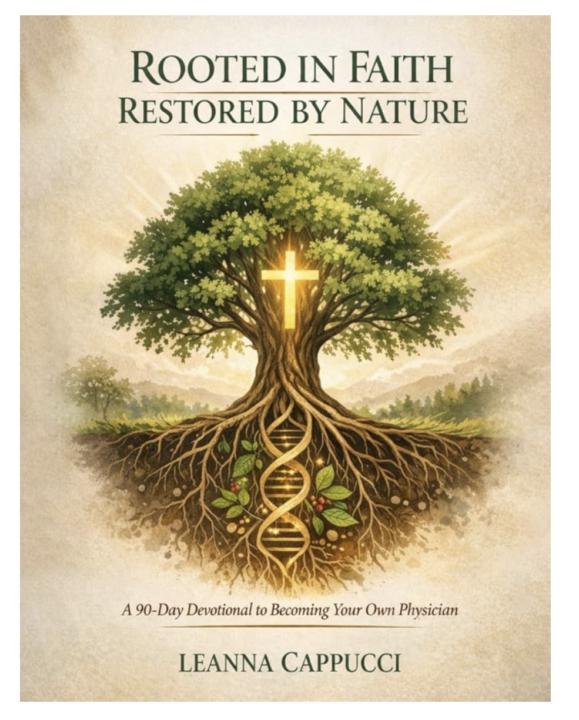
Book Launch: Rooted in Faith, Restored by Nature: A 90-Day Devotional to Becoming Your Own Physician
📖 It’s Official: The Book Is Finally Here! Bedrock Nation, Today is a special day. After months of writing, editing, reviewing, revising, and praying, Rooted in Faith, Restored by Nature: A 90-Day Devotional to Becoming Your Own Physician is officially published and available on Amazon. This book represents so much of what we teach here every day. That health is not something we outsource. That symptoms are signals. That the body is intelligently designed. That faith and function were never meant to be separated. That healing often begins when we stop fighting our bodies and start understanding them. Over 90 days, we’ll walk through: 🌱 God’s original design for health🌱 How modern life disrupts that design🌱 Practical restoration through nutrition, light, movement, rest, and community🌱 Reclaiming wisdom and stewardship over your own health journey Each day includes: ✅ Scripture✅ Faith Reflection✅ Function Insight✅ Faith in Action✅ Prayer My prayer is that this book becomes a tool that helps people move from fear to faith, from confusion to clarity, and from dependency to discernment. Whether you’ve been part of Bedrock Nation for years or you’re just beginning your journey, I believe this message will encourage you. 📖 Available now on Amazon:https://a.co/d/0ehzbAzb If you purchase a copy, I’d love for you to: 1. Drop a photo in the comments. 2. Leave an Amazon review once you’ve read it. 3. Share it with someone who needs encouragement and hope. Thank you all for being part of this mission. Become your own physician—rooted in faith, restored by design. 🌿💚 — Leanna CappucciRooted Faith Wellness by Bedrock Nutrition
May 31 •
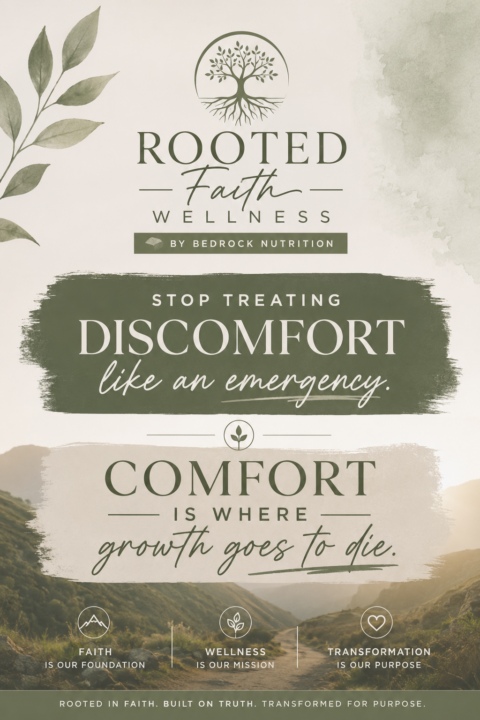
Food for Faith 5/31/26: Stop treating discomfort like an emergency
Food for Faith: Stop Treating Discomfort Like an Emergency Recently, my church is in a series called “God meant it for Good,” discussing the deeper, meaningful purposed of obstacles, challenges and hard times. Today, I was reflecting on some of the comments and questions I’ve received from you, and this seemed particularly relevant. One of the most impactful statements I have heard from my pastor is this: “God is not interested in your comfort. He is interested in your character.” At first glance, that sounds harsh. Most of us spend our lives trying to become more comfortable. We pursue comfort financially. We pursue comfort physically. We pursue comfort emotionally. We pursue comfort in our relationships. We pursue comfort in our schedules. We pursue comfort in our health. We assume that comfort is the reward. But Scripture paints a very different picture. Romans 5:3-4 tells us: “We also glory in our sufferings, because we know that suffering produces perseverance; perseverance, character; and character, hope.” Notice what God says produces character. Not comfort. Not convenience. Not easy circumstances. Not getting our way. Suffering. Difficulty. Resistance. Challenges. The very things most of us spend our lives trying to avoid. The Great Illusion of Control One of the greatest sources of suffering in modern life is our belief that we are somehow entitled to control the outcome. We want life to go according to our plan. We want our timeline. We want our expectations. We want our preferred outcome. And when life refuses to cooperate, we become frustrated, angry, anxious, discouraged, or fearful. But Scripture repeatedly reminds us that we are not in control. Isaiah 55:8-9 says: “For my thoughts are not your thoughts, neither are your ways my ways,” declares the Lord. The truth is that God does not operate according to our timeline. He does not ask our permission before allowing challenges into our lives. He does not consult our comfort level before developing our character.
May 4 •
Food for Faith 5/4/26: Surrender Sucks
I’m going to be really honest with you today… Life… just feels heavy right now. If I’m being real—what I want more than anything is to disappear for a while. To go quiet. To isolate. To just… hibernate until things feel better. But at the same time,I can feel God pressing on my heart… “Let go of control.” And I know that voice.I’ve taught that message.I’ve shared it.I believe it. But right now? I’m struggling to live it. Because the truth is—I don’t like how things look right now. This isn’t where I want to be.This isn’t how I thought things would go.This isn’t how I want to feel. And there’s a part of met that’s still clinging tightly to how I think this should all play out. And if I’m being even more honest… That tension? It’s making me feel bitter. Broken. Even… a little hypocritical. Because how do you tell people to trust God—when your own mind is fighting it? But I think this is the part we don’t talk about enough. Surrender isn’t a one-time decision. It’s a battle. A daily, sometimes moment-by-moment choice between control… and trust. And right now,I’m in that fight. Not on a stage. Not from a place of having it all figured out. But right in the middle of it. And maybe that’s the lesson. That faith isn’t proven when everything makes sense. It’s built when everything in you is resisting—and you choose to soften anyway. So today… I’m not coming to you with answers. I’m coming to you in the process. Learning—again—that God doesn’t need my control. He’s asking for my surrender. Even when I don’t like it. Even when I don’t understand it. Even when I’d rather run the other direction. And maybe you’re there too. Feeling stuck. Resisting what is. Holding to what you wish it looked If that’s you… You’re not alone. We’re both learning this together: Let go…so God can actually move. Scripture: 📖 Proverbs 3:5–6 📖 Matthew 11:28

1-20 of 20
powered by

skool.com/bedrock-nation-8489
Free wellness community for faith based living, functional health and real connection - off social media, rooted in purpose - learn, grow and heal.
Suggested communities
Powered by