Activity
Mon
Wed
Fri
Sun
Nov
Dec
Jan
Feb
Mar
Apr
May
Jun
Jul
Aug
Sep
Oct
What is this?
Less
More
The Iron Forge Brotherhood
62.1k
4.9
Free
Hacksmith’s Peptalk Community
3k
5.0
$10/m
PP
Popular Peptides
863
Free
DDT Method
226
$10/m
Real Primal Human
181
Free
Endless Evolution w/ Duffin
3.1k
Free
Castore: Built to Adapt
1.2k
5.0
Free
BIOHACKING | TONY HUGE
4.7k
Free
13 contributions to Castore: Built to Adapt

Jan 8 •
Elderly supps
@Anthony Castore Hi, I’m looking for some guidance on a limited supplement protocol for my 84yo mother. A bit of her background- as stated, she’s 84 years young, has no major health issues; has sporadic cases of skin cancers on her face, had a kidney stone a few years ago, and has had a hip replacement, she doesn’t exercise (though up and about majority of the day everyday), does NOT pay attention to her lifestyle or nutrition (HEAVY carbohydrate intake), does not take any medications. It amazes me how “healthy” or at least symptom free she is when she does EVERYTHING wrong in terms of health and performance. She goes against just about everything I know and have learned and preach as a Health and Performance Consultant, which is wild to me haha shows how complex health truly is, and how much we still don’t understand Here’s what I’m thinking about having her take daily- omega 3s and spirulina+chlorella. To me, these will cover just about everything from a structural, pliability, immune, and deep nutritional aspect. I’m playing with either CLO or Resolvin from BodyBio (leaning towards Resolvin). Thoughts? The thing with the spirulina+chlorella is the amount of tabs needed daily (10+). She hates taking pills/capsules, so I also like the idea of using Human Potential (freeze dried bison organs). This way she could open the capsules and sprinkle the nutrients on her food or mix in her tea or whatever. I also really like, and would love for her to take would be C60 and PC from BodyBio. Giving her cells and membranes some direct love will obviously be hugely beneficial, but if I can only give her 2 things to focus on for now, I think omega 3s and a broad spectrum of nutrients, enzymes, peptides, and bioactives will cover more needs. Even sulforaphane for the Nrf, BDNF, etc… What do you think here? What would you change or add/swap? Obviously lifestyle and nutrition come first, but there is no chance I’m getting her to change those behaviors and habits at this point, so I want give her a few easy things to take daily to ensure her body/biology are being provided what they need so she can have a better health span at this point in her life and going forward. Thank you for any advice!

1 like • Jan 12
My dad turns 85 this month and my mom 82 later this year. They've always been super supportive of my goals and endeavors and I'm doing my best to pay it forward. From a macro perspective, their appetites has slowed as is common, and with that they don't eat as much protein as they used to. I have them drink our EAA product at least twice a day, we know EAAs have more bang for their buck compared to intact proteins, and they're super easy on their stomachs and digestion, and are easy to add in without affecting their appetite much. I also have them use our POSTX product, it has 5g micronized creatine, Velositol to help maximize aminos or proteins, and it has Alpha-GPC to help their cognitive function. I also have them taking a K2D3 vitamin, BPC-157 tablets, and KPV tablets. They both have gut issues, and those are virtually a non-issue now. My dads blood pressure is actually the best its ever been, and his Dr., can't believe it. I also have them taking a high-quality curcumin, and CoQ10. They won't do/take everything I'd like them to, i wish my mom would take some TA1 to help with some conditions she has. We have some new products coming out that I think will be a good addition for them. And then I try to have them do some resistance exercises and walking as often as possible. I've learned it's all above love and not force, my desire is genuine but I have to also respect their free-agency, and not get frustrated, and let them be involved in the decision making process.

Dec '25 •
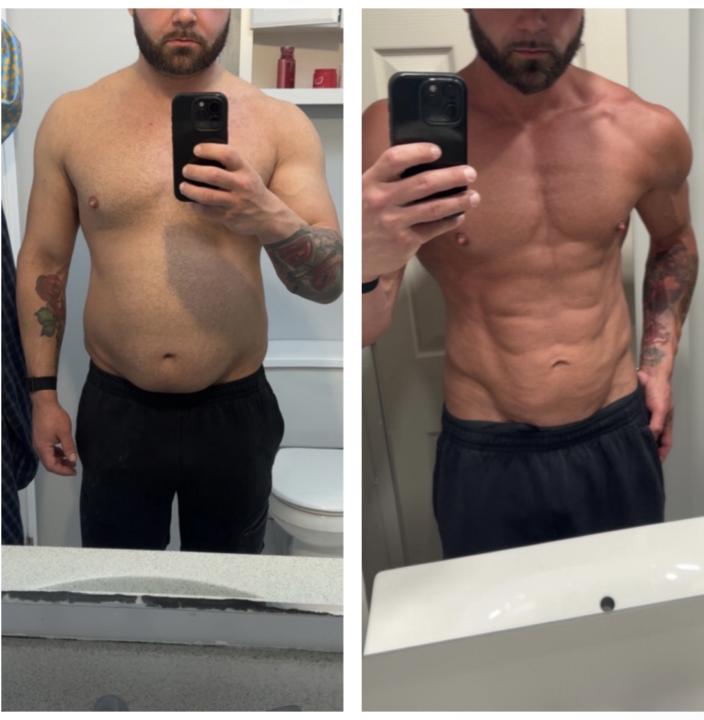
2025 Recomp: Progress, Setbacks, and What’s Next
As the year comes to an end, I wanted to share some progress with the community. From February 2025 to June 2025, I focused on doing things the right way carb cycling, a consistent Push / Pull / Legs split, hormone optimization, and strategically applied peptide protocols. Over that time, I went from 215 lbs to 188 lbs, recomping throughout the process while improving overall conditioning and muscle definition. In July, I unfortunately had to undergo back surgery, which cost me some momentum and a bit of size but it didn’t take away the foundation that was built. I’m already not far off from where I was, and more importantly, I’m back to pushing forward. This is just a pause, not a setback. 2026 is the real target and it’s going to be even better. Appreciate the knowledge, support, and accountability this community brings. Any questions don’t hesitate to ask!
1 like • Jan 2
Good work man, keep it up!

Aug '25 •
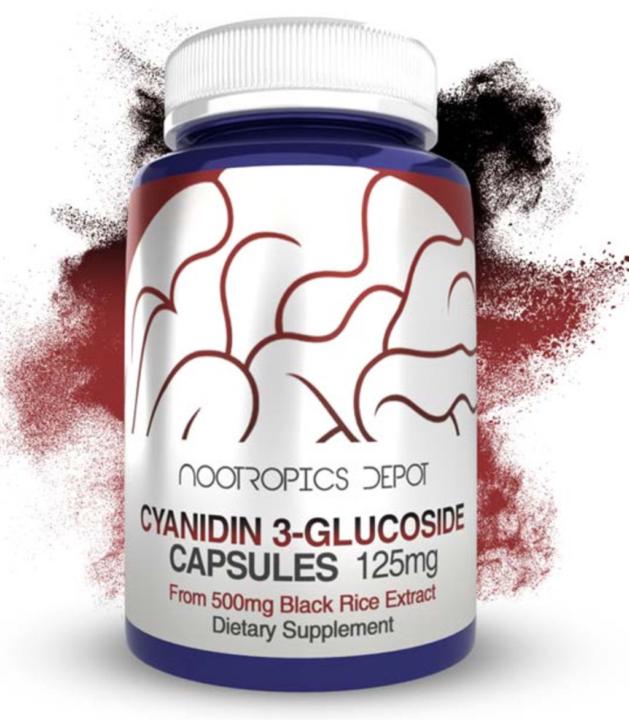
Everyones favorite non peptide supplement
I was just wondering what everyone’s favorite non peptide,sarm, steroid supplement was. Heres mine
1 like • Dec '25
@Drew Wurst my choice as well.
Dec '25 •
Peptide Y2K26
Ok, I feel like I have some pretty good resources into the peptide world. I have a mastermind with a well known lawyer. I’ve asked about what’s up and coming in 2026 and nothing concrete has been stated. YET, open social media and everyone is talking about having to stock up on GLP-1s. Is this valid/legit or is this just classic gate-keeping, fear-based marketing at its best. Seems the only ones pushing this agenda are ones ironically selling research peptides or alternatives. And I even sell research peptides but I will not tell my customers things I can’t substantiate. What am I missing? I know there’s some proposed legislation (i.e. Safe Drug Act) but that hasn’t been passed and isn’t even close from what I’ve been told. The truth is, research companies have always been under scrutiny, so that’s not new, so what is this fear that’s being perpetuated? Thanks!
1 like • Dec '25
@Damian Perez thank you, I've heard that too but I guess we will see what it all means.

Dec '25 •
Ask Anthony: Why Blocking Myostatin Makes Muscles Bigger -but Metabolically Worse
Myostatin is often described as the “brake” on muscle growth, and that simple phrase is partly true, but it hides a much more important role that myostatin plays inside muscle cells. A better analogy is that myostatin is not just a brake, but a city planner. It helps make sure that when muscle fibers grow, the roads, power plants, plumbing, and delivery systems grow with them. When myostatin is blocked, muscles can grow very quickly, but the underlying infrastructure that keeps those muscles efficient does not scale at the same pace. The result is tissue that looks impressive on the outside but functions more like an oversized engine bolted onto a weak electrical grid. To understand why this happens, it helps to think about muscle not as a single tissue, but as a mix of different fiber types with different jobs. Some fibers are built like diesel engines: slower, extremely efficient, and able to run all day using oxygen and fat as fuel. These are oxidative fibers, often called type I or type IIa. Other fibers are more like drag racing engines: explosive, powerful, and fast, but dependent on quick-burning fuel and prone to fatigue. These are glycolytic fibers, often called type IIx or IIb. In a healthy muscle, myostatin helps maintain a balance between these fiber types so that size, strength, endurance, and metabolic health stay aligned. When myostatin signaling is blocked, that balance shifts. The muscle is pushed toward fast growth and fast fibers, and the system increasingly relies on glycolysis, which is the rapid breakdown of glucose without oxygen. Glycolysis is not bad in itself; it is essential for high-intensity efforts. The problem arises when glycolysis becomes the default energy strategy rather than one tool among many. This shift happens because blocking myostatin strongly activates growth pathways like Akt and mTOR, which tell the cell to make more protein and increase fiber size, but it does not equally activate the pathways that build mitochondria, the tiny power plants inside cells that allow efficient oxygen-based energy production. Imagine building a massive warehouse but keeping the same number of generators inside. Each generator now has to work harder, and when demand spikes, the system fails. That is essentially what happens in myostatin-blocked muscle. The fibers grow larger, but mitochondrial density per unit of muscle drops. Oxygen has to travel farther to reach the center of the fiber, waste products have a harder time leaving, and energy production becomes less efficient. Because the oxidative machinery cannot keep up, the muscle leans more heavily on glycolysis to meet energy demands, even during activities where it normally would not. Another compounding issue is blood supply. Healthy muscle growth is usually accompanied by angiogenesis, the growth of new capillaries that deliver oxygen and nutrients. Myostatin inhibition does not reliably increase capillary density in proportion to fiber size. This creates a surface-to-volume problem: as fibers swell, their surface area does not increase fast enough to support efficient exchange. It is like inflating a balloon without adding more openings for air or water to move in and out. The muscle may look full and powerful, but it becomes more prone to fatigue and metabolic stress. At the cellular level, this inefficiency shows up as increased reliance on fast-burning glucose, higher production of metabolic byproducts like lactate, and greater oxidative stress. Oxidative stress sounds harmful, but in normal training it acts as a signal that tells the body to adapt by building more mitochondria and antioxidant systems. Myostatin blockade disrupts this feedback loop. The growth signal is so strong that it overrides the signals that would normally trigger improvements in efficiency. As a result, reactive oxygen species increase without the usual compensatory adaptations, leading to higher cellular stress for a given amount of work. This also helps explain why myostatin inhibition can paradoxically worsen metabolic health in some contexts. Even though there is more muscle mass, the quality of that muscle is skewed toward fibers that are poor at burning fat and less flexible in switching between fuels. Over time, this can reduce insulin sensitivity, increase fat accumulation inside muscle cells, and make the tissue less adaptable to different demands. In animal models and early human studies, this shows up as impressive gains in size and strength alongside poorer endurance, faster fatigue, and inconsistent metabolic outcomes. Clinically, this is one reason why drugs that broadly block myostatin or its receptor, such as ActRIIB decoys, have repeatedly struggled. They produce visible muscle growth, which looks like success, but the deeper functional and safety profiles raise concerns. Muscle that is large but inefficient places a higher energy demand on the body, including the heart and metabolic systems, without delivering proportional improvements in usable performance. The contrast with healthy training-induced hypertrophy is striking. When muscle grows in response to progressive overload, especially when combined with aerobic or mixed-intensity work, growth is coupled to increases in mitochondrial content, capillary density, and metabolic flexibility. The muscle becomes not just bigger, but better at producing force repeatedly, recovering between efforts, and using a wide range of fuels. Myostatin’s role in normal physiology is to enforce this coupling. It slows growth just enough to ensure that energy production, oxygen delivery, and cellular housekeeping keep pace. Removing it entirely breaks that coordination. For strength athletes, coaches, and clinicians, the practical takeaway is not that muscle growth is bad or that myostatin is an enemy, but that how muscle grows matters as much as how much it grows. Strategies that chase size through blunt biological shortcuts risk creating tissue that underperforms and carries hidden metabolic costs. For athletes, this means prioritizing training and interventions that support both strength and oxidative capacity, such as intelligent programming, sufficient recovery, and conditioning that maintains mitochondrial health. For coaches, it means evaluating progress not just by muscle size or one-rep maxes, but by work capacity, repeatability, and fatigue resistance. For clinicians, it means being cautious with approaches that artificially drive hypertrophy without considering long-term metabolic consequences, especially in populations where endurance, insulin sensitivity, and cardiovascular health matter. In applied terms, this knowledge encourages a shift away from the idea of simply removing biological brakes and toward the goal of improving the whole engine. Building muscle that is strong, efficient, and resilient requires respecting the systems that coordinate growth with energy supply, and myostatin, rather than being a villain, is one of the key regulators keeping that balance intact.
1 like • Dec '25
Muscle built this way seems like it would be more like structural muscle that obese people build just to support their increased frame. It isn’t muscle created through tension and stimulus. Great post!
1-10 of 13

Active 2d ago
Joined Aug 14, 2025
utah
Powered by