
Write something
Feb 25 •
Bow drill
I think I fell upon this site in December. At some point, January had a bow drill fire challenge. Better late than never lol

21d •
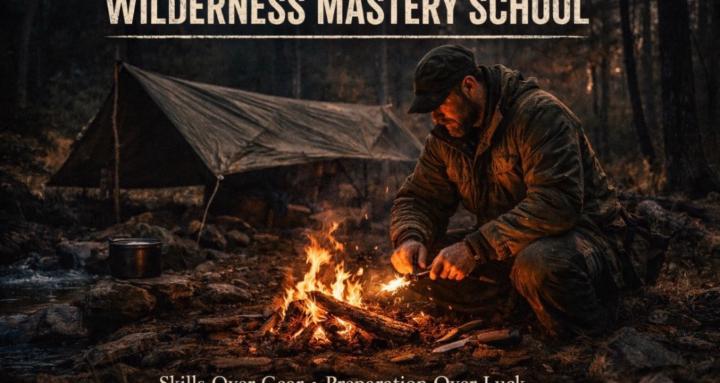
5-Minute Boil – No Excuses
Goal: Boil 1 cup of water in under 5 minutes using: - A magnesium strip + ferro rod - Only natural materials No shortcuts. No cheating. ⚠️ RULES (READ THIS FIRST) You are NOT allowed to use: - Lighters - Matches - Store-bought fire starters - Paper, cotton balls, dryer lint, etc. ONLY: - Magnesium strip - Ferro rod - Natural materials you find outside 🔰 CRAWL (Set Yourself Up to Win) What to do: Before you even strike a spark: 1. Get your materials ready FIRST Tinder (very small, fluffy, dry) Kindling (pencil-lead to pencil-size sticks) Fuel (finger-size sticks) 2. Shave your magnesium Make a small pile (about a quarter size) Keep it tight and together 3. Build your fire lay Don’t light first and then build Build FIRST, then ignite Tip: If your tinder isn’t good, nothing else matters. 🚶 WALK (Make It Work) What to do: Now execute. 1. Spark the magnesium into your tinder 2. Get flame 3. Feed it carefully 4. Build it into a real fire Then: Place your container with 1 cup of water over the fire. You pass this phase if: - You get a flame going - You build it into a sustainable fire (No time requirement yet—just make it work) 🏃 RUN (The Standard) Now do it for real: You have 5 minutes total to: - Ignite your fire - Build it - Get 1 cup of water to a rolling boil ⏱️ Time starts at first spark. Conditions: Pick at least ONE: - Damp ground - Slight wind - Slightly wet materials What matters: - Speed - Efficiency - Decision-making ✅ PASS / FAIL PASS: Water reaches a rolling boil in under 5 minutes FAIL: Anything else No partial credit. 📸 PROOF (POST THIS) - Video or pictures of your setup - Your tinder and magnesium - The flame - The boil 🧠 AFTER ACTION (WRITE THIS) - What slowed you down? - What almost caused failure? - What will you do differently next time?
24d •
Personal Weekly Challenge April 1 - 5 Next Generation Fire & Shelter
Training Primer: With the grandson team member, practice 2nd Amendment Rights & Responsibilities, Resource Walk, Fire under moderate conditions ( wet ground), supported shelter, Quiet Woods Time, and intro to Land Navigation. G Man and I will meet at 9:00 at his house and he, (11 y.o. ) has instructions to bring the BB Rifle, ammo, safety goggles, and whatever he equipment he chooses but it must include a compass. And to wear his Bogs. I will be carrying my full bushcraft kit with shovel and canteen cookset. Part of today’s exercise is to go out to the winter campsite location and make sure no mess remains. Land Navigation objective is compass introduction: Cardinal Direction of the main road dividing the homestead, same for the access woods road, and same for the path to the winter campsites. He will make a supported shelter and kindle a fire, from my pack if required. I will have suffered a lower leg injury, so Grampian Ken can talk but not help - much. I hope everyone here has a contemplative Saturday and remember the roots of their faith during this Holy Season.
Mar 22 •
Week March 22 - 28 Personal Challenge
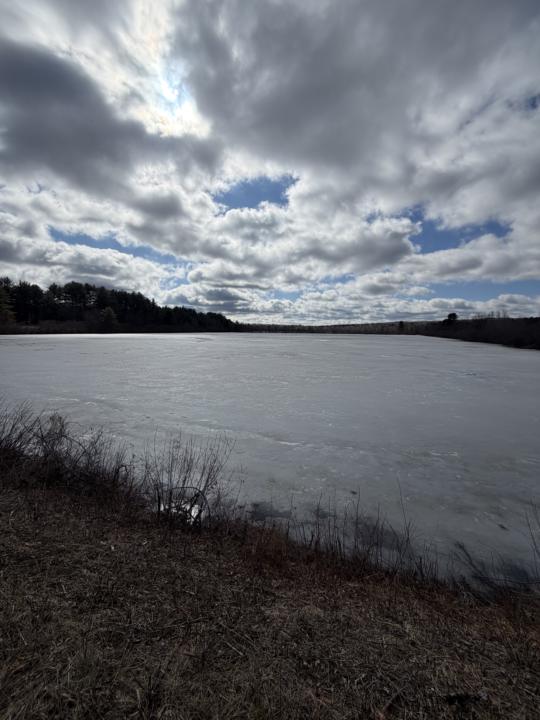
I am still working on the Week #6 and Week #7 Skills challenge. This weeks personal challenge is educational and repetitions working toward both. Free standing configurations takes religion and practice. Now that the ground is no longer frozen, I am going to continue with two different free-standing sets. My hiking partner and I have agreed to get out for multiple walks together and I am going to start rucking in boots with a pack. Develop my stamina while he is rehabbing his hip. The configurations will be a plow-point and a flying A-Frame. We hiked on a public trail yesterday and with very minor exception, the ice-path has now melted.
0
0
Mar 16 •
My Personal Challenge - Week of March 16th - Fire & Boil
Training Primer: Using some seasoned birch with bark on, to complete a one stick fire from ignition to boil. Using either a Bic Lighter and fire disk, or a windproof match, prepare tinder by carving curls and scraping the wood, to make kindling by finely batoning pieces of wood, and fueling the Migizi Wanderer Stove. Without using any Fatwood, which is my favorite crutch, or spruce kindling, my second favorite crutch, boil water in a small pot. I will probably start the exercise by setting up an unsupported survival shelter. Although this is my exercise, does anyone want to join me? What substitutions would you make? What am I overlooking in my planning? Invite any takers!
1-13 of 13
powered by
skool.com/wilderness-mastery-school-3134
Wilderness Mastery School: Green Beret-led survival training. Fire, shelter, water, navigation, first aid. Weekly challenges.
Suggested communities
Powered by