Activity
Mon
Wed
Fri
Sun
Sep
Oct
Nov
Dec
Jan
Feb
Mar
Apr
May
Jun
Jul
Aug
What is this?
Less
More
Wilderness Mastery School
24 members • $1/month
Piked Antler Wilderness School
38 members • Free
33 contributions to Wilderness Mastery School

Dec '25 •
Community Rules
This community is built around discipline, respect, and real-world skill development. To keep it useful and professional, the following rules apply to all members. 1. Be Respectful Disagree if needed, but keep it professional. No insults, harassment, or personal attacks. 2. Keep It Practical Posts should be grounded in experience, training, or honest questions. Avoid speculation and internet theory. 3. Safety Comes First No unsafe advice. If a technique could cause injury, fire spread, or environmental damage, say so clearly. 4. No Politics or Drama This is not the place for political arguments, culture wars, or personal grievances. 5. No Self-Promotion or Spam Do not promote your own channels, products, or services without permission. 6. Protect the Community Do not share screenshots, content, or member discussions outside this group. 7. Instructor Discretion Moderation decisions are final. Posts or members may be removed to protect the quality of the community. This community works because members hold themselves to a higher standard. If you're here to train, contribute, and improve—welcome.

1 like • Mar 9
@Ronald Shaw welcome!
0 likes • Mar 9
@Roberto Leal welcome!
Feb 17 •
Feb. Skills Challenge: Natural Tinder
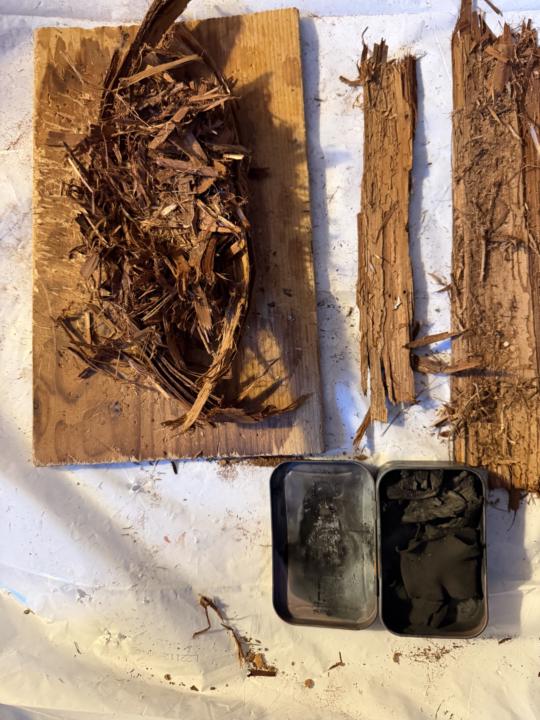
Working on this challenge involved two resource walks and a solid trip to my dry storage. On the first snowshoe walk I identified and harvested grass, flower tops, and birch bark. I also found a pine tree that has great potential for Fatwood. I had cedar bark in dry storage from a harvesting last summer and milkweed pods from last fall. I processed down two piles of cedar bark and kindled one with a ferro rod and one with flint & steel. Actually the charred punkwood was sparked with a piece of flint and my 1095 steel Migizi Bushcraft & Survival Knife. I specifically mention this because until recently, this is a skill that has alluded me. I also harvested two pieces of Fatwood from my dry storage, procured from a job site last fall. You can see on one of the pieces where I tested it in the field. I processed down the punk wood around the Fatwood, which would have been much easier with a hatchet but the Fatwood carved feathers very nicely, I was able to scrape some power with the spine of my knife and this easily lit with the ferro rod (and striker). I was under the impression that milkweed pod fluff was flash tinder but this was not the case. It smoldered just like charred material (and stink) but I was able to blow the fluff into a flame against the actual pod. I used that to start Saturdays fire. My second snowshoe hike was out at the family homestead where I knew there were cattail tops. I found tops of various degrees of degeneration and harvested several of each. I have not kindled this patch of grass and flower tops yet and still need to investigate the uses of the cattail. I will add to this in the comments. Darned wedding next weekend that is going to compromise my availability. Not a relative but close enough that there are expectations.
0 likes • Feb 25
Oof. Burned through most of my tinder reserves. Plan was grasses, flowered grasses, poplar and cedar bark, and fat wood shavings. May get a chance this weekend.
1 like • Mar 9
@Kenneth Berry that's awesome man!
Jan 9 •
Roll Call: Where are you training from this week?
Alright crew — quick roll call. Drop: - Location: state/country - Terrain: woods / mountains / desert / swamp / urban / other - This week’s focus: one skill you want sharper by Sunday (fire, shelter, navigation, knife skills, water, mindset, etc.) I’ll kick it off: I’m in KY/TN country, and this week I’m focused on instructing land navigation.
1 like • Jan 9
Just got out of the woods (GSMNP - Southern Appalachia/Temperate Rainforest). Worked on feather sticks and ferro rod techniques. Also lit several types of tinder (dried grasses, birch bark, poplar bark).
0 likes • Mar 9
Hung out in Nantahala National Forest during the week. Nice spot right by the creek. Blessed with abundance.
Feb 28 •
Week 6 - Tarp Configuration - Continued / Progress
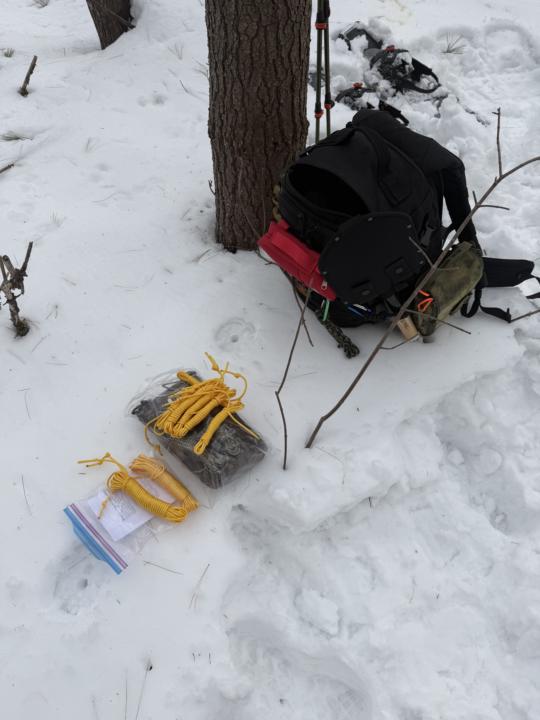
Training Primer: Hike out to my resource area and work on multiple tarp configurations based on the Week 6 Challenge. AAN: I set up an A-Frame tarp configurations based, supported using a rope kit without anything being pre-staged. After I disassembled that set, I attempted an unsupported plow-point shelter. Although the concept worked OK, it was very difficult to keep things tight with the tent pads in snow. I disassembled that and set up a supported plow-point, much more successfully. I tried a timed exercise just for grins. It was a modified lean-to which went 9 minutes and 20 seconds. More than two minutes too long.
1 like • Mar 2
@Kenneth Berry very nice! I bet you're looking forward to spring lol
Mar 1 •
AAR
What failed the first time you tried natural tinder in wet conditions? What corrected it?
0 likes • Mar 2
Cedar bark in damp conditions let me down. Still have some poplar bark drying. Fatwood can't be beat though.
1-10 of 33

@arthur-buesch-6973
I live and practice in the mountains of Western North Carolina. Experienced backpacker/outdoorsman, looking to broaden my skills in self-reliance.
Active 18d ago
Joined Dec 21, 2025
Franklin, NC