
Write something

🔥
8h •
🪞 UnShaming Reflections
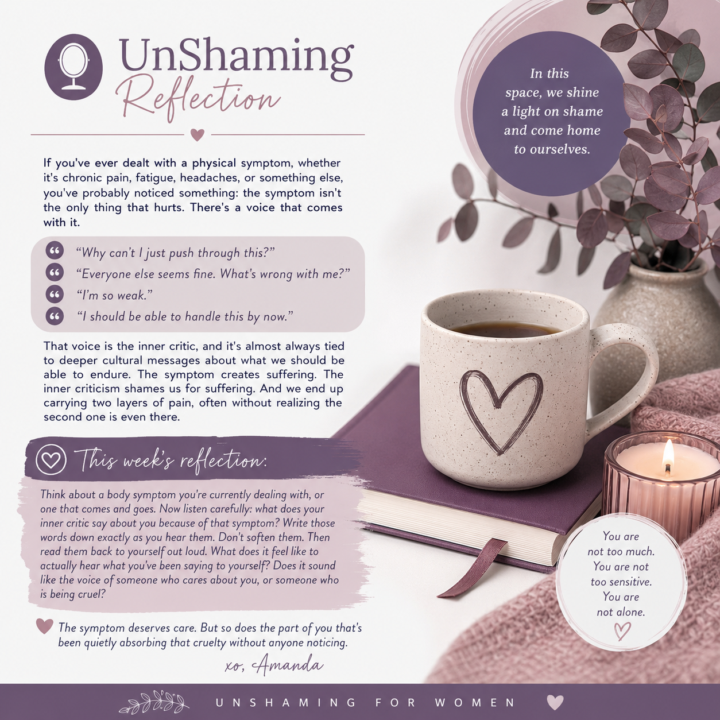
If you've ever dealt with a physical symptom, whether it's chronic pain, fatigue, headaches, or something else, you've probably noticed something: the symptom isn't the only thing that hurts. There's a voice that comes with it. "Why can't I just push through this?" "Everyone else seems fine. What's wrong with me?" "I'm so weak." "I should be able to handle this by now." That voice is the inner critic, and it's almost always tied to deeper cultural messages about what we should be able to endure. The symptom creates suffering. The inner criticism shames us for suffering. And we end up carrying two layers of pain, often without realizing the second one is even there. This week's reflection: 💗 Think about a body symptom you're currently dealing with, or one that comes and goes. Now listen carefully: what does your inner critic say about you because of that symptom? Write those words down exactly as you hear them. Don't soften them. Then read them back to yourself out loud. What does it feel like to actually hear what you've been saying to yourself? Does it sound like the voice of someone who cares about you, or someone who is being cruel? The symptom deserves care. But so does the part of you that's been quietly absorbing that cruelty without anyone noticing. xo, Amanda
1
0
🔥
14d •
🪞 UnShaming Reflections
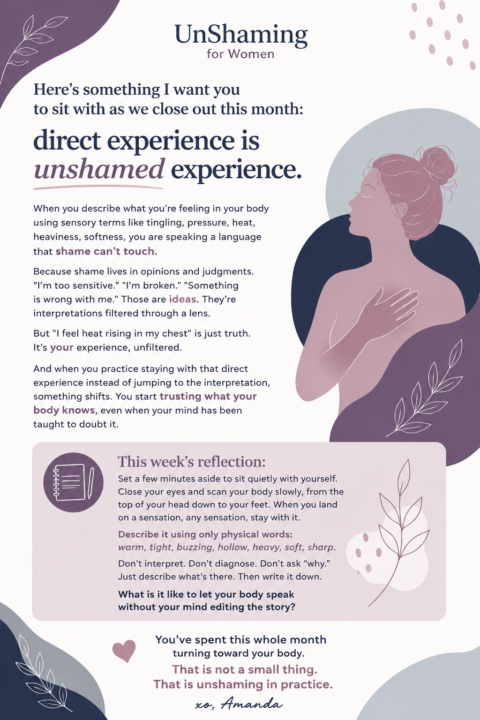
Here's something I want you to sit with as we close out this month: direct experience is unshamed experience. When you describe what you're feeling in your body using sensory terms like tingling, pressure, heat, heaviness, softness, you are speaking a language that shame can't touch. Because shame lives in opinions and judgments. "I'm too sensitive." "I'm broken." "Something is wrong with me." Those are ideas. They're interpretations filtered through a lens. But "I feel heat rising in my chest" is just truth. It's your experience, unfiltered. And when you practice staying with that direct experience instead of jumping to the interpretation, something shifts. You start trusting what your body knows, even when your mind has been taught to doubt it. This week's reflection: 💕 Set a few minutes aside to sit quietly with yourself. Close your eyes and scan your body slowly, from the top of your head down to your feet. When you land on a sensation, any sensation, stay with it. Describe it using only physical words: warm, tight, buzzing, hollow, heavy, soft, sharp. Don't interpret. Don't diagnose. Don't ask "why." Just describe what's there. Then write it down. What is it like to let your body speak without your mind editing the story? You've spent this whole month turning toward your body. That is not a small thing. That is unshaming in practice. xo, Amanda
2
0
🔥
21d •
🪞 UnShaming Reflections
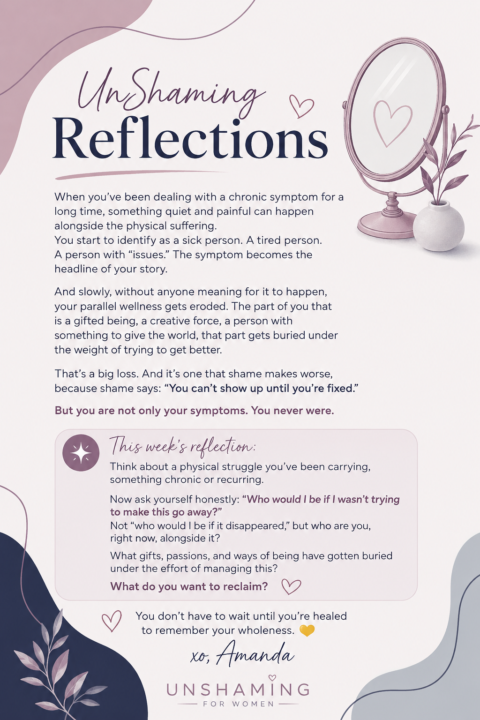
When you've been dealing with a chronic symptom for a long time, something quiet and painful can happen alongside the physical suffering. You start to identify as a sick person. A tired person. A person with "issues." The symptom becomes the headline of your story. And slowly, without anyone meaning for it to happen, your parallel wellness gets eroded. The part of you that is a gifted being, a creative force, a person with something to give the world, that part gets buried under the weight of trying to get better. That's a big loss. And it's one that shame makes worse, because shame says: "You can't show up until you're better, healed, or fixed." But you are not only your symptoms. You never were. This week's reflection: 🌟 Think about a physical struggle you've been carrying, something chronic or recurring. Now ask yourself honestly: "Who would I be if I wasn't trying to make this go away?" Not "who would I be if it disappeared," but who are you, right now, alongside it? How would you move through the world differently? What gifts, passions, and ways of being have gotten buried under the effort of managing this? What do you want to reclaim? You don't have to wait until you're healed to remember your wholeness. 💛 xo, Amanda
1
0
🔥
28d •
🪞 UnShaming Reflections
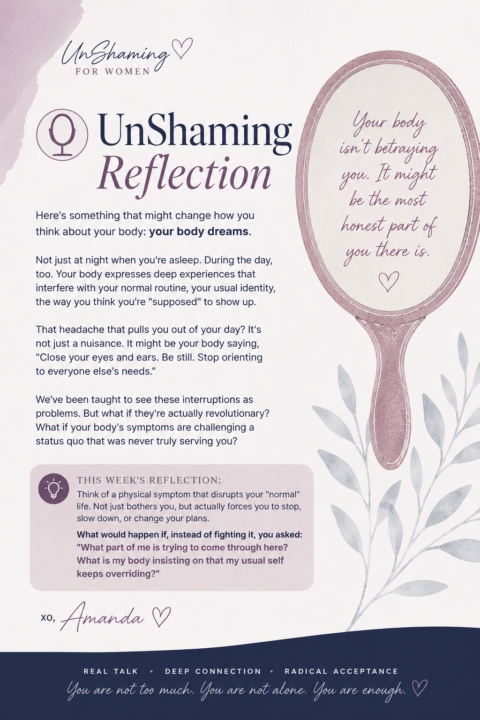
Here's something that might change how you think about your body: your body dreams. Not just at night when you're asleep. During the day, too. Your body expresses deep experiences that interfere with your normal routine, your usual identity, the way you think you're "supposed" to show up. That headache that pulls you out of your day? It's not just a nuisance. It might be your body saying, "Close your eyes and ears. Be still. Stop orienting to everyone else's needs." We've been taught to see these interruptions as problems. But what if they're actually revolutionary? What if your body's symptoms are challenging a status quo that was never truly serving you? This week's reflection: 🔥 Think of a physical symptom that disrupts your "normal" life. Not just bothers you, but actually forces you to stop, slow down, or change your plans. What would happen if, instead of fighting it, you asked: "What part of me is trying to come through here? What is my body insisting on that my usual self keeps overriding?" Your body isn't betraying you. It might be the most honest part of you there is. xo, Amanda
🔥
Jun 8 •
🪞 UnShaming Reflections
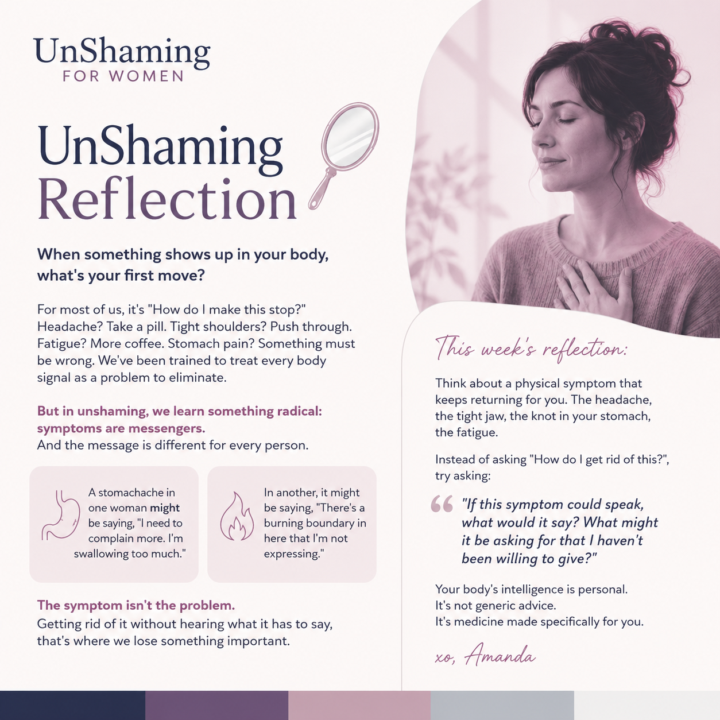
When something shows up in your body, what's your first move? For most of us, it's "How do I make this stop?" Headache? Take a pill. Tight shoulders? Push through. Fatigue? More coffee. Stomach pain? Something must be wrong. We've been trained to treat every body signal as a problem to eliminate. But in unshaming, we learn something radical: symptoms are messengers. And the message is different for every person. A stomachache in one woman might be saying, "I need to complain more. I'm swallowing too much." In another, it might be saying, "There's a burning boundary in here that I'm not expressing." The symptom isn't the problem. Getting rid of it without hearing what it has to say, that's where we lose something important. This week's reflection: 🤔 Think about a physical symptom that keeps returning for you. The headache, the tight jaw, the knot in your stomach, the fatigue. Instead of asking "How do I get rid of this?", try asking: "If this symptom could speak, what would it say? What might it be asking for that I haven't been willing to give?" Your body's intelligence is personal. It's not generic advice. It's medicine made specifically for you. xo, Amanda
1-19 of 19

skool.com/unshaming
What if your pain and struggles aren't proof something's wrong with you? A women's community for unshaming, witnessing, and coming home to yourself.
Leaderboard (30-day)
1

+2
2

🔥
+1
3

+1
Powered by