

16d •
Yay! The Soil Ate My Undies!
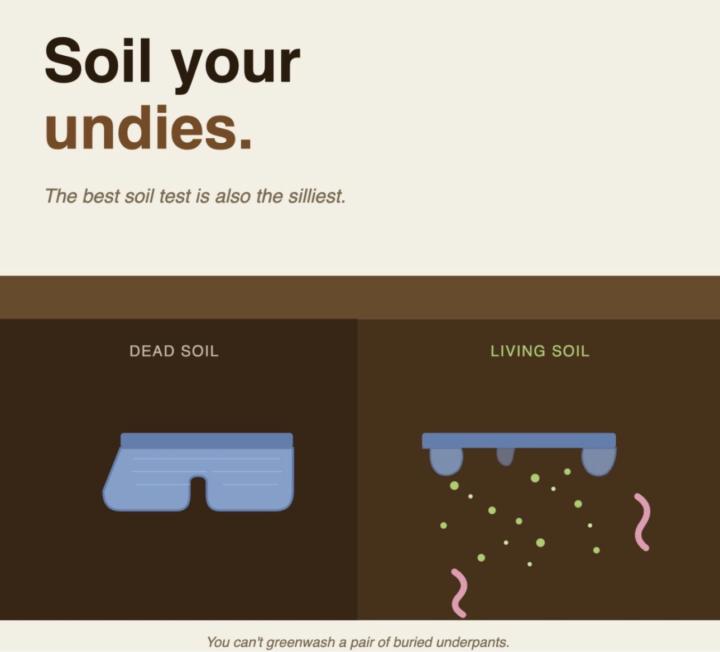
Good news: the soil ate your undies. Here's why that's something to celebrate. It's a real method, farmers call it "Soil Your Undies," and here's how it goes. You take a pair of plain white cotton underpants, bury them in your field, and dig them up about two months later. If all that comes back is a sad little waistband, congratulations, your soil is alive and thriving. If the undies come out more or less intact, you've got a problem. The reason it works is actually beautiful. Healthy soil is absolutely teeming with life, billions of bacteria, fungi and microbes in a single handful, and their whole job is to break down organic matter. Cotton is pure organic matter. So in living soil, the microbes swarm the cotton and devour it within weeks. In dead, compacted, over tilled soil, there's almost nobody home to eat it, so it just sits there. The underwear is basically a report card written by the microbes themselves. (They can't digest the synthetic elastic, which is why you're always left with the waistband.) And the best part is you don't need a lab to read it! There are a handful of these wonderfully low tech field tests that tell you the truth about soil. Drop a clod into a jar of water and see if it holds together or collapses into mud. Dig a spadeful and count the earthworms. The soil just tells you. Which is the whole point, really. The word "sustainable" has become so vague it's being regulated out of existence. This is the opposite of vague. You cannot greenwash a pair of buried underpants. Either the soil ate them or it didn't. Healthy soil is something you can dig up and hold in your hands!
24d •
Soil basics
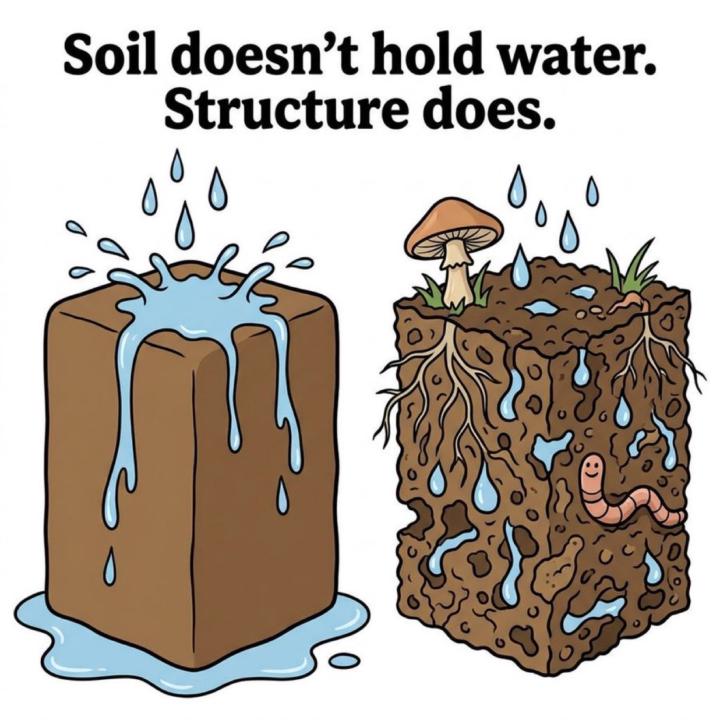
From dirt you came Soil is the foundation of agriculture, made from minerals, organic matter, water, and air. Its type determines what crops can grow and how productive land can be. Main types include sandy, clay, silt, loam, peat, and chalk. Sandy soil drains fast but lacks nutrients, while clay holds water and nutrients but is hard to work. Silt is fertile and good for crops like wheat. Loam, a balanced mix, is the most productive for farming. Peat is rich in organic matter but needs drainage, and chalky soil is alkaline and supports specific crops. With proper management, any soil can be improved to support diverse plant growth. And remember healthy soil acts like a sponge, not a bucket. 🌱💧 Fungi, roots, worms, and organic matter create pore spaces that capture, store, and slowly release water..helping plants thrive, reducing runoff, and building a resilient ecosystem.
2
0
May 4 •
May the Fourth Be With You
Hello, hello, hello everyone! Welcome to your morning briefing. I’m Neil Smith, and today is May 4th. Or as the nerds call it, 'May the Fourth Be With You.' Which is great, unless you’re a sheep. Then it’s 'May the Force be with Ewe.' I'm sorry, I had to. Let’s get into the news before I make another dad joke. 🪙 1. Crypto: To the Moon (Again?) Listen, the crypto world is buzzing right now. It’s like the whole market just downed a triple-shot espresso while watching a high-speed chase on the news. It’s chaotic, it’s loud, and nobody’s getting any sleep! Bitcoin is back above $78,000, casually strolling back into the room like it didn't just give everyone a heart attack for months. It’s got that "I never really left" energy, showing up unannounced and making everything more expensive the second you look at it. Meanwhile, XRP is pushing past $1.40 with some serious attitude, and Dogecoin, the joke that simply refuses to leave the party, is hovering around $0.10 like it actually belongs at the grown-up table. But while the big names are fighting for the spotlight, the real conversation is shifting toward $GROW. People are realizing that crypto doesn't just have to be about digital gold or memes; it can be about actual impact. While the rest of the market is chasing candles, $GROW is planting seeds, literally, turning ecological credits into the kind of value you can actually feel good about holding. Whether you’re a full-on HODLer or just watching the drama with cautious curiosity, one thing’s clear: the market is wide awake, and it’s finally starting to $GROW. 🚜 2. Agriculture: The Grain Game In the world of farming, grains are making new highs for the year. Apparently, everyone decided all at once that they really, really like bread. Soybean oil is driving prices up because of biofuel demand. We’re basically turning our salad dressing into car fuel now. Also, the EPA is looking for your comments on new proposals until the end of today. So if you’ve ever wanted to tell the government how you feel about soil, now is your moment! Don’t let the dirt down.
Apr 2 •
Plants say spring is here! 🌱
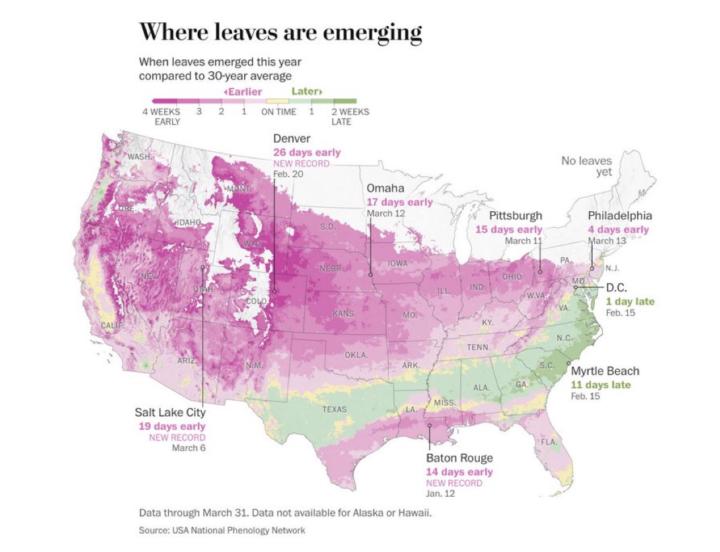
About 190 million Americans have experienced an earlier-than-normal spring leaf-out, based on the behavior of lilac and honeysuckle. Leaves emerged 30 to 50 days earlier than normal near the Rockies and in parts of the Plains, breaking records.
Mar 20 •
A living support system
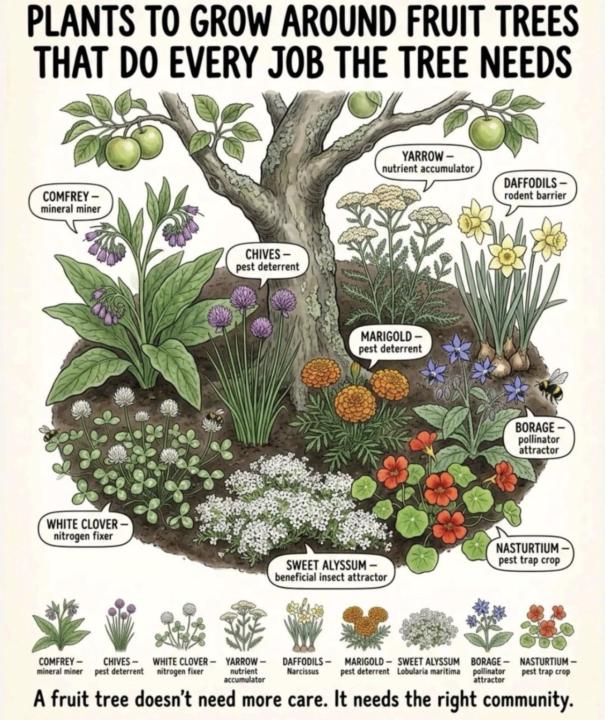
When a baby grows in the womb, it doesn’t grow alone. It grows inside a placenta. A living support system. Delivering nutrients. Balancing water. Filtering toxins. Supporting development. Without the placenta, the baby cannot survive. Life depends on relationships. And trees are no different. A fruit tree planted alone in the middle of a lawn is like a baby without a placenta. Technically alive. But missing the living system designed to support it. And what do we do when that happens? We replace relationships with chemicals. Fertilizers for nutrients. Pesticides for pests. Herbicides for competition. Because the natural support network is gone. In nature, trees never grow alone. They grow inside communities. Plants that mine minerals from deep soil. Plants that fix nitrogen. Plants that attract pollinators. Plants that confuse pests. Plants that protect and cover the soil. In permaculture we call this a tree guild. A living support network. For example: Comfrey mines minerals. White clover fixes nitrogen. Yarrow accumulates nutrients. Chives and marigolds deter pests. Borage attracts pollinators. Nasturtium acts as a trap crop. Each plant has a role. Not competing with the tree. Supporting it. And honestly… Who wants to live alone anyway? Nature thrives in communities. So do we. Maybe the real question when planting a fruit tree is not: “How do I care for this tree?” But: Who belongs in its community? 🌳
1-13 of 13
skool.com/thegrowskool
The Grow Renaissance unites agriculture, Web3, and stewardship to build a transparent, regenerative economy that nourishes people, animals and planet.
Leaderboard (30-day)
1

+19
2
+10
3

+8
4
+7
5
+5
Powered by